
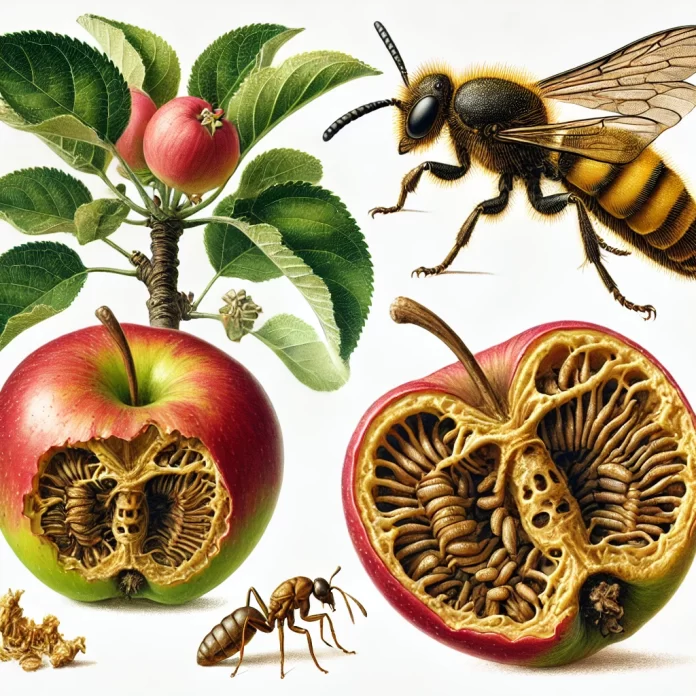
Apple Sawfly (Hoplocampa testudinea)
Overview
The apple sawfly (Hoplocampa testudinea) is a small, wasp-like insect that primarily affects apple (Malus domestica) trees. It is a significant pest in orchards, causing damage to developing fruit by burrowing into them, leading to premature fruit drop and reduced yields. The larvae feed within the fruit, creating characteristic tunneling damage known as “sawfly trails.”
Life Cycle
- Egg Stage: Females lay eggs just beneath the calyx (flower base) of young apple blossoms in spring.
- Larval Stage: Upon hatching, the larvae burrow into the developing fruitlets, creating winding tunnels. After feeding, they exit the fruit and drop to the soil.
- Pupal Stage: The larvae pupate in the soil, where they may overwinter for one or more years before emerging as adults.
- Adult Stage: Adult sawflies are about 5 mm long, with a yellow-brown body and dark wings. They emerge in spring to mate and lay eggs, continuing the cycle.
Damage Symptoms
- Fruit Damage:
- Early signs include small brown entry marks near the calyx.
- Larvae create irregular tunnels inside the fruit, filled with frass (excrement).
- Affected fruit often falls prematurely or becomes deformed as it matures.
- Leaf Damage: Unlike some sawflies, H. testudinea does not typically damage leaves.
Conditions Favoring Infestation
- Mild winters allow for higher survival rates of overwintering larvae.
- Early flowering apple varieties are more susceptible.
- Orchards with high humidity and dense tree canopies may experience increased sawfly activity.
Management and Control
- Cultural Practices:
- Regularly collect and dispose of fallen infested fruit to break the life cycle.
- Encouraging natural predators like birds and parasitoid wasps can help control populations.
- Biological Control:
- Some parasitoid wasps target apple sawfly larvae and can help reduce infestations naturally.
- Chemical Control:
- Insecticides targeting early fruit development stages, such as pyrethroids, may be used in severe cases.
- Organic alternatives like neem-based sprays (where legally permitted) can provide some protection.
Economic and Agricultural Impact
Apple sawfly infestations can lead to significant crop losses, particularly in organic orchards where chemical control is limited. In regions with frequent outbreaks, growers must implement integrated pest management (IPM) strategies to minimize damage while maintaining ecological balance.