
The Newspaper For Gardeners

Looking Out for Hedgehogs...

Hedgehogs are some of the most endearing creatures in our gardens, but winter...

Prune Apple Trees

Pruning is an essential task for maintaining healthy, productive apple trees. Proper pruning...

Dividing Snowdrops: A Step-by-Step...

Snowdrops (Galanthus spp.) are a cherished sight in late winter, heralding the arrival...

Force Rhubarb: A Gardener’s...

Forcing rhubarb is a traditional gardening technique that produces tender, sweet stalks, perfect...
Monday, January 12, 2026
A-ZAApical

Apical

Apical

Definition:
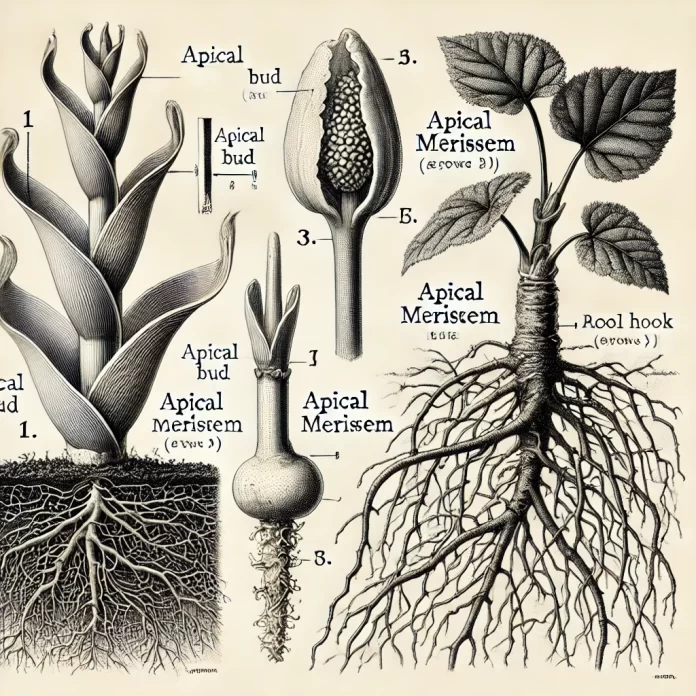
The term apical (from the Latin apex, meaning “tip” or “summit”) refers to the position, structure, or growth occurring at the apex (tip) of a plant organ. It is most commonly used in botany to describe the terminal regions of roots, stems, or other plant structures.

Botanical Contexts:

  1. Apical Meristem – A region of actively dividing cells found at the tips of roots and shoots. Apical meristems are responsible for primary growth, elongating stems and roots to allow for increased height or depth.
  2. Apical Dominance – A growth pattern in which the main central stem (or shoot apex) suppresses the growth of lateral buds, often under the influence of the plant hormone auxin. This dominance ensures vertical growth, which can be disrupted by pruning or environmental factors.
  3. Apical Bud (Terminal Bud) – The bud located at the tip of a stem or branch. It contains the apical meristem and is crucial for continued shoot elongation.
  4. Apical Growth – A mode of development where elongation occurs at the tip, seen in structures such as algae filaments, root tips, and climbing plant tendrils.
  5. Apical Hook – A curvature found in seedlings of dicots as they emerge from the soil, protecting the delicate shoot tip from mechanical damage.

Significance in Horticulture and Plant Science:
Understanding apical structures and processes is essential for pruning techniques, propagation, and plant training methods such as espalier and bonsai. Manipulating apical dominance can encourage bushier growth in ornamental and crop plants.


spot_img

lOOKING FOR MORE WORK?

The free and easy way to get more customers. Just join Find Local Gardeners.

BoltingCategory: Plant Physiology / Growth Disorders Definition:Bolting is the premature production of a flowering stem in plants before the crop has been harvested, typically triggered...
Definition:Blotchy ripening is a physiological disorder primarily observed in fleshy fruits—most notably in tomatoes (Solanum lycopersicum)—where patches of the fruit fail to develop normal...
Blossom End Rot (noun; plant pathology, horticulture) Definition: Blossom end rot is a physiological disorder affecting the fruit of various flowering plants—most notably tomatoes, peppers, aubergines...
Blind (adjective, noun; horticulture, botany) Definition (Botany & Horticulture): In a botanical or horticultural context, blind refers to a plant shoot, bud, or flowering stem that...
(noun; pathology, botany) Definition:In botany, blight refers to a rapid and extensive discoloration, wilting, or death of plant tissues—typically leaves, stems, or flowers—caused by...

How to Grow Ricinus communis

Ricinus communis, commonly known as the castor oil plant, is a versatile and striking plant prized for its unique foliage and valuable oil. Native to the tropical regions of Africa and India, this plant can grow as an annual...

How to Grow Alocasia Micholitziana ‘Frydek’

Alocasia Micholitziana “Frydek,” often referred to simply as Alocasia Frydek, is a striking houseplant known for its velvety, dark green leaves with pronounced white veins. This tropical beauty adds a touch of elegance to any indoor space. While it...

Eucomis bicolor – Grow Guide

Eucomis bicolour, commonly known as the pineapple lily, typically comes back every year. This plant is a perennial, meaning it can live for more than two years and will regrow each season from its underground bulb. Is Eucomis hardy in...

Agapanthus Grow Guide

Types of Agapanthus Agapanthus are generally divided into two main groups based on their foliage habits: evergreen and deciduous. Each has distinct characteristics that influence where and how they are best grown in UK gardens. 1. Evergreen Agapanthus Foliage: Retains its strap-like,...

Continue reading

Bolting

BoltingCategory: Plant Physiology / Growth Disorders Definition:Bolting is the premature production of a flowering stem in plants before the crop has been harvested, typically triggered by environmental stress. It is especially common in leafy vegetables such as lettuce (Lactuca sativa),...

Blotchy Ripening

Definition:Blotchy ripening is a physiological disorder primarily observed in fleshy fruits—most notably in tomatoes (Solanum lycopersicum)—where patches of the fruit fail to develop normal coloration during the ripening process. This results in irregular, often green, yellow, or grey-green areas...

Blossom End Rot

Blossom End Rot (noun; plant pathology, horticulture) Definition: Blossom end rot is a physiological disorder affecting the fruit of various flowering plants—most notably tomatoes, peppers, aubergines (eggplants), and courgettes (zucchini). It is characterized by a dark, sunken, leathery patch at the...

SUBSCRIBE TO OUR YOUTUBE CHANNEL

Plant advice for unusual species plus updates from our tropical garden

SUBSCRIBE