
The Newspaper For Gardeners

Looking Out for Hedgehogs...

Hedgehogs are some of the most endearing creatures in our gardens, but winter...

Prune Apple Trees

Pruning is an essential task for maintaining healthy, productive apple trees. Proper pruning...

Dividing Snowdrops: A Step-by-Step...

Snowdrops (Galanthus spp.) are a cherished sight in late winter, heralding the arrival...

Force Rhubarb: A Gardener’s...

Forcing rhubarb is a traditional gardening technique that produces tender, sweet stalks, perfect...
Monday, January 12, 2026
A-ZAAmmonium Polysulphide

Ammonium Polysulphide

Got it! Here’s the revised entry with sulphur instead of sulfur:


Ammonium Polysulphide

Overview

Chemical Name: Ammonium polysulphide (NH₄)₂Sₓ
Common Name: Ammonium polysulphide solution
Type: Inorganic compound
Use in Horticulture: Fertiliser, soil amendment, and pest control

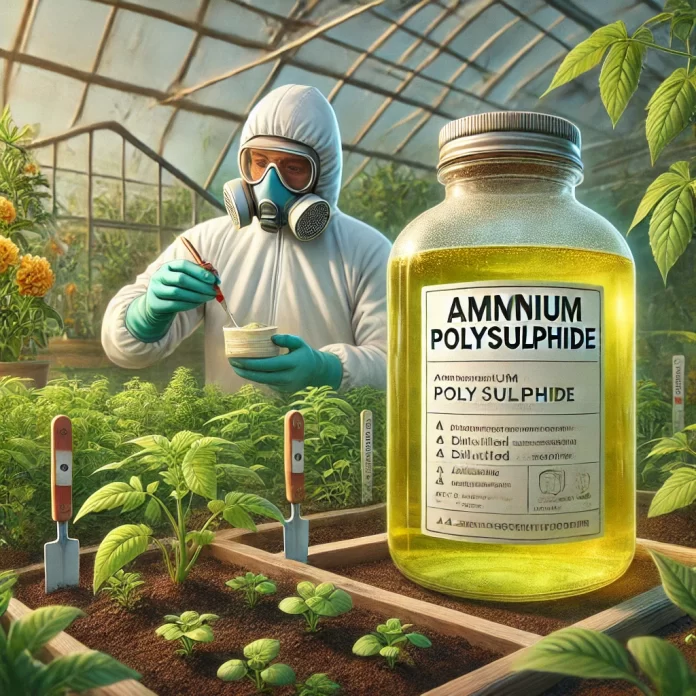
Ammonium polysulphide is a liquid compound formed by dissolving excess sulphur in ammonium sulphide solutions. It has been used in agriculture and industry for soil conditioning, sulphur supplementation, and pest control.

Chemical Properties

  • Formula: (NH₄)₂Sₓ
  • Appearance: Yellow to reddish liquid with a strong odour of rotten eggs due to hydrogen sulphide release.
  • Solubility: Highly soluble in water, decomposing into ammonia (NH₃), hydrogen sulphide (H₂S), and elemental sulphur upon exposure to air.
  • pH: Strongly alkaline

Uses in Horticulture

1. Sulphur and Nitrogen Source

Ammonium polysulphide provides essential sulphur and nitrogen, crucial for plant metabolism:

  • Sulphur (S) is vital for amino acid synthesis (e.g., cysteine, methionine) and chlorophyll production.
  • Nitrogen (N) supports leaf and stem growth, aiding in protein synthesis.

2. Soil pH Adjustment

  • Acts as an acidifying agent, beneficial for alkaline soils needing pH reduction.
  • Helps with micronutrient availability, especially iron, manganese, and zinc in high-pH soils.

3. Pest and Fungus Control

  • Historically used as a fungicide to control rusts and powdery mildew.
  • Can act as an insect repellent due to its strong sulphuric odour.

4. Soil Detoxification

  • Used to treat saline and sodic soils by helping leach out excess sodium.
  • Promotes soil aeration by breaking down compacted clay.

History of Use

Ammonium polysulphide has been used in agriculture for over a century, primarily as a soil amendment and pesticide. It was historically applied in orchards and vineyards to control fungal diseases and sulphur deficiencies. In the early 20th century, it was commonly included in mixtures for pest control before synthetic alternatives became widespread.

In industrial applications, ammonium polysulphide has been used for metal treatment, removing heavy metals from wastewater, and as a flotation agent in mining. These uses have influenced its regulation due to environmental concerns.

Availability and Legal Status in the UK

In the UK, ammonium polysulphide is not commonly available for home gardening. Its use is primarily restricted to industrial and agricultural applications, and it may require professional handling due to its hazardous properties. Regulations on sulphur-based chemicals have tightened due to environmental concerns, particularly regarding air and water pollution.

It is advisable to check with regulatory bodies such as the Health and Safety Executive (HSE) or DEFRA (Department for Environment, Food & Rural Affairs) for up-to-date information on its permitted uses and restrictions in the UK.


spot_img

lOOKING FOR MORE WORK?

The free and easy way to get more customers. Just join Find Local Gardeners.

BoltingCategory: Plant Physiology / Growth Disorders Definition:Bolting is the premature production of a flowering stem in plants before the crop has been harvested, typically triggered...
Definition:Blotchy ripening is a physiological disorder primarily observed in fleshy fruits—most notably in tomatoes (Solanum lycopersicum)—where patches of the fruit fail to develop normal...
Blossom End Rot (noun; plant pathology, horticulture) Definition: Blossom end rot is a physiological disorder affecting the fruit of various flowering plants—most notably tomatoes, peppers, aubergines...
Blind (adjective, noun; horticulture, botany) Definition (Botany & Horticulture): In a botanical or horticultural context, blind refers to a plant shoot, bud, or flowering stem that...
(noun; pathology, botany) Definition:In botany, blight refers to a rapid and extensive discoloration, wilting, or death of plant tissues—typically leaves, stems, or flowers—caused by...

How to Grow Ricinus communis

Ricinus communis, commonly known as the castor oil plant, is a versatile and striking plant prized for its unique foliage and valuable oil. Native to the tropical regions of Africa and India, this plant can grow as an annual...

How to Grow Alocasia Micholitziana ‘Frydek’

Alocasia Micholitziana “Frydek,” often referred to simply as Alocasia Frydek, is a striking houseplant known for its velvety, dark green leaves with pronounced white veins. This tropical beauty adds a touch of elegance to any indoor space. While it...

Eucomis bicolor – Grow Guide

Eucomis bicolour, commonly known as the pineapple lily, typically comes back every year. This plant is a perennial, meaning it can live for more than two years and will regrow each season from its underground bulb. Is Eucomis hardy in...

Agapanthus Grow Guide

Types of Agapanthus Agapanthus are generally divided into two main groups based on their foliage habits: evergreen and deciduous. Each has distinct characteristics that influence where and how they are best grown in UK gardens. 1. Evergreen Agapanthus Foliage: Retains its strap-like,...

Continue reading

Bolting

BoltingCategory: Plant Physiology / Growth Disorders Definition:Bolting is the premature production of a flowering stem in plants before the crop has been harvested, typically triggered by environmental stress. It is especially common in leafy vegetables such as lettuce (Lactuca sativa),...

Blotchy Ripening

Definition:Blotchy ripening is a physiological disorder primarily observed in fleshy fruits—most notably in tomatoes (Solanum lycopersicum)—where patches of the fruit fail to develop normal coloration during the ripening process. This results in irregular, often green, yellow, or grey-green areas...

Blossom End Rot

Blossom End Rot (noun; plant pathology, horticulture) Definition: Blossom end rot is a physiological disorder affecting the fruit of various flowering plants—most notably tomatoes, peppers, aubergines (eggplants), and courgettes (zucchini). It is characterized by a dark, sunken, leathery patch at the...

SUBSCRIBE TO OUR YOUTUBE CHANNEL

Plant advice for unusual species plus updates from our tropical garden

SUBSCRIBE