
The Newspaper For Gardeners

Looking Out for Hedgehogs...

Hedgehogs are some of the most endearing creatures in our gardens, but winter...

Prune Apple Trees

Pruning is an essential task for maintaining healthy, productive apple trees. Proper pruning...

Dividing Snowdrops: A Step-by-Step...

Snowdrops (Galanthus spp.) are a cherished sight in late winter, heralding the arrival...

Force Rhubarb: A Gardener’s...

Forcing rhubarb is a traditional gardening technique that produces tender, sweet stalks, perfect...
Monday, January 12, 2026
A-ZAAmmonia

Ammonia

Ammonia

Chemical Formula: NH₃

Definition:
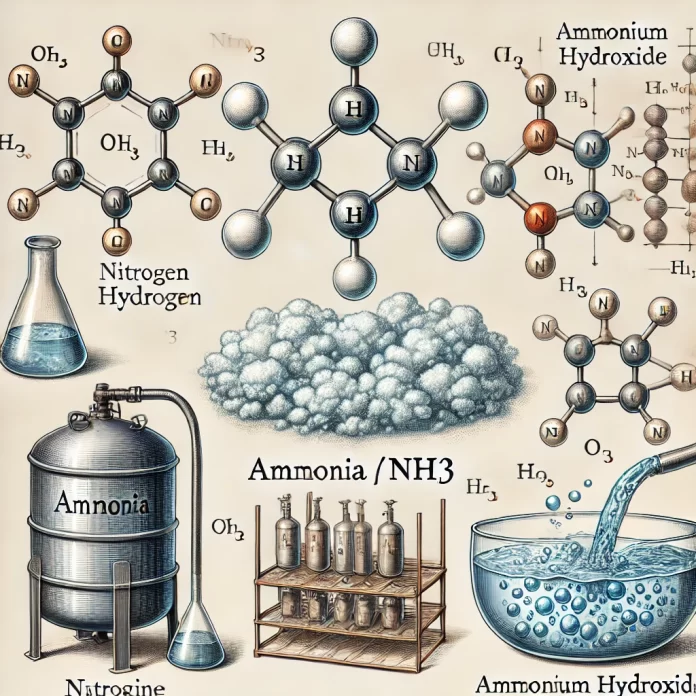
Ammonia is a colorless, pungent gas composed of nitrogen and hydrogen. It is a naturally occurring compound found in the environment, animal waste, and biological processes. Ammonia is widely used in agriculture, industry, and household cleaning products.

Physical & Chemical Properties:

  • State: Gas at room temperature
  • Odor: Strong, sharp, and pungent
  • Solubility: Highly soluble in water, forming ammonium hydroxide (NH₄OH)
  • Boiling Point: -33.34°C (-28.01°F)
  • pH: Basic (alkaline) in aqueous solution

Natural Occurrence & Production:
Ammonia is produced naturally through the decomposition of organic matter, nitrogen fixation by bacteria, and metabolic processes in animals and plants. Industrially, it is synthesized using the Haber-Bosch process, which combines nitrogen and hydrogen under high pressure and temperature.

Uses & Applications:

  • Agriculture: Used in fertilizers (ammonium nitrate, urea) to supply nitrogen for plant growth.
  • Chemical Industry: A precursor in the production of nitric acid, explosives, and synthetic fibers.
  • Cleaning Products: Found in household and industrial cleaners due to its grease-cutting and disinfectant properties.
  • Refrigeration: Used as a refrigerant gas (R717) in industrial cooling systems.
  • Water Treatment: Helps neutralize acidic contaminants and is used in wastewater treatment.

Health & Environmental Impact:

  • Exposure Risks: High concentrations can cause irritation to the eyes, nose, throat, and lungs. Severe exposure may lead to respiratory distress or chemical burns.
  • Environmental Effects: Ammonia released into the environment can contribute to eutrophication in water bodies, affecting aquatic ecosystems. However, it is also a vital component of the nitrogen cycle.

See Also:

  • Haber-Bosch Process
  • Ammonium Compounds
  • Nitrogen Cycle
spot_img

lOOKING FOR MORE WORK?

The free and easy way to get more customers. Just join Find Local Gardeners.

BoltingCategory: Plant Physiology / Growth Disorders Definition:Bolting is the premature production of a flowering stem in plants before the crop has been harvested, typically triggered...
Definition:Blotchy ripening is a physiological disorder primarily observed in fleshy fruits—most notably in tomatoes (Solanum lycopersicum)—where patches of the fruit fail to develop normal...
Blossom End Rot (noun; plant pathology, horticulture) Definition: Blossom end rot is a physiological disorder affecting the fruit of various flowering plants—most notably tomatoes, peppers, aubergines...
Blind (adjective, noun; horticulture, botany) Definition (Botany & Horticulture): In a botanical or horticultural context, blind refers to a plant shoot, bud, or flowering stem that...
(noun; pathology, botany) Definition:In botany, blight refers to a rapid and extensive discoloration, wilting, or death of plant tissues—typically leaves, stems, or flowers—caused by...

Continue reading

Bolting

BoltingCategory: Plant Physiology / Growth Disorders Definition:Bolting is the premature production of a flowering stem in plants before the crop has been harvested, typically triggered by environmental stress. It is especially common in leafy vegetables such as lettuce (Lactuca sativa),...

Blotchy Ripening

Definition:Blotchy ripening is a physiological disorder primarily observed in fleshy fruits—most notably in tomatoes (Solanum lycopersicum)—where patches of the fruit fail to develop normal coloration during the ripening process. This results in irregular, often green, yellow, or grey-green areas...

Blossom End Rot

Blossom End Rot (noun; plant pathology, horticulture) Definition: Blossom end rot is a physiological disorder affecting the fruit of various flowering plants—most notably tomatoes, peppers, aubergines (eggplants), and courgettes (zucchini). It is characterized by a dark, sunken, leathery patch at the...

SUBSCRIBE TO OUR YOUTUBE CHANNEL

Plant advice for unusual species plus updates from our tropical garden

SUBSCRIBE