
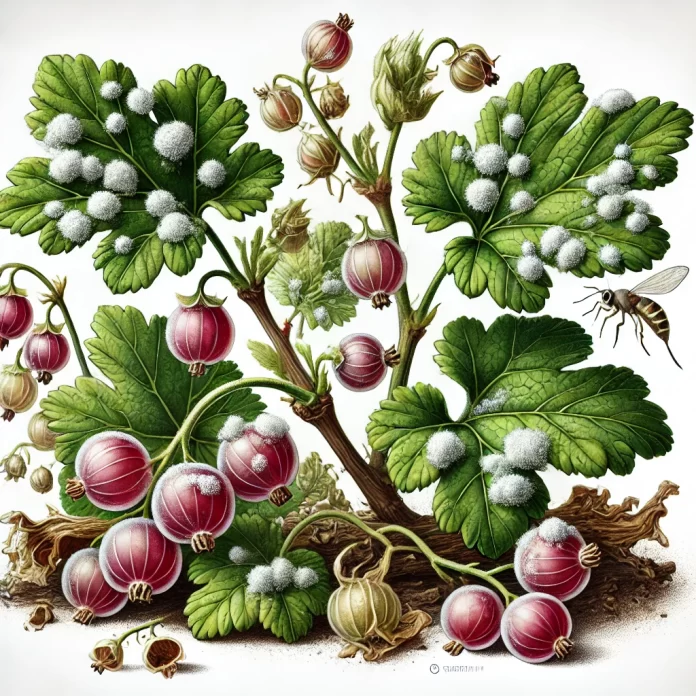
American Gooseberry Mildew
Scientific Name: Podosphaera leucotricha (formerly Sphaerotheca mors-uvae)
Definition:
American gooseberry mildew is a fungal disease affecting gooseberries (Ribes spp.) and currants, caused by Podosphaera leucotricha. It primarily affects foliage, shoots, and fruit, covering them in a powdery white or grey fungal growth. The disease originated in North America and spread to Europe, where it has become a serious problem for commercial and home growers.
Description & Symptoms:
- Initial infection appears as white, powdery patches on young leaves, shoots, and fruit.
- Infected areas may turn brown or reddish as the fungus matures.
- Leaves become distorted and may drop prematurely.
- Shoots can be stunted, affecting overall plant vigor.
- Fruits may develop a rough, russeted surface, reducing quality and yield.
Life Cycle & Spread:
The fungus overwinters in dormant buds and releases spores in spring, infecting new growth. It spreads rapidly in warm, humid conditions, particularly in dense plantings with poor air circulation. The disease is most severe in late spring and early summer.
Control & Management:
- Cultural Methods:
- Prune to improve air circulation and reduce humidity around plants.
- Remove and destroy infected shoots in winter to reduce overwintering spores.
- Grow resistant gooseberry varieties where available.
- Chemical Control:
- Sulfur-based fungicides and systemic fungicides can help manage outbreaks, especially in early spring.
- Environmental Management:
- Avoid excessive nitrogen fertilization, which promotes soft, susceptible growth.
Historical Context:
American gooseberry mildew was first recorded in Europe in the late 19th century, following the introduction of North American gooseberry cultivars. The disease devastated European gooseberry production, leading to the development of resistant varieties.
See Also:
- Podosphaera leucotricha
- Gooseberry Diseases
- Powdery Mildew Management in Fruit Crops
Would you like an illustration to go with this entry?