Types of Agapanthus
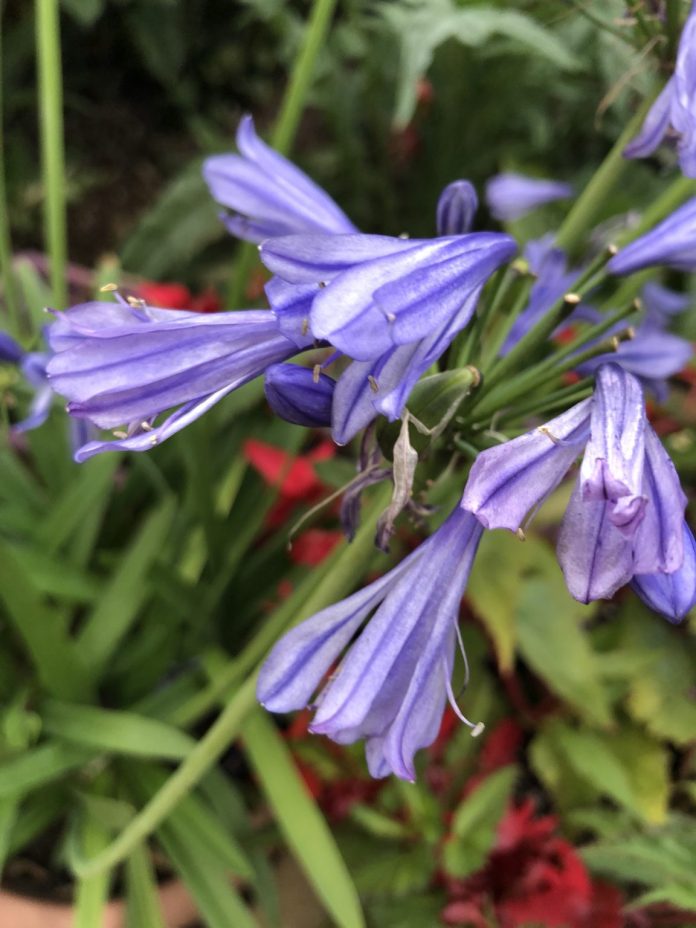
Agapanthus are generally divided into two main groups based on their foliage habits: evergreen and deciduous. Each has distinct characteristics that influence where and how they are best grown in UK gardens.
1. Evergreen Agapanthus
- Foliage: Retains its strap-like, green leaves all year in mild UK climates, providing architectural structure even in winter.
- Hardiness: RHS H4 – hardy in southern and coastal areas; requires mulch or winter protection in colder regions.
- Flowering: Usually June–August, sometimes lasting into September in sheltered locations.
- Uses: Ideal for borders, containers, or coastal gardens where winter foliage adds year-round interest.
- Popular Cultivars:
- ‘Blue Heaven’ – deep blue flowers, vigorous growth
- ‘Black Panther’ – dark violet-blue flowers, compact clump
- ‘Peter Pan’ – white flowers, very compact, perfect for pots
- ‘Twister’ – violet-blue striped flowers, early-flowering
2. Deciduous Agapanthus
- Foliage: Leaves die back in winter, leaving bare crowns; regrowth begins in spring.
- Hardiness: RHS H5–H6 – hardy across most of the UK; less affected by frost due to leaf dieback.
- Flowering: June–August; may bloom slightly later than evergreen types.
- Uses: Suitable for larger borders, gravel gardens, or mass plantings where winter leaf dieback is not a concern.
- Popular Cultivars:
- ‘Northern Star’ – violet-blue flowers, strong upright stems
- ‘Blue Danube’ – pale blue flowers, long flowering period
- ‘Sky Blue’ – compact deciduous type, reliable flowering
- ‘Regal Pearl’ – white flowers, early flowering, ideal for border highlights
Key Differences
| Feature | Evergreen | Deciduous |
|---|---|---|
| Winter foliage | Retained | Dies back |
| Winter interest | High | Low |
| Frost tolerance | Slightly less hardy | Generally hardier |
| Flowering time | Slightly earlier | Slightly later |
| Best for | Containers, coastal, tropical-style borders | Large borders, gravel gardens, mass plantings |
Summary:
- Evergreen Agapanthus: Best where winter structure is important or for container planting; needs some winter protection.
- Deciduous Agapanthus: Hardier and suited to most UK gardens; ideal for borders or mass planting where winter dieback is acceptable.
Hardy Agapanthus Varieties Suitable for UK Gardens
Agapanthus ‘Polar Ice’
- Description: ‘Polar Ice’ features elegant white flowers with a hint of blue at the base, making it a striking addition to any garden.
- Hardiness: Suitable for UK climate (equivalent to USDA Zones 6-10).
Agapanthus ‘Cold Hardy White’
- Description: This variety produces stunning white flowers and is known for its cold hardiness.
- Hardiness: Suitable for UK climate (equivalent to USDA Zones 6-10).
Agapanthus ‘Cold Hardy Blue’
- Description: This variety has blue flowers and is bred for enhanced cold hardiness.
- Hardiness: Suitable for UK climate (equivalent to USDA Zones 6-10).
Agapanthus ‘Headbourne Hybrids’
- Description: A group of hybrids known for their resilience and cold hardiness, producing blue to violet flowers.
- Hardiness: Suitable for UK climate (equivalent to USDA Zones 6-9).
Agapanthus ‘Blue Heaven’
- Description: Noted for its compact growth and bright blue flowers.
- Hardiness: Suitable for UK climate (equivalent to USDA Zones 6-10).
Agapanthus inapertus ‘Graskop’
- Description: Known for its pendulous blue flowers and tolerance of cooler temperatures.
- Hardiness: Suitable for UK climate (equivalent to USDA Zones 6-9).
Agapanthus ‘Peter Pan’
- Description: A dwarf variety with blue flowers, hardy and compact, suitable for smaller gardens or containers.
- Hardiness: Suitable for UK climate (equivalent to USDA Zones 7-10).
Tips for Growing Agapanthus in a UK Garden
Planting Location:
- Soil: Ensure well-draining soil. Agapanthus dislike waterlogged conditions, which are more common in the UK due to frequent rain.
- Sunlight: Choose a spot with full sun to partial shade. Agapanthus thrive in sunny locations but can tolerate some shade.
Winter Protection:
- Mulching: Apply a thick layer of mulch (such as straw or bark chips) around the base of the plant in late autumn to protect the roots from frost.
- Covering: In very cold regions, cover the plants with horticultural fleece or bring potted plants indoors during severe frosts.
Watering:
- Summer: Water regularly during the growing season, ensuring the soil is moist but not waterlogged.
- Winter: Reduce watering significantly in winter to prevent root rot, as the plants are dormant and need less moisture.
Feeding:
- Spring and Summer: Use a balanced, slow-release fertilizer in spring and again in mid-summer to promote healthy growth and flowering.
- Autumn: Avoid feeding in autumn to prevent soft growth that could be damaged by frost.
Dividing:
- Timing: Divide the clumps every few years in spring or early summer to rejuvenate the plants and encourage better flowering.
- Method: Lift the clumps carefully, divide them with a sharp spade, and replant the divisions at the same depth.
Containers:
- Pots: If growing in pots, use a well-draining compost mix and ensure the container has drainage holes.
- Mobility: Potted Agapanthus can be moved to a sheltered location or greenhouse during winter to provide additional protection.
Agapanthus – Grow Guide
Common name: African Lily, Lily of the Nile
Family: Amaryllidaceae
Plant type: Herbaceous perennial (tender evergreen or deciduous, depending on variety)
Hardiness: RHS H4–H5 – hardy in milder parts of the UK; frost protection recommended for tender evergreen types
Height & spread: 45 cm–1.5 m tall × 30–90 cm wide (depending on cultivar)
Overview
Agapanthus are architectural, clump-forming perennials prized for their striking umbels of trumpet-shaped flowers and strap-like evergreen or semi-evergreen foliage. They are ideal for borders, containers, or coastal gardens, and their blue, purple, or white flowers add a summer highlight.
Position
- Full sun for best flowering; tolerates partial shade
- Sheltered from strong winds to protect flower stems
- Performs well in borders, gravel gardens, patios, or containers
Soil
- Fertile, well-drained soil
- Neutral to slightly alkaline pH preferred (6.5–7.5)
- Avoid heavy, waterlogged soils, especially in winter
- Incorporate grit or sand in heavy clay soils to improve drainage
Planting
- Plant clumps in spring after risk of severe frost
- Space 30–60 cm apart, depending on the cultivar
- Large containers need good drainage and slightly sandy compost
Watering
- Water moderately during active growth and flowering
- Reduce watering in autumn and winter
- Avoid waterlogging, which may cause crown rot
Feeding
- Apply a balanced liquid fertiliser in spring and early summer
- Slow-release fertiliser at planting promotes strong growth
- Avoid high-nitrogen feeds, which encourage lush foliage but reduce flowering
Growth & Habit
- Clump-forming, with strap-like leaves forming a basal rosette
- Flower stems rise 0.5–1.5 m above the foliage
- Evergreen varieties provide year-round structure in mild climates; deciduous types die back in winter
Flowering
- Months: June–August (may extend to September in sheltered sites)
- Flowers: Blue, purple, or white, in rounded umbels atop tall stems
- Excellent for cut flowers, borders, and architectural interest
Maintenance
- Remove dead flower stems after flowering
- Divide clumps every 3–4 years to maintain vigour
- Mulch in winter for frost protection, especially for tender evergreen varieties
- Container plants may need winter protection
Pests & Problems
- Generally trouble-free
- Occasional slugs, snails, or aphids
- Crown rot may occur if soil is poorly drained
Propagation
- Division of clumps in spring or autumn
- Seed: Possible but slow; cultivars may not breed true
- Offsets develop around the base and can be separated for propagation
Garden & Display Use
- Mixed borders and tropical-style planting
- Container planting for patios or terraces
- Coastal and sunny gardens
- Companion plants:
- Phormium
- Cannas
- Cordyline
- Agaves or ornamental grasses
Quick Reference Table
| Feature | Details |
|---|---|
| Hardiness | RHS H4–H5 – hardy in mild areas; frost protection for tender types |
| Height | 45 cm–1.5 m |
| Spread | 30–90 cm |
| Flowering | June–August (sometimes to September) |
| Position | Full sun; partial shade tolerated |
| Soil | Well-drained, fertile; pH 6.5–7.5 |
| Water | Moderate in growth; reduce after flowering |
| Feeding | Balanced fertiliser in spring; slow-release at planting |
| Propagation | Division; seed (slow) |
| Maintenance | Remove spent flower stems; divide every 3–4 years |
| Best feature | Architectural flower umbels and strap-like foliage for summer interest |
Agapanthus: Evergreen vs Deciduous + Best Types
Evergreen Agapanthus
- Habit: Retains its strap-like foliage year-round in mild UK climates; provides architectural interest even in winter.
- Hardiness: RHS H5 – hardy in southern and coastal areas; requires mulch or frost protection in colder regions.
- Flowering: Typically June–August, sometimes into September in sheltered sites.
- Best for: Borders, mixed perennial beds, containers, coastal gardens.
- Top Cultivars:CultivarFlower ColourHeightNotes‘Blue Heaven’Deep blue90 cmVigorous, reliable summer flowering‘Black Panther’Dark violet-blue1 mLarge umbels, compact clump‘Twister’Violet-blue with white stripe60 cmEarly-flowering, bushy habit‘Peter Pan’White45 cmVery compact, ideal for containers
Deciduous Agapanthus
- Habit: Leaves die back in winter, leaving bare crowns; regrowth in spring.
- Hardiness: RHS H5–H6 – hardy throughout most of the UK; less affected by frost than evergreen types.
- Flowering: June–August; blooms often slightly later than evergreen varieties due to delayed spring growth.
- Best for: Borders where winter leaf dieback is acceptable, gravel gardens, or larger landscape plantings.
- Top Cultivars:CultivarFlower ColourHeightNotes‘Northern Star’Violet-blue1 mDeciduous, strong upright stems‘Blue Danube’Pale blue90 cmLong flowering period, hardy‘Sky Blue’Blue80 cmCompact deciduous type‘Regal Pearl’White60 cmEarly flowering, striking contrast in borders
Key Differences
| Feature | Evergreen | Deciduous |
|---|---|---|
| Winter foliage | Retained | Dies back |
| Winter interest | High | Low |
| Frost tolerance | Slightly less hardy | Generally hardier |
| Garden use | Coastal, container, tropical-style borders | Larger borders, mass plantings, gravel gardens |
| Flowering | Slightly earlier, long-lasting | Slightly later, robust spikes |
Tips for UK Growers
- Evergreen types: Mulch in winter to protect crowns in northern or exposed gardens.
- Deciduous types: Can be planted in heavier soils as leaves die back and crowns are less sensitive to frost.
- Containers: Evergreen types look better year-round; deciduous types require empty pot space in winter.
- Feeding: Balanced fertiliser in spring and summer; avoid high-nitrogen feeds to encourage flowering.
.