
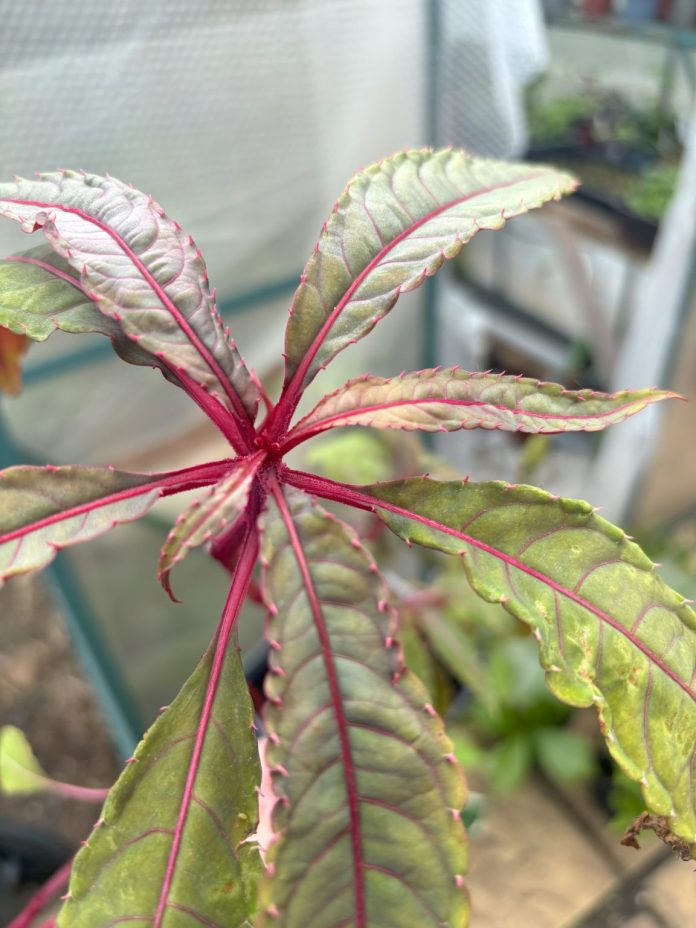
Impatiens omeiana ‘Pink Nerves’ is a captivating perennial known for its striking variegated foliage and delicate pink flowers. Native to China, this plant is perfect for adding color and texture to shaded garden areas. Propagating Impatiens omeiana ‘Pink Nerves’ through cuttings is a rewarding and efficient way to expand your garden. Here’s how to successfully take and grow cuttings from this beautiful plant.
Understanding Impatiens omeiana ‘Pink Nerves’
Impatiens omeiana ‘Pink Nerves’ is part of the Balsaminaceae family and thrives in moist, well-drained soil in partial to full shade. It’s valued for its ornamental leaves, which are green with striking silver veins, and its charming pink flowers that appear in late summer to early autumn. This plant typically grows to about 30-45 cm (12-18 inches) tall and spreads via rhizomes, making it an excellent ground cover for shady spots.
When to Take Cuttings
The best time to take cuttings from Impatiens omeiana ‘Pink Nerves’ is in late spring to early summer when the plant is actively growing. This timing ensures that the cuttings have the best chance of rooting and establishing themselves before the colder months.
Materials Needed
- Sharp, sterile scissors or pruning shears
- Rooting hormone (optional but recommended)
- Small pots or seed trays
- Well-draining potting mix
- Clear plastic bags or a propagation dome
- Watering can or spray bottle
Steps to Take Cuttings
- Select Healthy Stems: Choose healthy, non-flowering stems for cuttings. The stems should be free from disease and pests and should have several sets of leaves.
- Make the Cut: Using sharp, sterile scissors or pruning shears, cut a 10-15 cm (4-6 inch) section of the stem just below a leaf node (the point where a leaf attaches to the stem). This is where roots are most likely to form.
- Remove Lower Leaves: Remove the lower leaves from the cutting, leaving only a few leaves at the top. This reduces water loss and helps the cutting focus its energy on forming roots.
- Optional: Apply Rooting Hormone: Dip the cut end of the stem into rooting hormone to enhance root development. This step is optional but can increase the success rate of your cuttings.
- Plant the Cutting: Fill small pots or seed trays with a well-draining potting mix. Make a hole in the soil with a pencil or stick and insert the cutting, ensuring that the cut end is well-covered and the cutting is upright. Firm the soil gently around the base of the cutting.
- Water and Cover: Water the cuttings lightly to settle the soil. Cover the pots or trays with clear plastic bags or a propagation dome to create a humid environment, which helps prevent the cuttings from drying out.
- Provide Proper Conditions: Place the cuttings in a warm, bright location out of direct sunlight. Maintain high humidity by misting the cuttings regularly and ensuring the plastic cover does not touch the leaves. Keep the soil consistently moist but not waterlogged.
Caring for the Cuttings
- Check for Root Development: After a few weeks, gently tug on the cuttings to check for resistance, indicating root development. Once roots are established, you can remove the plastic cover.
- Transplanting: When the cuttings have developed a strong root system, they can be transplanted into individual pots or directly into the garden. Gradually acclimate them to outdoor conditions before planting them in their permanent location.
- Ongoing Care: Water the newly transplanted plants regularly and provide the same care as the parent plant, ensuring they receive adequate moisture and shade.
Conclusion
Propagating Impatiens omeiana ‘Pink Nerves’ through cuttings is a straightforward and effective way to increase your collection of this stunning plant. By following these steps, you can successfully grow new plants that will thrive and add beauty to your garden. Whether you are an experienced gardener or a novice, taking cuttings from Impatiens omeiana ‘Pink Nerves’ is a rewarding gardening project that will enhance your landscape with its unique foliage and charming flowers.
Impatiens omeiana ‘Pink Nerves’ – Grow Guide
Common name: Hardy Impatiens
Family: Balsaminaceae
Plant type: Rhizomatous perennial
Hardiness: RHS H6 – fully hardy throughout the UK
Height & spread: 30–45 cm tall × 45–60 cm wide
Overview
Impatiens omeiana ‘Pink Nerves’ is a highly ornamental, shade-loving perennial grown for its lush, lance-shaped green leaves marked with vivid pink veins. Originating from woodland areas of China, it is valued far more for its striking foliage than its modest flowers, making it an excellent choice for damp, shady borders and woodland gardens.
Position
- Partial to full shade
- Best colour in bright shade or dappled light
- Avoid full sun, which can scorch foliage
Soil
- Moist, humus-rich, well-drained soil
- Slightly acidic to neutral preferred (pH 5.5–7.0)
- Thrives in woodland conditions with plenty of organic matter
Planting
- Plant in spring or early autumn
- Space plants 45–60 cm apart
- Mulch well after planting to retain moisture
Watering
- Keep soil consistently moist, especially in dry spells
- Does not tolerate drought
- Mulching is essential in summer
Feeding
- Apply garden compost or leaf mould in spring
- Light feed with a balanced fertiliser in early summer if growth is weak
- Avoid over-feeding, which may reduce leaf colour
Growth & Habit
- Spreading, rhizomatous habit
- Forms a dense, leafy ground cover over time
- Dies back completely in winter and re-emerges in late spring
Flowering
- Months: July–August
- Flowers: Small, pale yellow, hooded blooms
- Flowers are subtle and secondary to foliage interest
Maintenance
- Cut back dead growth in late autumn or early spring
- Mulch annually to conserve moisture and improve soil structure
- Once established, plants require little intervention
Pests & Problems
- Generally pest-free
- Occasional slugs and snails on young growth
- Leaf scorch if soil dries out or if exposed to sun
Propagation
- Division of rhizomes in spring
- Can also self-seed lightly in ideal conditions
- Easy to propagate and share
Garden & Display Use
- Woodland and shade borders
- Damp, shaded areas
- Excellent underplanting for shrubs and trees
- Pairs well with:
- Hostas
- Ferns
- Rodgersia
- Brunnera
Quick Reference Table
| Feature | Details |
|---|---|
| Hardiness | RHS H6 |
| Height | 30–45 cm |
| Spread | 45–60 cm |
| Flowering | July–August |
| Position | Partial to full shade |
| Soil | Moist, humus-rich; pH 5.5–7.0 |
| Water | High moisture requirement |
| Feeding | Compost in spring |
| Propagation | Division; light self-seeding |
| Best feature | Bright pink-veined foliage for shaded gardens |