Cardoons (Cynara cardunculus) can be relatively easy to grow, especially if you have some gardening experience and the right conditions. Cardoons come in several varieties, each with distinct characteristics. Here are some popular varieties:
1. ‘Gigante di Romagna’
- Description: This is a large variety known for its robust growth and thick, meaty stems.
- Origin: Italy
- Uses: Ideal for blanching and eating the tender inner stalks.
2. ‘Porto Spineless’
- Description: As the name suggests, this variety has fewer spines, making it easier to handle and harvest.
- Origin: Portugal
- Uses: Popular for its tender stems and ease of preparation.
3. ‘Red Cardoon’ (Cynara cardunculus var. altilis)
- Description: This variety features striking red or purple-tinged stems and foliage.
- Origin: Likely a cultivated variety selected for its color.
- Uses: Adds ornamental value to gardens and is also edible.
4. ‘Cardon Plein Blanc Inerme’
- Description: A French variety known for its broad, white, and tender stalks.
- Origin: France
- Uses: Excellent for blanching and cooking, known for its mild flavor.
5. ‘Gobbo di Nizza’
- Description: This variety is known for its curved, ribbed stems that are tender and flavorful.
- Origin: Italy
- Uses: Often used in Italian cuisine, especially for braising and frying.
6. ‘Tunisian Cardoon’
- Description: A variety adapted to warmer climates, with robust growth and thick stems.
- Origin: Tunisia
- Uses: Commonly used in Mediterranean cooking.
Growing Tips for Different Varieties
- Climate Adaptation: Choose a variety suited to your local climate. For example, ‘Tunisian Cardoon’ might be better for hot, dry areas, while ‘Gigante di Romagna’ could thrive in milder conditions.
- Blanching Needs: Some varieties require more extensive blanching for the best flavor, such as ‘Cardon Plein Blanc Inerme’.
- Pest Resistance: ‘Porto Spineless’ is often preferred for its ease of handling and reduced spines, which can also make it less prone to pests that target the spiny foliage.
By selecting the right variety for your garden conditions and culinary preferences, you can enjoy both the visual appeal and unique flavors of cardoons.
Growing Conditions
- Climate: Cardoons thrive in Mediterranean climates. They prefer mild winters and hot summers. They can tolerate light frosts but may need protection in colder regions.
- Soil: They prefer well-drained, fertile soil. Adding compost or organic matter can improve soil quality.
- Sunlight: Full sun is ideal for cardoons. They need at least 6-8 hours of direct sunlight daily.
Planting
- Starting Seeds: You can start cardoon seeds indoors about 6-8 weeks before the last frost date. Transplant seedlings outdoors when they are about 6 inches tall and the danger of frost has passed.
- Spacing: Plant seedlings 3-4 feet apart to give them plenty of space to grow, as they can become quite large.
- Watering: Keep the soil consistently moist but not waterlogged. Once established, cardoons are relatively drought-tolerant but will produce better with regular watering.
Maintenance
- Fertilizing: Feed cardoons with a balanced fertilizer or compost in the growing season to promote vigorous growth.
- Weeding: Keep the area around the plants free of weeds, which can compete for nutrients and water.
- Pests and Diseases: Cardoons are generally pest-resistant but watch for aphids and snails. Good garden hygiene and monitoring can prevent most problems.
Harvesting
- Blanching: For the best flavor, blanch the stems about a month before harvesting by tying the leaves together and wrapping the stems in paper or cloth to exclude light.
- Timing: Harvest cardoons in late summer or early fall, before the first heavy frost.
Additional Tips
- Mulching: Mulch around the plants to retain moisture and suppress weeds.
- Pruning: Remove any dead or yellowing leaves to maintain plant health.
Overall, cardoons can be a rewarding plant to grow with the right care and conditions. They are not as common as some other vegetables, so they can be a unique addition to your garden.
Cardoon (Cynara cardunculus) – Grow Guide
Common name: Cardoon
Family: Asteraceae
Plant type: Architectural perennial vegetable / ornamental
Hardiness: RHS H5 – hardy throughout most of the UK once established
Height & spread: 1.5–2 m tall × 1–1.5 m wide
Overview
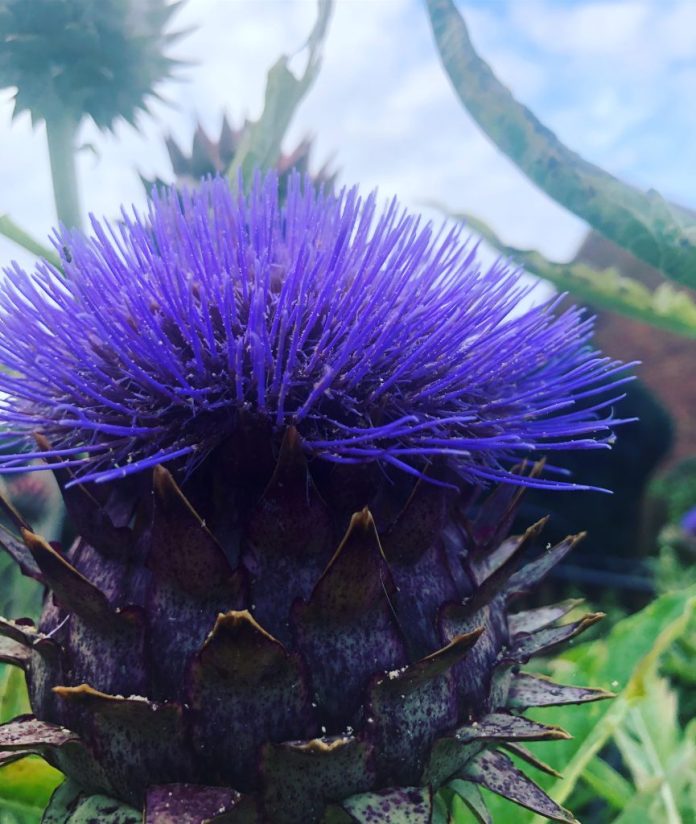
Cardoons are bold, architectural plants with large, deeply cut, silvery-grey leaves and impressive thistle-like purple flowers. Closely related to globe artichokes, they are grown both as ornamental statement plants and as a traditional edible crop, prized for their blanched leaf stalks. They are ideal for dramatic borders, vegetable plots, and Mediterranean-style gardens.
Position
- Full sun for best growth and leaf colour
- Sheltered from strong winds, as leaves are large and easily torn
- Suitable for borders, ornamental kitchen gardens, or mixed planting schemes
Soil
- Deep, fertile, well-drained soil
- Prefers neutral to slightly alkaline conditions (pH 6.5–7.5)
- Improve soil with well-rotted manure or garden compost before planting
- Avoid waterlogged ground, especially in winter
Planting
- Sow seeds indoors in March–April or direct outdoors in late spring
- Transplant young plants once frost risk has passed
- Space plants 1–1.5 m apart to allow full development
- Plant crowns at soil level and firm in well
Watering
- Water regularly during the first growing season to establish deep roots
- Once established, cardoons are fairly drought tolerant
- Avoid letting soil dry out completely in hot weather
Feeding
- Heavy feeders – apply organic fertiliser or compost in spring
- Feed monthly during the growing season with a balanced fertiliser
- Mulch annually to retain moisture and improve soil structure
Growth & Habit
- Forms a large basal clump of silver-grey, spiny foliage
- Upright, architectural habit
- Flower stems appear in the second year if grown as a perennial
- Can reach full size within one growing season
Flowering
- Months: July–September (usually second year onwards)
- Flowers: Large, purple, thistle-like blooms loved by pollinators
- Flowers can be left for structure or cut before opening to encourage leaf growth
Maintenance
- Cut back flower stems after blooming to maintain shape
- In colder areas, mulch crowns heavily in autumn for winter protection
- Old plants can be rejuvenated by dividing in spring
- Wear gloves when handling due to spiny foliage
Pests & Problems
- Generally trouble-free
- Occasional slugs and snails on young growth
- Crown rot may occur in poorly drained soils
- Aphids may appear on flower stems
Propagation
- Seed: Most common and reliable method
- Division: Possible in spring, though large plants can be difficult to split
- Allow some plants to flower if seed saving is desired
Edible Use (Optional)
- Leaf stalks are traditionally blanched by tying leaves together and excluding light
- Harvest stalks in autumn or early winter
- Used in Mediterranean and Italian cooking
Garden & Display Use
- Architectural focal point in borders
- Mediterranean-style planting schemes
- Ornamental kitchen gardens
- Companion plants:
- Verbascum
- Fennel
- Grasses
- Globe artichokes
Quick Reference Table
| Feature | Details |
|---|---|
| Hardiness | RHS H5 |
| Height | 1.5–2 m |
| Spread | 1–1.5 m |
| Flowering | July–September |
| Position | Full sun, sheltered |
| Soil | Deep, fertile, free-draining; pH 6.5–7.5 |
| Water | Regular during establishment |
| Feeding | Heavy feeder; compost and fertiliser |
| Propagation | Seed; division |
| Best feature | Dramatic silver foliage and bold structure |
| Extra use | Ornamental and edible |