
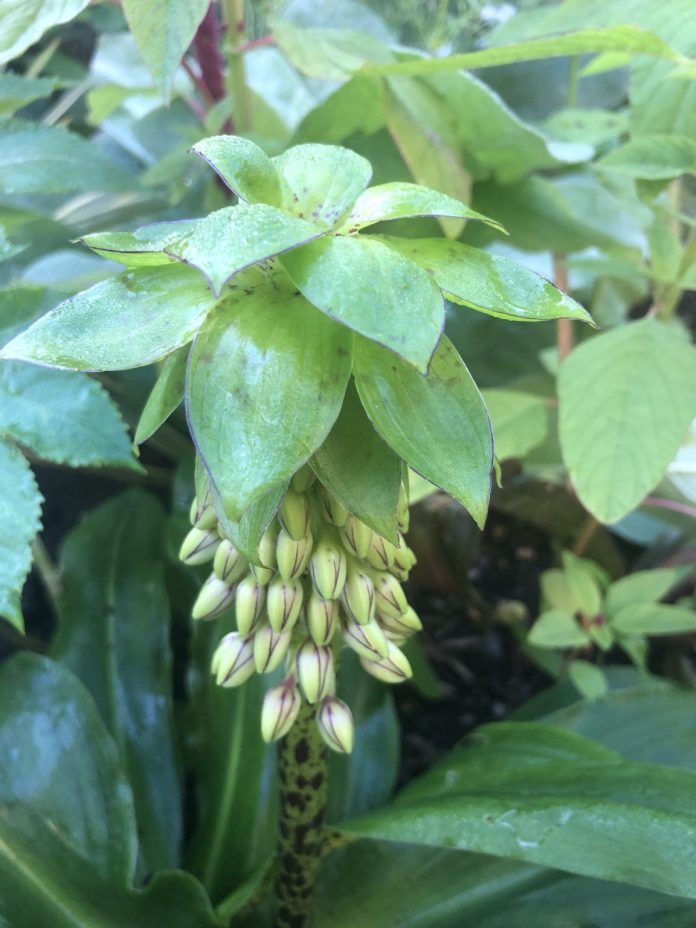
Eucomis bicolour, commonly known as the pineapple lily, typically comes back every year. This plant is a perennial, meaning it can live for more than two years and will regrow each season from its underground bulb.
Is Eucomis hardy in the UK?
However, its ability to come back annually can depend on the climate and growing conditions:
- In warmer climates (USDA zones 7-10): Eucomis bicolor can be left in the ground year-round, and it will naturally re-emerge each spring.
- In colder climates: The bulbs need to be dug up and stored indoors during the winter to protect them from hard frost. They can then be replanted in the spring after the danger of frost has passed. In the UK the bulbs can withstand a mild winter in the ground if mulched
Proper care, including well-drained soil, adequate sunlight, and appropriate watering, can help ensure the plant’s health and its ability to return each year.
Eucomis bicolor – Grow Guide
Common name: Pineapple Lily
Family: Asparagaceae
Plant type: Bulbous perennial
Hardiness: RHS H4 – hardy in southern UK; frost protection needed in colder areas
Height & spread: 40–60 cm tall × 20–30 cm wide
Overview
Eucomis bicolor is a striking summer-flowering bulb with upright spikes of star-shaped flowers topped with a “pineapple-like” tuft of bracts. Native to South Africa, it brings a tropical flair to borders, patio containers, or conservatory displays. The flowers are typically greenish-white with purple tips, and the foliage forms a basal rosette of strap-like leaves.
Position
- Full sun for best flowering
- Tolerates partial shade, but flower colour and size may be reduced
- Ideal for borders, sunny containers, or raised beds
Soil
- Well-drained soil is essential to prevent bulb rot
- Fertile, slightly acidic to neutral soil (pH 6.0–7.0) preferred
- Incorporate grit or sand if drainage is poor
Planting
- Plant bulbs in spring after the risk of frost has passed
- Depth: 10–12 cm, with 15–20 cm spacing
- Can also be lifted and potted for display in containers
Watering
- Keep soil evenly moist during active growth and flowering
- Reduce watering after foliage dies back in autumn
- Avoid waterlogging, particularly in winter
Feeding
- Apply a balanced liquid fertiliser every 2–3 weeks during the growing season
- Container plants benefit from monthly feeding
- Avoid over-fertilising, which can encourage lush foliage at the expense of flowers
Growth & Habit
- Forms a basal rosette of strap-like leaves
- Produces erect flower spikes 40–60 cm tall, topped with a tuft of bracts
- Flowers are fragrant and attract pollinators
Flowering
- Months: July–September
- Flowers: Greenish-white with purple tips, arranged in tight clusters resembling a pineapple crown
- Excellent for cut flowers and late-summer colour
Maintenance
- Remove spent flowers to tidy plants
- Allow foliage to die back naturally to nourish bulbs for the next season
- Mulch bulbs in colder UK regions for frost protection
- Container-grown bulbs may need lifting and overwintering indoors in colder areas
Pests & Problems
- Generally trouble-free
- Occasional slugs or snails
- Bulbs can rot in poorly drained soils
Propagation
- Offsets: Separate young bulbs from the parent after flowering or during dormancy
- Seed: Rarely used; slow and less reliable for garden performance
Garden & Display Use
- Sunny borders and tropical-style plantings
- Containers on patios, terraces, or conservatories
- Mixed with late-season perennials for colourful summer displays
- Companion plants:
- Crocosmia
- Cannas
- Phormium
- Agapanthus
Quick Reference Table
| Feature | Details |
|---|---|
| Hardiness | RHS H4 – hardy in southern UK; frost protection needed in colder regions |
| Height | 40–60 cm |
| Spread | 20–30 cm |
| Flowering | July–September |
| Position | Full sun; partial shade tolerated |
| Soil | Well-drained, fertile; pH 6.0–7.0 |
| Water | Evenly moist during growth; reduce after foliage dies back |
| Feeding | Balanced liquid fertiliser every 2–3 weeks |
| Propagation | Offsets; seed (rare) |
| Maintenance | Remove spent flowers; allow foliage to die back; mulch for frost protection |
| Best feature | Architectural pineapple-like flower spikes with tropical appeal |