
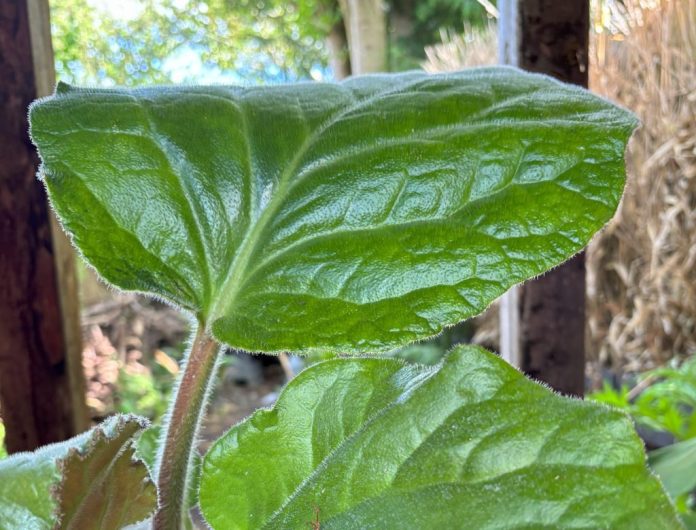
Bergenia ciliata ‘Wilton’ is an enchanting perennial that brings a touch of exotic allure to any garden. Known for its large, heart-shaped leaves and charming pink flowers, this plant is particularly well-suited for UK tropical style gardening. In this guide, we will explore the history, care requirements, and relevance of Bergenia ciliata ‘Wilton’ in creating a lush, tropical atmosphere in your garden.
History and Background
Bergenia ciliata, commonly known as Himalayan or Winter Bergenia, is native to the rocky slopes and forests of the Himalayas. The variety ‘Wilton’ has been specifically bred for its striking foliage and vibrant blooms. Bergenias were introduced to Europe in the early 19th century and have since become a staple in many gardens due to their hardiness and ornamental value.
Characteristics
Bergenia ciliata ‘Wilton’ is distinguished by its:
- Leaves: Large, leathery, and heart-shaped with serrated edges. They turn a rich bronze color in autumn, adding seasonal interest.
- Flowers: Pink, bell-shaped flowers that bloom in early spring, providing an early burst of color.
- Growth Habit: Clump-forming perennial that spreads slowly, creating a dense ground cover.
Cultivation and Care
Growing Bergenia ciliata ‘Wilton’ in the UK is relatively straightforward, thanks to its adaptability to various conditions. Here are some essential tips for successful cultivation:
1. Site Selection
- Light: Bergenias prefer partial shade but can tolerate full sun in cooler climates. In tropical style gardens, they can be planted under taller, shade-providing plants.
- Soil: Well-drained, humus-rich soil is ideal. They can tolerate a range of soil types, including clay, as long as it is not waterlogged.
2. Planting
- Spacing: Space plants about 30-45 cm apart to allow room for growth.
- Depth: Plant rhizomes just below the soil surface, ensuring the crown is at or slightly above ground level.
3. Watering
- Bergenias require regular watering, especially during dry spells. However, they are relatively drought-tolerant once established.
4. Feeding
- Apply a balanced, slow-release fertilizer in spring to promote healthy growth and flowering.
5. Mulching
- Mulch around the plants in autumn to conserve moisture, suppress weeds, and protect the roots from extreme cold.
6. Maintenance
- Remove spent flowers and damaged leaves to encourage new growth and maintain the plant’s appearance.
- Divide clumps every 3-4 years to prevent overcrowding and rejuvenate the plant.
Relevance to UK Tropical Style Gardening
Bergenia ciliata ‘Wilton’ is a fantastic addition to UK gardens aiming for a tropical aesthetic. Its large, bold foliage and early blooms contribute to the lush, vibrant look typical of tropical gardens. Here’s how it fits into this style:
1. Foliage Contrast
- The plant’s broad leaves provide a striking contrast to the fine textures of ferns and grasses commonly found in tropical gardens.
2. Color and Seasonal Interest
- The pink flowers add a pop of color in early spring, while the foliage’s seasonal color changes ensure year-round interest.
3. Ground Cover
- Its spreading habit makes it an excellent ground cover, helping to create a dense, layered planting scheme that is key to the tropical style.
4. Hardiness
- While tropical in appearance, Bergenia ciliata ‘Wilton’ is hardy enough to withstand UK winters, making it a practical choice for gardeners looking to create a tropical effect without the need for extensive winter protection.
Conclusion
Bergenia ciliata ‘Wilton’ is a versatile and visually appealing plant that brings a touch of the exotic to UK gardens. Its ease of care, coupled with its striking foliage and flowers, make it an excellent choice for gardeners aiming to create a lush, tropical paradise. By following the cultivation tips outlined above, you can enjoy the beauty and resilience of this Himalayan gem in your own garden.
Bergenia ciliata ‘Wilton’ – Grow Guide
Common name: Wilton Bergenia, Elephant’s Ears
Family: Saxifragaceae
Plant type: Evergreen perennial
Hardiness: RHS H5 – fully hardy throughout the UK
Height & spread: 30–45 cm tall × 45–60 cm wide
Overview
Bergenia ciliata ‘Wilton’ is a compact, clump-forming perennial valued for its thick, leathery leaves and early-spring flower spikes. Its dark green foliage often develops red or bronze tones in winter, providing year-round interest. The pink to deep magenta flowers appear in spring, attracting bees and other pollinators, making it ideal for borders, rockeries, or shaded areas.
Position
- Full sun to partial shade
- Performs well in woodland-style gardens, borders, or shaded patios
- Partial shade can protect leaves from scorching in hotter areas
Soil
- Moist, fertile, well-drained soil
- Tolerates clay, loam, or sandy soils if drainage is good
- Slightly acidic to neutral soil (pH 6.0–7.0) is ideal
Planting
- Plant in spring or autumn
- Space 45–60 cm apart for clump formation
- Mulch around the base to retain moisture and suppress weeds
Watering
- Keep soil evenly moist, particularly during establishment and flowering
- Once established, moderately drought-tolerant
- Avoid waterlogging, which can cause crown rot
Feeding
- Apply a balanced fertiliser in early spring as growth resumes
- Slow-release fertiliser at planting supports healthy clump development
Growth & Habit
- Forms dense clumps of large, rounded, slightly glossy leaves
- Leaves develop red or bronze tones in winter
- Short flower spikes rise 20–30 cm above the foliage in spring
Flowering
- Months: March–April
- Flowers: Small, cup-shaped, pink to deep magenta, clustered on upright spikes
- Excellent for early-season colour and pollinator attraction
Maintenance
- Remove dead or damaged leaves in late winter or early spring
- Divide clumps every 4–5 years to maintain vigour and create new plants
- Mulch in winter to protect roots in colder regions
Pests & Problems
- Generally trouble-free
- Occasionally affected by slugs and snails
- Leaf scorch may occur in exposed, hot sites
Propagation
- Division in spring or autumn
- Seed: Rarely used; seedlings may vary from parent plant
Garden & Display Use
- Evergreen, low-maintenance borders
- Rockeries, woodland gardens, and patio containers
- Early-season nectar source for pollinators
- Companion plants:
- Helleborus
- Heuchera
- Ferns
- Pulmonaria
Quick Reference Table
| Feature | Details |
|---|---|
| Hardiness | RHS H5 – fully hardy |
| Height | 30–45 cm |
| Spread | 45–60 cm |
| Flowering | March–April |
| Position | Full sun to partial shade |
| Soil | Moist, well-drained; pH 6.0–7.0 |
| Water | Evenly moist; avoid waterlogging |
| Feeding | Balanced fertiliser in spring; optional slow-release |
| Propagation | Division |
| Maintenance | Remove dead leaves; divide every 4–5 years |
| Best feature | Early spring flowers and evergreen foliage with winter colour |