
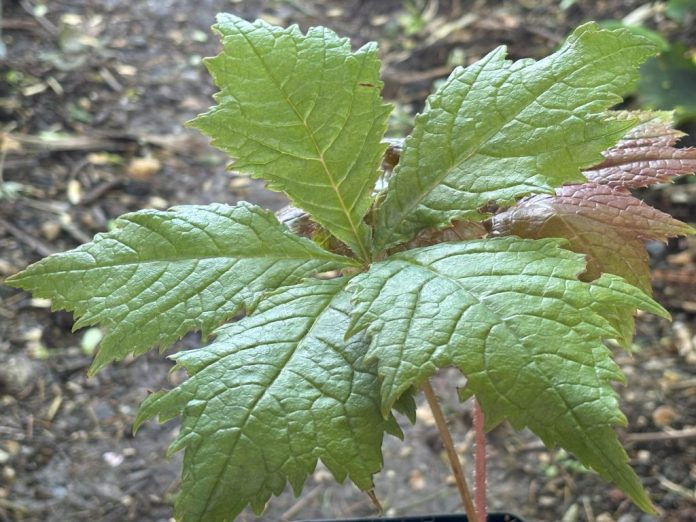
Rodgersia podophylla ‘Crûg’s Colossus’ is a spectacular perennial known for its bold, architectural foliage and creamy white flowers. Native to East Asia, this variety has been selected for its exceptional size and ornamental value. This guide will provide you with detailed information on how to successfully grow Rodgersia podophylla ‘Crûg’s Colossus’ in your garden, enhancing its beauty and ensuring its health.
History and Background
Rodgersia podophylla is native to the temperate regions of East Asia, including Japan, Korea, and northeastern China. The genus Rodgersia was named after the American Admiral John Rodgers, who led expeditions to East Asia in the mid-19th century. Rodgersia species were introduced to Western horticulture in the late 19th and early 20th centuries, quickly gaining popularity for their striking foliage and adaptability to various garden environments.
‘Crûg’s Colossus’ is a particular cultivar developed by Crûg Farm Plants, a renowned nursery in North Wales, UK. Known for its extensive plant collections and contributions to horticulture, Crûg Farm Plants has selected and bred this variety for its impressive size and robust growth. ‘Crûg’s Colossus’ has since become a sought-after plant among gardeners seeking to add dramatic foliage and a tropical feel to their landscapes.
Characteristics
Rodgersia podophylla ‘Crûg’s Colossus’ is noted for its:
- Foliage: Large, palmate leaves that emerge bronze in spring, maturing to a deep green.
- Flowers: Tall spikes of creamy white flowers that bloom in early summer, adding vertical interest.
- Growth Habit: Clump-forming perennial that can reach heights of up to 1.5 meters and spread up to 1 meter.
Ideal Growing Conditions
To thrive, Rodgersia podophylla ‘Crûg’s Colossus’ requires specific conditions that mimic its natural habitat:
1. Light
- Prefers partial shade, but can tolerate full sun in cooler climates if provided with adequate moisture.
- In shaded areas, the foliage color may be more intense, making it a striking feature in a woodland garden.
2. Soil
- Moist, humus-rich, and well-drained soil is ideal.
- The plant thrives in slightly acidic to neutral pH levels.
3. Watering
- Consistent moisture is crucial, especially during dry spells.
- Avoid waterlogging, as excessive moisture can lead to root rot.
4. Temperature
- Hardy in USDA zones 5-9, making it suitable for a wide range of climates.
- Protect young plants from late frosts in spring.
Planting Rodgersia podophylla ‘Crûg’s Colossus’
Proper planting is essential for the successful establishment of Rodgersia podophylla ‘Crûg’s Colossus’:
1. Site Preparation
- Choose a location with partial shade and rich, well-drained soil.
- Amend the soil with organic matter, such as compost or well-rotted manure, to improve fertility and moisture retention.
2. Planting
- Dig a hole twice the width and the same depth as the root ball.
- Place the plant in the hole with the crown at soil level.
- Backfill with soil, firming it gently around the roots, and water thoroughly.
3. Spacing
- Space plants 90-120 cm apart to allow for their mature size and to promote good air circulation.
Care and Maintenance
Ongoing care ensures that Rodgersia podophylla ‘Crûg’s Colossus’ remains healthy and vibrant:
1. Watering
- Maintain consistent moisture, particularly during dry periods.
- Mulch around the base of the plant to conserve moisture and suppress weeds.
2. Feeding
- Apply a balanced, slow-release fertilizer in spring to support vigorous growth and flowering.
- Additional feeding in mid-summer can benefit plants in poorer soils.
3. Pruning
- Remove spent flower spikes to encourage further blooming and to maintain the plant’s appearance.
- Cut back dead or damaged foliage in late autumn or early spring.
4. Pest and Disease Control
- Generally pest-free, but keep an eye out for slugs and snails which may damage young leaves.
- Ensure good air circulation to prevent fungal diseases.
5. Division
- Divide clumps every 4-5 years in early spring to rejuvenate the plant and control its spread.
- Replant divisions immediately, keeping them well-watered until established.
Landscaping Uses
Rodgersia podophylla ‘Crûg’s Colossus’ is an excellent choice for adding dramatic foliage and texture to various garden styles:
1. Woodland Gardens
- Its preference for partial shade makes it ideal for woodland settings where it can be underplanted with shade-loving perennials.
2. Water Features
- The plant’s need for consistent moisture makes it suitable for planting near ponds, streams, or in bog gardens.
3. Mixed Borders
- Use it as a focal point in mixed borders, where its large leaves and tall flower spikes can provide structure and height.
Conclusion
Rodgersia podophylla ‘Crûg’s Colossus’ is a striking addition to any garden, offering bold foliage and elegant flowers. By providing the right growing conditions and regular care, you can enjoy the impressive beauty of this perennial for many years. Whether used in woodland gardens, near water features, or as a structural element in mixed borders, ‘Crûg’s Colossus’ will enhance your garden with its dramatic presence and lush growth.
Rodgersia podophylla ‘Crûg’s Colossus’ – Grow Guide
Common name: Rodgersia ‘Crûg’s Colossus’
Family: Saxifragaceae
Plant type: Herbaceous perennial
Hardiness: RHS H5 – fully hardy throughout the UK
Height & spread: 1–1.5 m tall × 1–1.5 m wide
Overview
Rodgersia podophylla ‘Crûg’s Colossus’ is a dramatic, large-leaved perennial prized for its tropical-style foliage. Its enormous, deeply lobed leaves create a bold architectural effect in moist borders, alongside ponds, or in woodland gardens. In summer, it produces upright panicles of creamy-white flowers above the foliage, adding contrast and structure.
Position
- Partial shade to full shade is ideal
- Performs best in sheltered positions, away from strong winds that may shred large leaves
- Tolerates some morning sun if soil remains moist
Soil
- Moist, fertile, humus-rich, well-drained soil
- Prefers slightly acidic to neutral soil (pH 6.0–7.0)
- Mulching helps retain moisture and protect roots in winter
Planting
- Plant in spring or autumn
- Space 1–1.5 m apart to allow for mature spread
- Water well at planting and apply a 2–3 cm mulch layer
Watering
- Keep soil consistently moist, particularly during dry spells
- Avoid letting soil dry out completely, as large leaves are sensitive to drought
- Container-grown plants need regular watering in summer
Feeding
- Apply a balanced liquid fertiliser in spring as growth begins
- Slow-release fertiliser at planting or in early spring encourages vigorous foliage growth
Growth & Habit
- Clump-forming perennial with massive, deeply lobed, umbrella-like leaves
- Forms a bold, architectural feature in garden beds
- Flower spikes rise 0.5–1 m above the foliage in mid to late summer
Flowering
- Months: July–August
- Flowers: Creamy-white, loosely branched panicles
- Attracts pollinators, adding wildlife value to the garden
Maintenance
- Remove dead or damaged leaves to keep tidy
- Divide every 4–5 years to maintain vigour and create new plants
- Mulch annually to protect roots and conserve moisture
Pests & Problems
- Generally trouble-free
- Occasional slugs and snails may damage young foliage
- Powdery mildew can appear in humid, poorly ventilated locations
Propagation
- Division in spring or autumn
- Seed rarely used in gardens; seedlings are slow to reach maturity
Garden & Display Use
- Bold feature plant in moist borders and woodland gardens
- Ideal for tropical-style planting
- Works well along ponds, streams, or water features
- Companion plants:
- Gunnera manicata (smaller-scale)
- Rodgersia aesculifolia
- Astilbe
- Ferns
Quick Reference Table
| Feature | Details |
|---|---|
| Hardiness | RHS H5 – fully hardy |
| Height | 1–1.5 m |
| Spread | 1–1.5 m |
| Flowering | July–August |
| Position | Partial to full shade; sheltered |
| Soil | Moist, humus-rich, well-drained; pH 6.0–7.0 |
| Water | Keep consistently moist |
| Feeding | Balanced liquid fertiliser in spring; optional slow-release |
| Propagation | Division |
| Maintenance | Remove dead leaves; divide every 4–5 years |
| Best feature | Enormous, deeply lobed leaves and architectural form |