
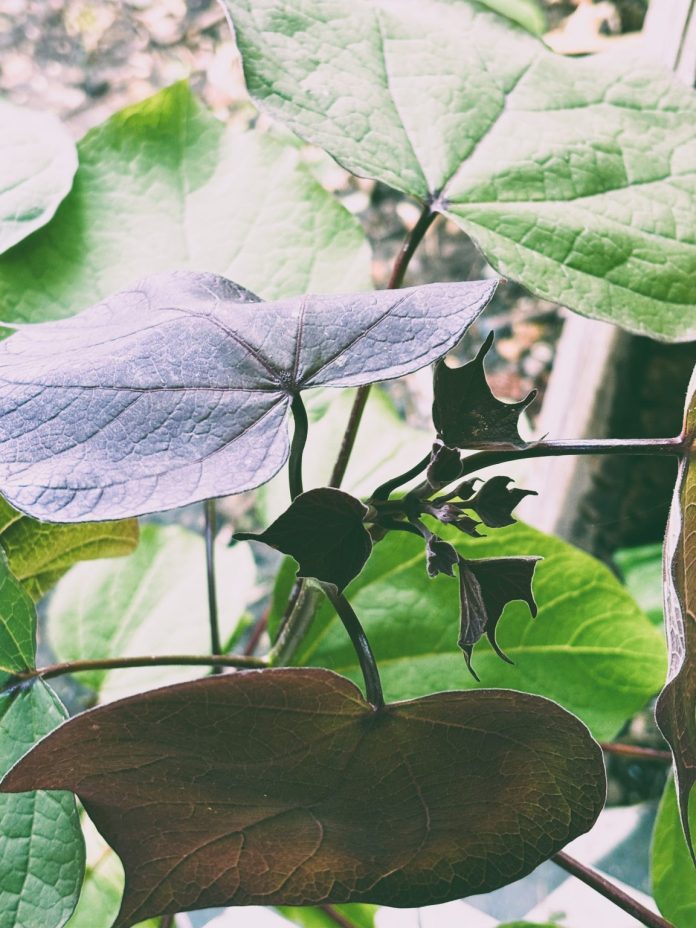
Catalpa erubescens Purpurea, commonly known as the purple catalpa, is a stunning hybrid tree noted for its large, heart-shaped leaves that emerge as a deep purple and gradually turn dark green. With its showy white flowers and long, slender seed pods, this tree adds a touch of tropical elegance to any garden. While its appearance suggests a tropical origin, the purple catalpa can thrive in the temperate climate of the UK, making it an excellent choice for gardeners looking to create an exotic garden oasis.
Historical Background of Catalpa × erubescens ‘Purpurea’
The Catalpa genus, part of the Bignoniaceae family, is native to North America and East Asia. The hybrid Catalpa × erubescens ‘Purpurea’ originated in the 19th century through the crossing of Catalpa bignonioides and Catalpa ovata. The result is a tree that combines the hardiness and striking features of both parent species. Its introduction to Europe quickly captivated gardeners and landscapers, who appreciated its ornamental value and adaptability.
Cultivating Catalpa × erubescens ‘Purpurea’ in the UK
Creating a tropical-style garden in the UK with Catalpa × erubescens ‘Purpurea’ is an achievable goal. Here’s a comprehensive guide to growing this majestic tree.
1. Selecting the Right Location
Catalpa × erubescens ‘Purpurea’ thrives in full sun to partial shade. Choose a site that receives at least 6 hours of direct sunlight daily to encourage vibrant leaf coloration and robust flowering. Ensure the location is sheltered from strong winds, which can damage the large leaves.
2. Soil Requirements
This tree is adaptable to a variety of soil types but prefers well-draining, fertile soil. Amend heavy clay or sandy soils with organic matter, such as compost or well-rotted manure, to improve soil structure and fertility.
3. Planting and Spacing
Plant Catalpa × erubescens ‘Purpurea’ in the spring or autumn. Dig a hole twice as wide and as deep as the root ball. Place the tree in the hole, backfill with soil, and water thoroughly to settle the soil around the roots. Space the tree at least 5-6 meters away from other large plants or structures to allow for its mature size.
4. Watering
During the first few years after planting, water the tree regularly to help establish a strong root system. Once established, Catalpa × erubescens ‘Purpurea’ is relatively drought-tolerant but will benefit from deep watering during prolonged dry spells.
5. Temperature and Hardiness
Catalpa × erubescens ‘Purpurea’ is hardy in USDA zones 5-9, making it well-suited to the UK climate. It can withstand temperatures as low as -23°C, though young trees may need protection from severe frost.
6. Feeding
Feed the tree with a balanced fertilizer in early spring to promote healthy growth and flowering. A slow-release granular fertilizer or a well-balanced liquid feed can be used.
7. Pruning and Maintenance
Prune in late winter or early spring to remove dead, damaged, or crossing branches. Catalpa × erubescens ‘Purpurea’ benefits from periodic thinning to maintain its shape and improve air circulation. Regularly remove suckers from the base of the tree to maintain a clean trunk.
Designing a Tropical-Style Garden
Integrating Catalpa × erubescens ‘Purpurea’ into a tropical-style garden can create a dramatic focal point. Here are some design tips:
- Combine with Lush Foliage: Pair with other large-leaved plants like Gunnera manicata, Musa basjoo (hardy banana), and Fatsia japonica to enhance the tropical effect.
- Add Colorful Blooms: Introduce vibrant flowering plants such as Canna lilies, Dahlias, and Hibiscus to complement the tree’s white blossoms.
- Incorporate Water Features: A pond or water fountain can enhance the tropical ambiance and provide a humidity boost beneficial for many exotic plants.
- Use Decorative Elements: Bamboo fencing, tiki statues, and tropical-themed garden furniture can help complete the look.
Conclusion
Growing Catalpa × erubescens ‘Purpurea’ in the UK can transform your garden into a tropical paradise, offering lush foliage, beautiful flowers, and a striking appearance. By selecting the right location, providing appropriate soil and care, and incorporating complementary plants and features, you can enjoy the exotic charm of this tree in your own backyard. Embrace the beauty of Catalpa × erubescens ‘Purpurea’ and create a tropical haven that stands out in the temperate UK climate.
Catalpa erubescens ‘Purpurea’ – Grow Guide
Common name: Purple-leaved Catalpa, Indian Bean Tree
Family: Bignoniaceae
Plant type: Deciduous tree
Hardiness: RHS H5 – fully hardy throughout the UK
Height & spread: 8–12 m tall × 5–8 m wide
Overview
Catalpa erubescens ‘Purpurea’ is a medium-sized, deciduous tree admired for its striking purple-tinged foliage, large heart-shaped leaves, and late-summer panicles of white flowers with yellow and purple throats. Its tropical-style leaves and bold form make it a great feature tree for parks, large gardens, and avenues.
Position
- Full sun to partial shade
- Prefers a sheltered position in exposed areas to protect young leaves
- Performs best where it has ample space to grow
Soil
- Moist, fertile, well-drained soil
- Tolerates clay, loam, and sandy soils
- Prefers slightly acidic to neutral soil (pH 6.0–7.5)
- Avoid prolonged waterlogging
Planting
- Best planted in autumn or spring
- Space 8–10 m apart for trees grown as specimens or in avenues
- Water well at planting and mulch to retain moisture
Watering
- Water regularly during the first 2–3 growing seasons to establish roots
- Once established, moderately drought-tolerant
- Avoid overwatering, especially in winter
Feeding
- Low-maintenance; a general-purpose fertiliser in spring encourages growth
- Avoid high-nitrogen feeds if pruning for flowering or structure
Growth & Habit
- Upright, oval to rounded crown with spreading branches
- Large heart-shaped leaves up to 25 cm long, purple when young, fading to deep green with maturity
- Produces slender, bean-like seed pods in autumn
- Fast-growing and long-lived
Flowering
- Months: July–August
- Flowers: White, trumpet-shaped with yellow and purple markings, arranged in terminal panicles
- Flowers attract bees and other pollinators
Pruning & Maintenance
- Minimal pruning needed; remove dead, diseased, or crossing branches
- Can be pruned lightly in late winter to maintain shape
- Tidy fallen seed pods if needed in formal settings
Pests & Problems
- Generally trouble-free
- Occasional aphids or caterpillars
- Leaf scorch may occur in very hot, dry summers
Propagation
- Seed: Sow fresh in autumn or stratified for spring germination
- Softwood cuttings are rarely used; trees are slow to root from cuttings
Garden & Display Use
- Specimen or feature tree in large gardens
- Street tree or parkland planting
- Wildlife-friendly planting (flowers attract pollinators; seed pods feed birds)
- Companion plants:
- Perennial grasses
- Hydrangea
- Ferns
- Late-summer flowering perennials
Quick Reference Table
| Feature | Details |
|---|---|
| Hardiness | RHS H5 – fully hardy |
| Height | 8–12 m |
| Spread | 5–8 m |
| Flowering | July–August |
| Position | Full sun to partial shade |
| Soil | Moist, fertile, well-drained; pH 6.0–7.5 |
| Water | Regular while establishing; moderate drought tolerance |
| Feeding | General-purpose fertiliser in spring |
| Propagation | Seed |
| Maintenance | Minimal; remove dead or crossing branches |
| Best feature | Purple-tinged leaves, large heart-shaped foliage, and late-summer flowers |