Strelitzia, commonly known as Bird of Paradise, is a strikingly beautiful plant native to South Africa. Named for its bird-like flowers that resemble a bird in flight, it is a popular choice among gardeners and plant enthusiasts. Here’s how you can successfully grow and care for Strelitzia, ensuring it thrives and graces your space with its exotic blooms.
Choosing the Right Variety
There are five species of Strelitzia, with Strelitzia reginae and Strelitzia nicolai being the most common in cultivation:
- Strelitzia reginae: Known for its bright orange and blue flowers, this variety is ideal for garden beds and large containers.
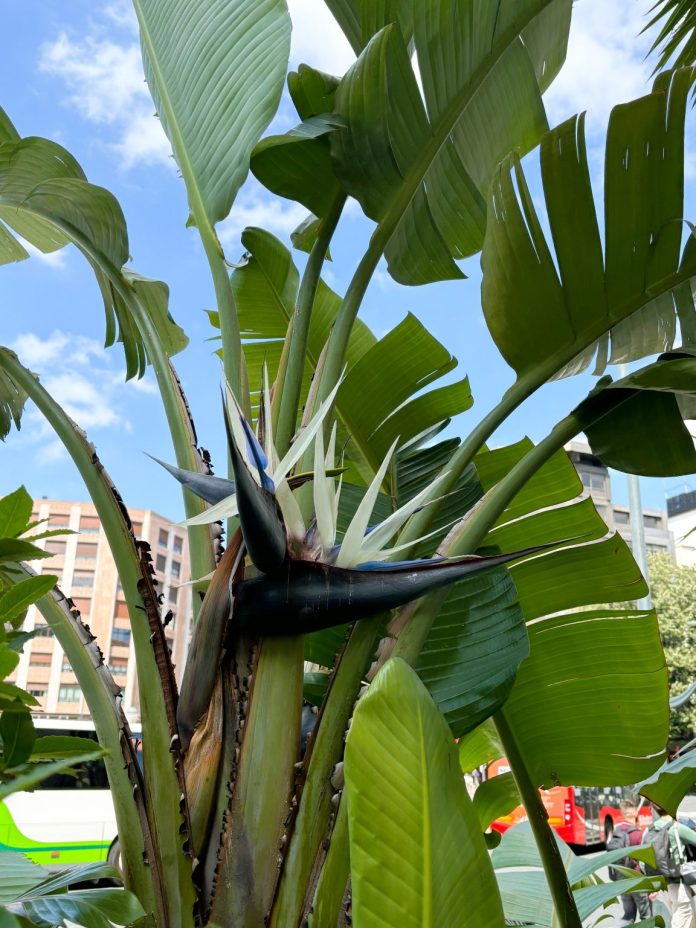
- Strelitzia nicolai: Also called the Giant Bird of Paradise, it produces white and blue flowers and can grow much taller, making it suitable for larger outdoor spaces.
Planting Strelitzia
1. Climate and Location:
Strelitzia thrives in tropical and subtropical climates but can also be grown indoors in cooler regions. They prefer full sun to partial shade, so choose a bright spot with plenty of indirect sunlight if grown indoors. In the UK, they can be grown outdoors during the summer months but should be brought inside or protected during the winter. Strelitzia can tolerate temperatures as low as 10°C (50°F) but should be protected from frost.
2. Soil:
Use well-draining soil rich in organic matter. A mix of standard potting soil with added perlite or sand works well to improve drainage.
3. Planting:
- Outdoors: Space plants about 4 to 6 feet apart to accommodate their large spread. Dig a hole twice the size of the root ball, place the plant, and backfill with soil, firming it gently around the base.
- Containers: Choose a large pot with drainage holes. Ensure the container is sturdy, as Strelitzia can become top-heavy.
Watering and Feeding
1. Watering:
- Young Plants: Keep the soil consistently moist but not waterlogged.
- Established Plants: Water deeply once a week, allowing the soil to dry out slightly between waterings. In winter, reduce watering.
2. Feeding:
Feed with a balanced liquid fertilizer every two weeks during the growing season (spring and summer). Reduce feeding in autumn and cease during winter.
Maintenance and Care
1. Pruning:
Remove dead or damaged leaves regularly to encourage healthy growth and improve airflow. Prune flower stems once the blooms fade.
2. Pests and Diseases:
Strelitzia is generally resistant to pests, but watch for aphids, scale, and spider mites. Treat infestations with insecticidal soap or neem oil. Ensure good air circulation to prevent fungal diseases.
3. Repotting:
Repot container-grown Strelitzia every 2-3 years to refresh the soil and provide more space for growth. This is best done in spring.
Flowering and Propagation
1. Flowering:
Strelitzia can take 3-5 years to flower when grown from seed. Ensure they receive enough light, nutrients, and space to encourage blooming. Flowers typically appear in late winter to early spring.
2. Propagation:
- Division: The easiest method. Divide the plant during repotting by separating the rhizomes and planting them individually.
- Seeds: Soak seeds in warm water for 24 hours before planting. Sow in a seed-starting mix and keep warm and moist. Germination can take 1-6 months, so be patient.
Overwintering Strelitzia in the UK
1. Indoor Transition:
In the UK, where winters can be harsh, it’s crucial to protect Strelitzia from frost. Move container-grown plants indoors before the first frost. If planted in the ground, consider potting them up temporarily or covering them with a frost cloth.
2. Indoor Care:
- Light: Place the plant in a bright spot with plenty of indirect sunlight, such as near a south-facing window.
- Temperature: Maintain indoor temperatures between 10-15°C (50-59°F). Avoid placing the plant near drafts or heat sources.
- Watering: Reduce watering frequency in winter. Water only when the top inch of soil is dry to the touch. Ensure good drainage to prevent root rot.
- Humidity: Increase humidity around the plant by misting the leaves regularly or using a humidity tray.
3. Outdoor Protection:
If moving the plant indoors isn’t possible, protect it with a thick layer of mulch around the base and cover it with a frost cloth. For larger plants, consider constructing a temporary greenhouse or using bubble wrap around the plant for additional insulation.
Longevity
Strelitzia plants are long-lived, often surviving for several decades with proper care. Some can live up to 50 years or more, making them a lasting addition to your garden or indoor space.
Tips for Indoor Growing
If growing Strelitzia indoors:
- Ensure the plant gets at least 4-6 hours of direct sunlight daily. Supplement with grow lights if necessary.
- Maintain high humidity by misting the leaves regularly or using a humidifier.
- Place the plant away from drafts and direct heat sources.
Conclusion
With their stunning flowers and lush foliage, Strelitzia plants can transform any garden or indoor space into a tropical paradise. By following these guidelines on planting, watering, feeding, and maintenance, and by taking special care to overwinter them properly in the UK, you can enjoy the unique beauty of the Bird of Paradise for years to come.
Strelitzia (Bird of Paradise) – Grow Guide
Common name: Bird of Paradise
Family: Strelitziaceae
Plant type: Evergreen perennial
Hardiness: RHS H1B – minimum 10–12 °C
Height & spread:
- Strelitzia reginae: 1.2–1.8 m tall
- Strelitzia nicolai: 3–6 m+ (best as a conservatory or indoor specimen)
Overview
Strelitzia is a bold, architectural plant with large, paddle-shaped leaves and spectacular orange-and-blue crane-like flowers. In the UK it is grown as a houseplant, conservatory plant, or summer patio specimen, and can live for many decades when well cared for.
Position
- Very bright light, including direct sun
- South or west-facing windows are ideal indoors
- Outdoors in summer, place in full sun in a sheltered spot
Soil
- Free-draining but moisture-retentive compost
- Best in a loam-based compost with added grit or perlite
- Excellent drainage is essential
Planting & Containers
- Grow in large, heavy pots to support tall growth
- Likes to be slightly pot-bound, which encourages flowering
- Repot only every 2–3 years in spring
Watering
- Water generously during spring and summer
- Allow the top few centimetres of compost to dry between waterings
- Reduce watering significantly in winter
- Never allow pots to sit in water
Feeding
- Feed every 2 weeks with a balanced liquid fertiliser during the growing season
- High-potash feeds can encourage flowering on mature plants
- Stop feeding in winter
Temperature & Hardiness
- Minimum winter temperature: 10–12 °C
- Ideal growing range: 18–25 °C
- Protect from cold draughts and frost
Growth & Habit
- Upright, clump-forming evergreen perennial
- Leaves may split naturally along veins — this is normal
- Slow to flower: plants may take 4–7 years to bloom
Flowering
- Usually late winter to summer on mature plants
- Flowers last for several weeks
- Flowering is more reliable with:
- Bright light
- Slight root restriction
- Warm summers
Maintenance
- Remove damaged or old leaves at the base
- Wipe leaves occasionally to remove dust
- Rotate pots for even growth
Pests & Problems
- Watch for scale insects, mealybugs, spider mites
- Yellowing leaves usually indicate overwatering or low light
- Lack of flowers often due to insufficient light or plants being too young
Propagation
- Division in late spring (best for flowering plants)
- Seed is possible but very slow to mature
Garden & Display Use
- Statement indoor plant
- Conservatory centrepiece
- Summer patio feature in large containers
Quick Reference
| Feature | Details |
|---|---|
| Hardiness | RHS H1B |
| Height | 1.2–6 m (species dependent) |
| Flowering | Late winter–summer |
| Position | Very bright light, full sun |
| Soil | Free-draining, loam-based |
| Water | Regular in growth, reduced in winter |
| Feeding | Fortnightly spring–summer |
| Propagation | Division |
| Best feature | Iconic bird-like flowers |
Strelitzia Species Add-On
While all Strelitzia share similar growing requirements, each species has unique traits:
1. Strelitzia reginae – Bird of Paradise
- Size: 1.2–1.8 m tall × 1 m wide
- Flowers: Bright orange and blue, classic “bird” shape
- Notes: Most common species for indoor or patio containers. Flowers reliably in bright light; relatively compact.
2. Strelitzia nicolai – Giant White Bird of Paradise
- Size: 3–6 m tall × 2–3 m wide (much larger in the wild)
- Flowers: White and blue, larger than S. reginae
- Notes: Best suited to conservatories, large patios, or tropical-style gardens. Slow to flower; requires large pots and very bright light.
3. Strelitzia juncea – Narrow-Leaved Bird of Paradise
- Size: 1–2 m tall × 1 m wide
- Flowers: Orange and blue, similar to S. reginae
- Leaves: Cylindrical, strap-like leaves rather than broad paddle shapes
- Notes: Very drought-tolerant and more striking in sculptural containers. Flowering is similar to S. reginae.
4. Strelitzia caudata – Mountain Strelitzia
- Size: 2–3 m tall × 1–1.5 m wide
- Flowers: Orange and blue, held high on stems
- Notes: Less common in cultivation; slower growing and prefers consistently warm conditions.
Quick Species Comparison Table
| Species | Height | Spread | Flower Colour | Best Use |
|---|---|---|---|---|
| S. reginae | 1.2–1.8 m | 1 m | Orange & blue | Indoor, patio, conservatory |
| S. nicolai | 3–6 m | 2–3 m | White & blue | Large conservatory, tropical gardens |
| S. juncea | 1–2 m | 1 m | Orange & blue | Sculptural containers, drought-tolerant |
| S. caudata | 2–3 m | 1–1.5 m | Orange & blue | Specialist tropical cultivation |