
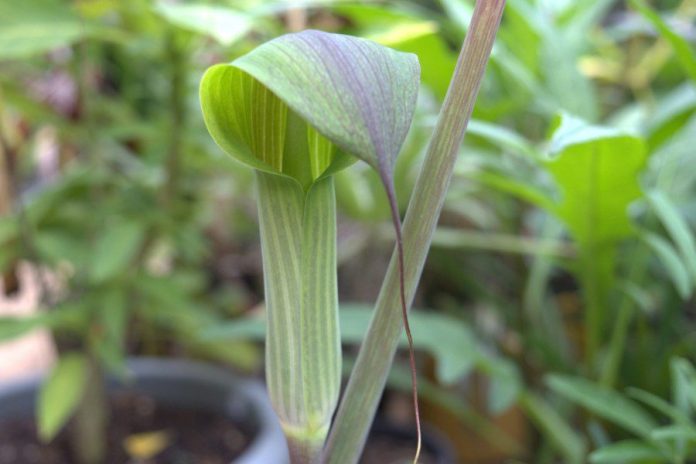
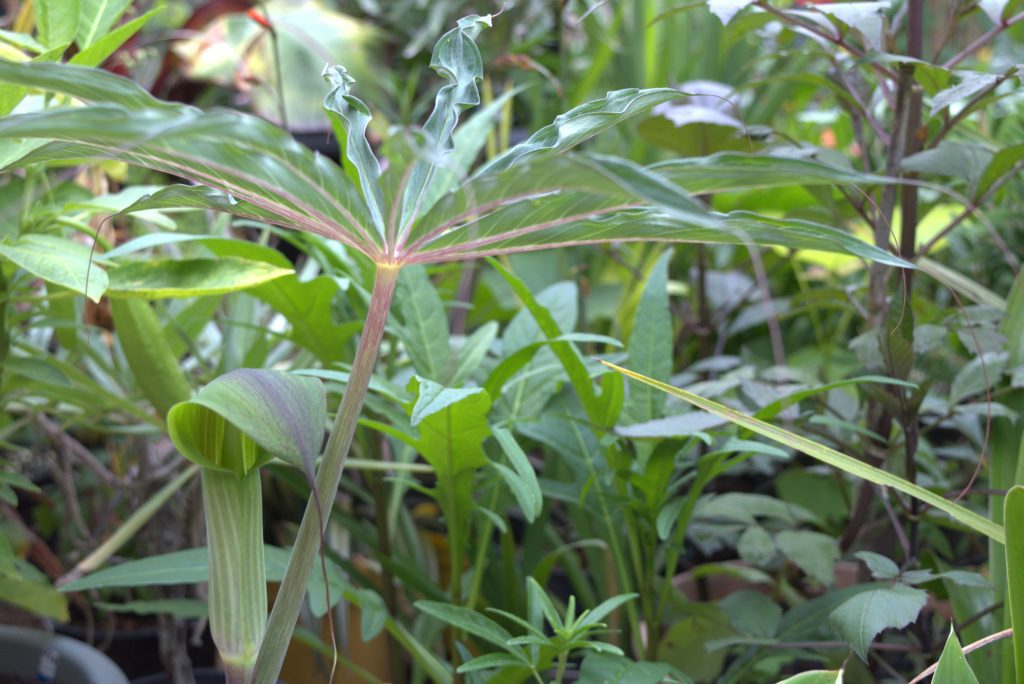
Arisaema consanguineum, also known as the Cobra Lily, is an exotic and intriguing plant that can add a dramatic touch to any UK garden. Known for its distinctive hooded spathe and striking, umbrella-like leaves, this plant is a member of the Araceae family and hails from the forests of Asia. With the right care and conditions, Arisaema consanguineum can thrive in the UK, offering gardeners a unique and fascinating addition to their plant collection.
Growing Conditions for Arisaema consanguineum in the UK
- Climate and Location:
- Arisaema consanguineum is native to regions in Asia, including the Himalayas, Nepal, and parts of China and India, where it typically grows in shady, forested environments. This makes it well-suited to the UK’s temperate climate.
- The ideal spot for this plant in a UK garden is one that mimics its natural habitat: a shaded or partially shaded area with protection from strong, direct sunlight. A woodland garden or a sheltered spot under larger plants or trees is perfect.
- Soil Requirements:
- Cobra lilies prefer humus-rich, well-draining soil. A mix of leaf mold, compost, and loamy soil provides the nutrients and drainage they need. The soil should retain moisture but not become waterlogged, as overly wet conditions can cause the tubers to rot.
- Avoid heavy clay soils, or amend them with organic matter and grit to improve drainage. A slightly acidic to neutral pH is ideal.
- Planting and Propagation:
- Plant the tubers in spring, once the risk of frost has passed and the soil has warmed up. Place them 10-15 cm deep, with the growing point facing upwards, and space them about 30 cm apart.
- If propagating, division is the most reliable method. Carefully lift and divide the tubers in early spring, then replant them immediately. While it’s possible to grow Arisaema consanguineum from seed, it’s a slower process and requires patience.
- Watering and Feeding:
- Keep the soil consistently moist during the growing season, watering regularly but avoiding waterlogged conditions. In autumn, reduce watering as the plant enters dormancy.
- A balanced, slow-release fertilizer or an organic top-dressing in early spring can help support healthy growth. Cobra lilies do not require heavy feeding, so moderation is key.
- Winter Care:
- Although Arisaema consanguineum is relatively hardy, it benefits from some winter protection, especially in colder areas of the UK. In mild regions, mulching with a thick layer of organic material can help insulate the tubers.
- In areas prone to severe frost, consider lifting the tubers in autumn and storing them in a cool, frost-free place until spring.
- Pests and Diseases:
- Arisaema consanguineum is generally resistant to pests and diseases. However, young shoots can be vulnerable to slugs and snails in spring. Regular checks and organic slug control measures can help prevent damage.
Conclusion
Arisaema consanguineum is a captivating plant that brings an exotic flair to UK gardens. With its unique, cobra-like appearance and relatively easy-care requirements, it’s a rewarding choice for gardeners looking to cultivate something out of the ordinary. By providing the right conditions—shady spots, well-drained soil, and proper winter protection—this cobra lily can flourish, offering years of stunning visual appeal. Whether planted in a woodland garden or as part of a tropical-themed display, Arisaema consanguineum is sure to be a conversation starter and a cherished addition to any plant collection.
Arisaema consanguineum – Grow Guide
Common name: Himalayan Cobra Lily
Family: Araceae
Plant type: Tuberous perennial
Hardiness: RHS H4 – hardy in most of the UK with good drainage
Height & spread: 60–90 cm tall × 30–45 cm wide
Overview
Arisaema consanguineum is a dramatic woodland perennial grown for its cobra-like flowers with long, whip-like tails and its elegant, umbrella-shaped foliage. It emerges late in spring and brings a distinctly exotic, jungle feel to shady borders and woodland gardens.
Position
- Partial to full shade
- Best in dappled woodland light
- Shelter from strong winds to protect stems and flowers
Soil
- Moist but well-drained, humus-rich soil
- Ideal soil includes leaf mould or garden compost
- Avoid winter waterlogging, which can rot the tubers
Planting
- Plant tubers 10–15 cm deep
- Best planted in autumn or early spring
- Space plants 30–40 cm apart
- Mulch annually with leaf mould
Watering
- Keep soil consistently moist during spring and summer
- Reduce watering as plants die back in autumn
- Do not allow soil to dry out completely while in growth
Feeding
- Feed lightly in spring with a balanced fertiliser
- Excess feeding can produce leaf growth at the expense of flowers
Growth & Habit
- Upright stems with radiating leaflets
- Flowers appear before or with foliage
- Dies back completely in autumn
Flowering
- May–June
- Purple-brown striped spathes with very long tails
- Female flowers may produce clusters of red berries in autumn if pollinated (do not eat)
Maintenance
- Apply a thick mulch each autumn
- Mark planting positions—plants emerge late
- Remove spent stems once foliage yellows
Pests & Problems
- Generally trouble-free
- Slugs and snails may damage emerging shoots
- Tubers rot if soil is waterlogged in winter
Propagation
- Division of offsets in autumn
- Seed: Sow fresh seed; seedlings may take several years to flower
Garden Uses
- Woodland borders
- Shaded exotic gardens
- Under trees and shrubs
- Companion plants:
- Ferns
- Hosta
- Epimedium
- Trillium
Quick Reference
| Feature | Details |
|---|---|
| Hardiness | RHS H4 |
| Height | 60–90 cm |
| Spread | 30–45 cm |
| Flowering | May–June |
| Position | Part to full shade |
| Soil | Moist, humus-rich, well-drained |
| Propagation | Division, seed |
| Dormancy | Autumn–winter |
| Best feature | Whip-tailed cobra flowers |