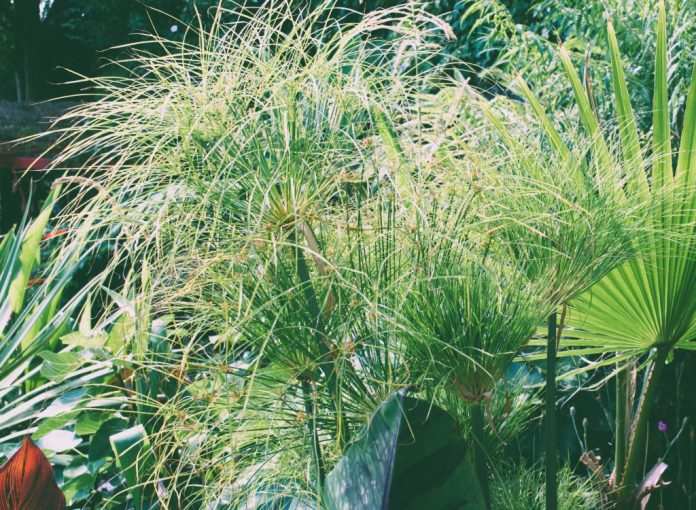
Papyrus (Cyperus papyrus) can be grown in the UK, but since it’s a plant native to warmer, tropical regions like Egypt and parts of Africa, it requires specific care to thrive. In the UK’s cooler climate, papyrus is usually grown as a pond or bog plant, often in containers or pots, and may need to be brought indoors during winter or grown in a greenhouse.
Growing Papyrus in the UK
Here’s what papyrus generally requires:
- Location: Full sun to partial shade. It thrives best in warm and bright conditions.
- Water: Papyrus is a marsh plant, so it needs constant moisture. Plant it in shallow water, the edge of a pond, or in very water-retentive soil.
- Temperature: Papyrus is not frost-hardy. During winter, temperatures must not drop below 5°C (41°F). It should be brought indoors or protected in a greenhouse.
- Soil: It prefers rich, loamy soil with good water retention. Ensure the soil is consistently wet, almost bog-like.
- Containers: If you’re growing papyrus in a pot, ensure that the container is large enough to accommodate the root system and keep it in a water tray to mimic the marshy environment.
- Overwintering: In colder months, move your papyrus into a greenhouse or indoors where the temperature stays above freezing. It can be cut back in winter when growth slows down.
Best Varieties of Papyrus to Grow in the UK
- Cyperus papyrus (Common Papyrus)
- Description: The traditional papyrus plant that was historically used by the Egyptians for paper-making. It has tall, green, triangular stems that can grow up to 2-3 meters in ideal conditions, with umbrella-like clusters of fine, thread-like leaves on top.
- Growing Requirements: Needs lots of water, full sun, and protection from frost. Ideally grown near a pond or in a container filled with water.
- Cyperus alternifolius (Umbrella Plant)
- Description: Often referred to as the umbrella papyrus, this species is smaller than Cyperus papyrus, reaching about 1-1.5 meters. It has a similar look, with radiating leaves that resemble an umbrella, but it’s easier to manage in smaller spaces.
- Growing Requirements: Easier to grow indoors, in water or very wet soil. It can also tolerate partial shade and is better suited for container planting.
- Cyperus involucratus (Dwarf Papyrus)
- Description: A compact variety, reaching about 60-90 cm (2-3 feet) in height. It has similar umbrella-like foliage but is smaller and more manageable in smaller gardens or ponds.
- Growing Requirements: It prefers full sun and constant moisture, though it can be grown indoors in containers or in water gardens. It also needs to be protected from frost.
General Care Tips:
- Fertilizing: Papyrus grows rapidly in fertile conditions. A liquid fertilizer high in nitrogen can help boost its growth in summer.
- Pruning: Trim any brown or yellowing leaves, especially before bringing the plant indoors for winter.
- Pest Control: Aphids and spider mites can occasionally attack papyrus, especially indoors. Regular misting can help keep pests away, or use a gentle insecticidal soap if necessary.
In conclusion, with proper care, papyrus can be a stunning addition to a UK garden, especially in pond areas or as a striking potted plant. However, it’s crucial to manage its water needs and protect it from frost during the colder months.
Papyrus – Cyperus papyrus Grow Guide
Common name: Papyrus
Family: Cyperaceae
Type: Tender perennial / marginal aquatic
Hardiness: RHS H1–H2 – not frost hardy; needs winter protection in the UK
Ultimate size: 1.5–3 m tall × 1–2 m wide (smaller in pots)
Overview
Papyrus is a dramatic, architectural marginal plant best known for its tall triangular stems topped with umbrella-like heads of fine green bracts. Native to African wetlands, it is ideal for pond margins, water features, containers, and tropical-style gardens. In the UK it is usually grown in pots so it can be moved under cover for winter.
Position
- Light: Full sun to light shade
- Sheltered from strong winds, which can snap stems
- Performs best in warm, bright positions
Soil & Growing Medium
- Type: Heavy, moisture-retentive soil
- Use loam-based compost (e.g. John Innes No. 3)
- Can be grown:
- In pots standing in water
- In shallow water up to 10–20 cm deep
Planting
- When: Late spring, once temperatures are consistently above 10 °C
- Grow in large, stable containers to prevent toppling
- Sink pots into pond margins or stand in trays of water
Watering
- Papyrus must never dry out
- Keep pots constantly standing in water during the growing season
- In hot weather, ensure water levels are maintained daily
Feeding
- Heavy feeder
- Apply liquid fertiliser every 2 weeks during active growth
- Slow-release fertiliser can be added at planting
Growth & Habit
- Upright, clump-forming plant
- Tall green stems with flat, spreading umbels
- Produces new stems continuously in warm conditions
- Can become very large in a single season
Flowering
- Months: Summer
- Flowers: Small, brownish-green, insignificant; plant is grown for structure
Maintenance
- Remove yellowing or damaged stems at the base
- Thin congested clumps in summer if required
- Regularly top up water and feed during growth
Overwintering (Essential in the UK)
- Before first frost, move plants to:
- A bright frost-free greenhouse, conservatory, or
- A warm indoor position
- Reduce feeding and watering slightly, but do not let compost dry
- Minimum winter temperature: 5–10 °C
Propagation
- Division: Very easy; divide clumps in spring
- Stem cuttings: Umbel heads can be rooted in water upside-down
- Seed: Possible but slow
Pests & Problems
- Generally pest-free
- Spider mites may occur indoors in dry air
- Yellowing leaves usually indicate lack of water or nutrients
Garden & Display Use
- Pond margins and water features
- Large containers on patios
- Tropical-style and architectural planting schemes
- Excellent companion plants:
- Colocasia
- Canna
- Zantedeschia (Calla lilies)
- Cyperus alternifolius
Quick Reference Table
| Feature | Details |
|---|---|
| Hardiness | RHS H1–H2 |
| Height | 1.5–3 m |
| Spread | 1–2 m |
| Flowering | Summer (insignificant) |
| Position | Full sun to light shade |
| Soil | Heavy, moisture-retentive |
| Water | Constantly wet; standing water |
| Feeding | Liquid feed every 2 weeks |
| Propagation | Division; stem cuttings |
| Overwintering | Frost-free, bright location |
| Best feature | Dramatic umbrella-like form |