
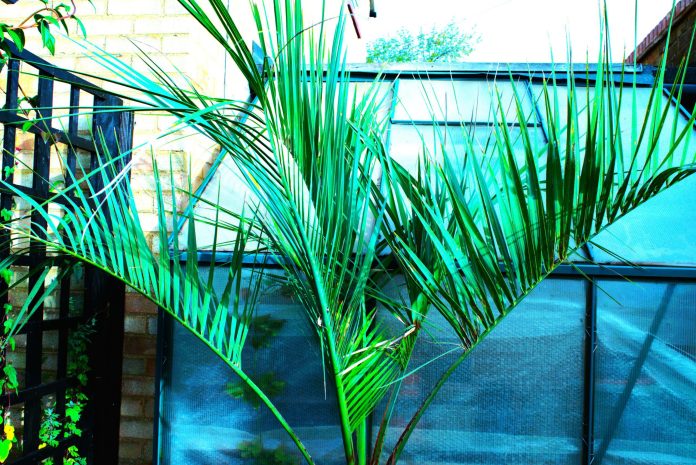
Butia odorata (formerly misidentified as Butia capitata) is one of the hardiest feather palms suitable for UK gardens, particularly in milder regions. Its graceful, arching fronds and edible fruit make it a striking feature in exotic and tropical-style plantings.
Climate & Hardiness
- Hardy to around -10°C to -12°C, making it one of the most cold-tolerant feather palms.
- Performs best in southern and coastal areas of the UK, where winters are milder.
- In colder inland areas, protection is needed during severe frosts.
Planting & Soil Requirements
- Prefers a well-drained soil, such as sandy or loamy soil with good drainage.
- Tolerates poor soils but benefits from organic matter for better growth.
- Likes a sunny, sheltered position, ideally against a south-facing wall or near other plants for wind protection.
- Tolerates some salt exposure, making it suitable for coastal gardens.
Watering & Feeding
- Water regularly in the first few years to help establish roots.
- Once mature, it is drought-tolerant, though it benefits from occasional deep watering in dry spells.
- Apply a high-potassium feed (such as a palm fertiliser or tomato feed) in spring and summer to encourage healthy growth.
Winter Protection
- In milder UK areas (e.g., Cornwall, coastal Devon, London), it usually survives unprotected.
- In colder regions:
- Mulch around the base with straw or bark to protect roots.
- If extreme frost is forecast, wrap the crown in horticultural fleece or dry straw.
- Avoid excessive winter wet, as damp cold is more damaging than frost.
Growth Rate & Appearance
- Slow-growing but can reach 4–6m tall in the UK over many years.
- Forms a thick, textured trunk with gracefully arching blue-green fronds.
- Can be grown in large containers, though growth will be slower.
Pests & Problems
- Generally pest-free in the UK, though watch for red spider mites in greenhouses.
- Excess winter wet can cause crown rot, so ensure good drainage.
- If fronds yellow, it may need extra potassium and magnesium.
Companion Planting
Pairs well with:
- Trachycarpus fortunei (for a mixed palm effect)
- Tetrapanax papyrifer (adds a jungle feel)
- Musa basjoo (hardy banana for contrast)
- Agave and Yucca species (for a drier, Mediterranean look)
Final Thoughts
Butia odorata is one of the best feather palms for UK gardens, especially if you want a tropical look without the fuss of high maintenance. With a little winter care, it can be a long-lived feature that adds structure and elegance to your landscape.
Butia odorata – Grow Guide
Common name: Jelly Palm, Pindo Palm
Family: Arecaceae
Type: Hardy palm / small tree
Hardiness: RHS H4–H5 – hardy in most of the UK with a sheltered site; tolerates temperatures down to −10 °C once established
Ultimate size: 5–7 m tall × 3–4 m wide
Overview
Butia odorata is a slow-growing, cold-hardy palm from South America, valued for its arching, feather-like blue-green leaves and orange-yellow edible fruits. It is one of the hardiest palms suitable for UK gardens, making it ideal for tropical-style or Mediterranean borders, patios, and large containers in cooler areas. Its ornamental form and resilience to wind make it a standout architectural feature.
Position
- Light: Full sun to partial shade
- Requires a sheltered site from cold northerly winds
- Performs well as a specimen tree in lawns, borders, or coastal gardens
Soil
- Type: Well-draining, fertile soil
- Tolerates sandy or moderately poor soils
- pH: Neutral to slightly acidic
- Avoid waterlogged soils which can cause root rot
Planting
- When: Spring or early summer for best establishment
- Space 5–7 m apart for mature crowns
- Mulch base to retain moisture and suppress weeds
- In pots, use large containers with good drainage
Watering
- Water regularly during establishment
- Once established, drought-tolerant but benefits from occasional deep watering in dry spells
- Reduce watering in winter
Feeding
- Apply a slow-release palm fertiliser in spring
- Optional liquid feed during the growing season to promote healthy fronds
- Protect young palms from over-fertilisation, which can burn roots
Growth & Habit
- Slow-growing, evergreen palm with feather-like fronds up to 3 m long
- Forms a solitary trunk with a rounded crown
- Edible fruits appear in autumn after flowering
Flowering
- Months: Summer
- Flowers: Small, yellow flowers in large panicles
- Fruit ripens orange-yellow, edible and often used in preserves
Maintenance
- Remove dead or damaged fronds to maintain tidy appearance
- Mulch around base in winter to protect roots
- Protect young palms (<2 m) from severe frost
- Prune only if necessary to control shape; avoid heavy pruning of healthy fronds
Propagation
- Seed: Most common; germinates slowly (1–6 months)
- Offshoots: Rare, usually propagated by specialist nurseries
Pests & Problems
- Generally pest- and disease-resistant
- Occasional scale or spider mite infestations
- Root rot if soil is waterlogged
- Young palms may suffer frost damage
Garden Use
- Specimen tree for lawns, borders, or tropical-themed gardens
- Large container planting on terraces or patios
- Excellent companion plants:
- Trachycarpus fortunei (Windmill Palm)
- Cordyline australis
- Agave and Yucca
- Ornamental grasses
Quick Reference Table
| Feature | Details |
|---|---|
| Hardiness | RHS H4–H5 – hardy in sheltered sites; down to −10 °C |
| Height | 5–7 m |
| Spread | 3–4 m |
| Flowering | Summer; small yellow flowers; orange-yellow fruits in autumn |
| Position | Full sun to partial shade; sheltered from wind |
| Soil | Well-draining, fertile; neutral to slightly acidic |
| Water | Regular during establishment; occasional deep watering once established |
| Feeding | Slow-release palm fertiliser in spring; optional liquid feed |
| Propagation | Seed (slow); offshoots (rare) |
| Maintenance | Remove dead fronds; mulch base; protect young palms from frost |
| Best feature | Arching blue-green fronds and edible orange fruits |