
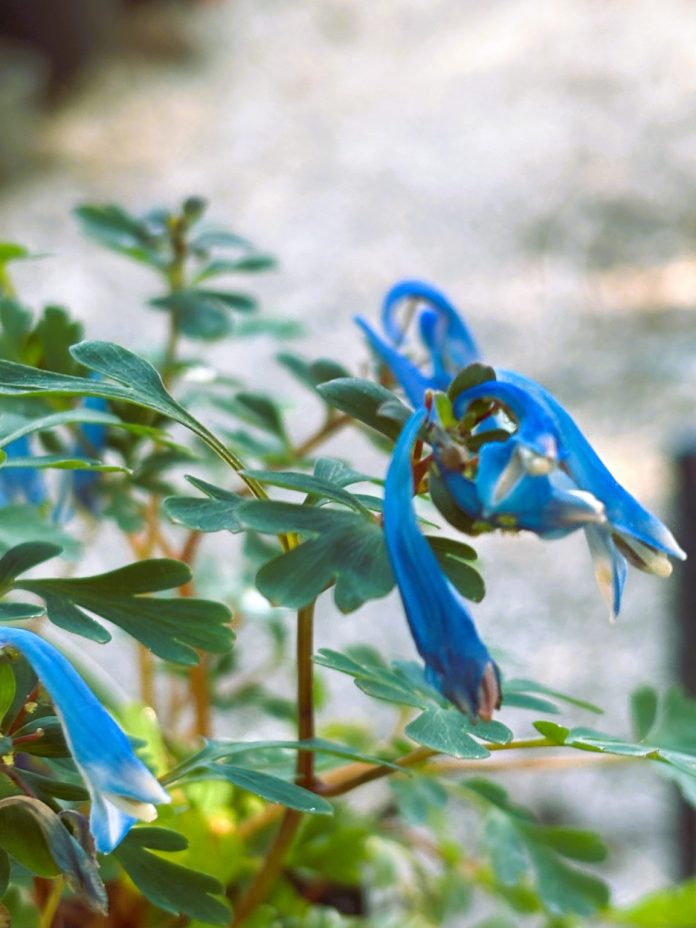
Elegant blue blooms for shady borders and woodland gardens
Plant Overview
- Botanical Name: Corydalis elata ‘Blue Heron’
- Common Name: Blue Heron Corydalis
- Family: Papaveraceae
- Type: Herbaceous perennial
- Hardiness: RHS H7 (down to -20°C or lower)
- Height & Spread: 30–40cm tall × 30cm wide
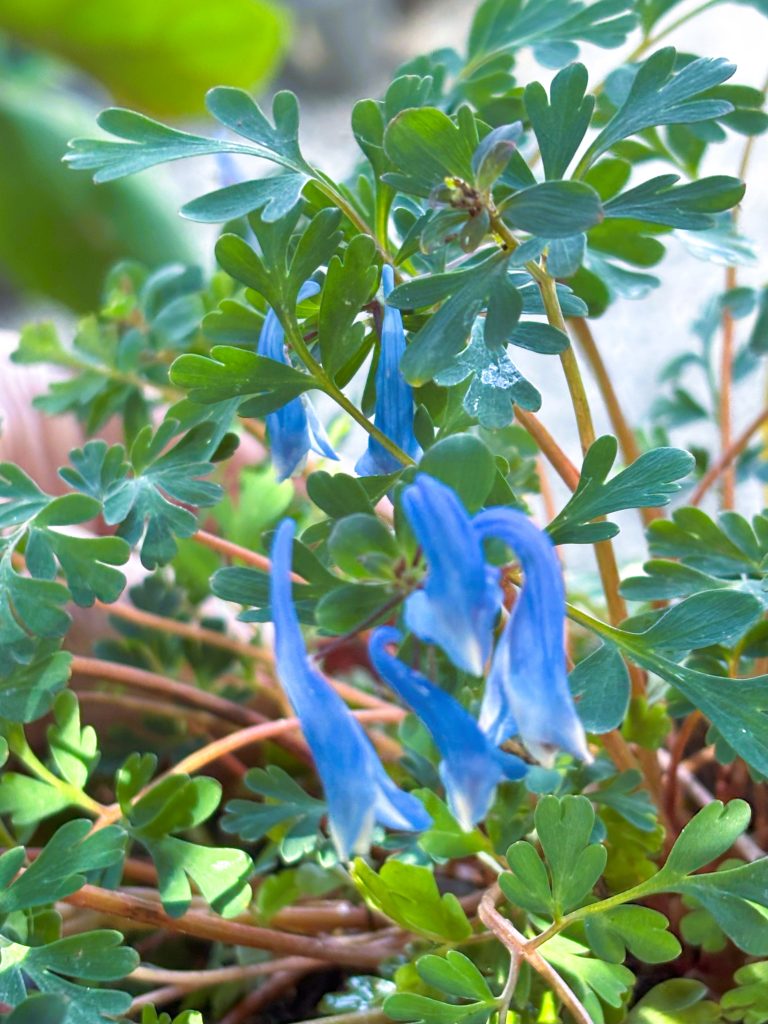
- Flowers: Intense cobalt-blue tubular flowers
- Foliage: Finely divided, ferny, grey-green leaves
- Scent: Sweetly scented flowers
Planting
- Best Time to Plant: Spring or autumn
- Soil: Moist, humus-rich, well-drained soil
- Soil Type: Suitable for loam, clay (improved), or sandy soils
- Not Suitable For: Very dry, shallow chalk or free-draining gravel unless heavily improved with organic matter
- pH: Neutral to slightly acidic
- Light Requirements: Partial shade to full shade
- Spacing: Allow 25–30cm between plants
Tip: Corydalis ‘Blue Heron’ prefers consistently moist, cool soils – work in plenty of leaf mould or compost to improve clay or sandy ground.
Seasonal Interest
- Flowering Time: May to September (with breaks in hot weather)
- Foliage Interest: Deciduous – foliage may disappear in high summer and reappear in autumn
Care & Maintenance
Watering
- Keep soil evenly moist, especially during dry spells.
- Avoid waterlogging.
Feeding
- Mulch annually with leaf mould or garden compost in early spring.
- Optional: feed with a balanced liquid fertiliser in late spring if growth is sluggish.
Pruning & Tidying
- Deadhead spent flowers to encourage continued blooming.
- Remove tired foliage in summer if it dies back – fresh leaves may re-sprout later.
Pests & Diseases
- Generally pest-free
- May be affected by slugs or snails in spring – protect young growth
Design Tips
- Pair with ferns, hostas, Pulmonaria, Brunnera, or Tiarella
- Great for shady borders, woodland gardens, or underplanting shrubs
- Perfect under deciduous trees where spring light is strong and summer shade protects the plant
Container Growing
- Can be grown in pots with rich, moisture-retentive compost
- Keep shaded and cool in summer
- Water regularly to avoid drying out
Propagation
- By Division:
- Divide clumps in spring or early autumn when dormant
- Replant immediately at the same depth
- From Seed:
- Can be grown from fresh seed sown as soon as ripe
- Germination can be erratic; best for patient growers!
Troubleshooting
| Problem | Likely Cause | Solution |
|---|---|---|
| Sudden summer dormancy | Natural reaction to heat/dryness | Water well, leave alone – it may re-emerge |
| Poor flowering | Too much sun or dry soil | Move to more shaded, damper spot |
| Leaves nibbled | Slugs or snails | Use barriers or wildlife-friendly pellets |
Summary
Corydalis ‘Blue Heron’ is a quietly stunning addition to the shady garden, valued for its long flowering season and ethereal blue flowers. Once settled in the right spot, it can form slowly spreading clumps that return reliably year after year.
Corydalis ‘Blue Heron’ – Grow Guide
Common name: Blue Heron Corydalis
Family: Papaveraceae (formerly Fumariaceae)
Type: Hardy perennial / herbaceous tuberous plant
Hardiness: RHS H5 – fully hardy in the UK
Ultimate size: 20–30 cm tall × 25–30 cm wide
Overview
Corydalis ‘Blue Heron’ is a low-growing, clump-forming perennial with delicate, fern-like foliage and vivid deep blue tubular flowers in late spring to early summer. Ideal for woodland gardens, shaded borders, or rockeries, it adds textural contrast and vibrant colour in cool spring conditions. Foliage remains attractive even after flowering.
Position
- Light: Partial to full shade
- Performs best in sheltered, cool locations
- Ideal under trees, shrubs, or in woodland-style planting
Soil
- Type: Moist, fertile, well-draining soil
- Enrich with compost or leaf mould at planting
- pH: Neutral to slightly acidic
Planting
- When: Spring or autumn
- Space plants 20–25 cm apart to form dense clumps
- Excellent for rockeries, woodland edges, or shaded containers
Watering
- Keep soil consistently moist, particularly during active growth
- Avoid waterlogging, which can rot tubers
- Reduce watering once foliage dies back in late summer
Feeding
- Apply a balanced liquid fertiliser in spring as growth begins
- Organic compost top-dress annually for best performance
Growth & Habit
- Clump-forming perennial with fern-like, grey-green foliage
- Flower stems rise above foliage, producing tubular, violet-blue flowers
- Moderate growth rate; foliage dies back naturally in late summer
Flowering
- Months: May–June (UK)
- Flowers: Deep blue tubular flowers with contrasting yellow throats
- Attracts early pollinators like bees
Maintenance
- Remove dead or yellowing foliage to keep clumps tidy
- Divide clumps every 3–4 years after dormancy to maintain vigour
- Mulch in winter in colder or exposed sites to protect tubers
Propagation
- Division: Main method; separate clumps in autumn after foliage dies
- Seed: Possible, but slow and may take 2–3 years to flower
Pests & Problems
- Generally pest-free
- Slugs may occasionally nibble emerging shoots
- Root rot in poorly drained soils
Garden Use
- Woodland and shaded borders
- Rockeries or alpine-style plantings
- Containers in shaded terraces or patios
- Excellent companions:
- Hellebores
- Pulmonaria
- Ferns
- Epimedium
Quick Reference Table
| Feature | Details |
|---|---|
| Hardiness | RHS H5 – fully hardy |
| Height | 20–30 cm |
| Spread | 25–30 cm |
| Flowering | May–June; deep blue tubular flowers with yellow throats |
| Position | Partial to full shade; sheltered |
| Soil | Moist, fertile, well-draining; neutral to slightly acidic |
| Water | Keep evenly moist during growth; avoid waterlogging |
| Feeding | Balanced liquid fertiliser in spring; compost top-dress optional |
| Propagation | Division (main); seed (slow) |
| Maintenance | Remove dead foliage; divide every 3–4 years; mulch in winter |
| Best feature | Deep blue flowers and fern-like foliage in shaded borders |