
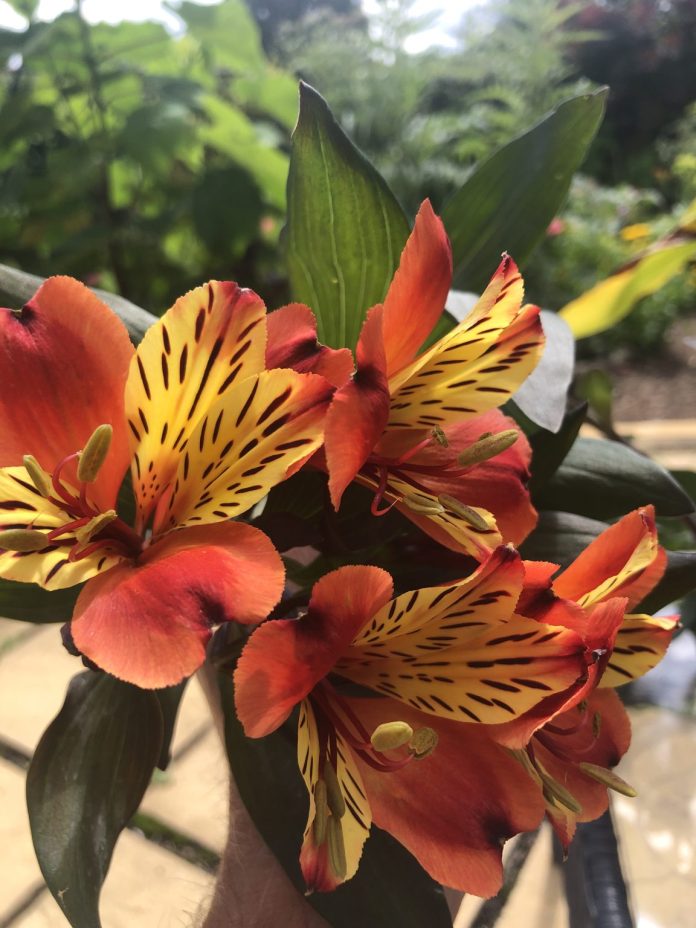
Alstroemeria ‘Indian Summer’ is a beautiful perennial plant that produces vibrant orange flowers. Here are some general guidelines to help you grow and care for Alstroemeria ‘Indian Summer’:
- Planting location: Choose a planting location that receives full sun to partial shade. Alstroemerias prefer well-draining soil with a slightly acidic to neutral pH.
- Soil preparation: Prepare the soil by adding organic matter like compost or well-rotted manure. This will improve the soil’s fertility, drainage, and water-holding capacity.
- Planting time: Plant Alstroemeria ‘Indian Summer’ in the spring or fall when the soil has warmed up or cooled down. This will allow the plant to establish itself before the extreme temperatures of summer or winter.
- Planting process: Dig a hole that is deep enough to accommodate the plant’s root ball. Place the plant in the hole, ensuring that the crown (where the stems meet the roots) is level with the soil surface. Backfill the hole with soil, gently firming it around the roots.
- Watering: Alstroemerias prefer consistently moist soil but not waterlogged conditions. Water the plants deeply once or twice a week, especially during dry periods. Avoid overhead watering, as it can lead to fungal diseases. Instead, direct the water to the base of the plant.
- Mulching: Apply a layer of organic mulch around the base of the plant to help retain moisture, suppress weed growth, and maintain a more even soil temperature.
- Fertilization: Feed Alstroemeria ‘Indian Summer’ with a balanced slow-release fertilizer in the spring when new growth begins. Follow the package instructions for application rates. Avoid over-fertilization, as it can lead to excessive foliage growth at the expense of flowers.
- Support: Alstroemerias can benefit from some support to keep the stems upright, especially when they become top-heavy with flowers. Install stakes or use a trellis system to provide support and prevent the stems from bending or breaking.
- Deadheading: Remove spent flowers regularly by cutting the stem back to the base or to a healthy leaf node. This will encourage the production of more blooms and maintain a tidy appearance.
- Winter care: In colder regions, apply a layer of mulch around the base of the plant to protect it during winter. Cut back the foliage to a few inches above the ground after it has died back naturally in the fall. This will help the plant conserve energy and promote new growth in the following spring.
Alstroemeria ‘Indian Summer’ – Grow Guide
Common name: Peruvian Lily, Lily of the Incas
Family: Alstroemeriaceae
Type: Herbaceous perennial
Hardiness: RHS H3–H4 – frost-tender; may need winter protection in colder UK regions
Ultimate size: 60–90 cm tall × 30–50 cm wide
Overview
Alstroemeria ‘Indian Summer’ is a vibrant, long-flowering perennial producing clusters of orange and red trumpet-shaped flowers from summer into autumn. Its matted, tuberous root system allows for vigorous growth in well-draining soil, and its flowers are excellent for cut arrangements. Ideal for tropical-style borders, sunny beds, or large containers in the UK.
Position
- Light: Full sun to partial shade
- Needs a sheltered site away from strong winds for best flowering
- Performs well in mild coastal or urban gardens
Soil
- Type: Fertile, well-draining soil
- Avoid heavy clay or waterlogged conditions
- Enrich soil with compost or well-rotted manure at planting
- pH: Neutral to slightly acidic
Planting
- When: Spring after frost, or autumn in mild areas
- Plant tubers 10–15 cm deep, spaced 30–45 cm apart
- Containers should have good drainage and nutrient-rich compost
Watering
- Keep soil evenly moist during active growth and flowering
- Reduce watering after flowering or when foliage dies back
- Avoid waterlogging, which can cause tuber rot
Feeding
- Apply a high-potassium liquid fertiliser every 2–3 weeks during the growing season
- Optional slow-release fertiliser at planting
Growth & Habit
- Clump-forming, herbaceous perennial
- Lance-shaped green leaves that twist from base to tip
- Flower stems rise above foliage, producing abundant blooms
- Dies back naturally in winter; foliage may die off in cold regions
Flowering
- Months: July–October (UK)
- Flowers: Trumpet-shaped, bright orange-red with speckled throats
- Excellent for cut flowers lasting 1–2 weeks in vases
Maintenance
- Deadhead spent flowers to prolong bloom
- Cut back foliage after it yellows
- Mulch lightly in winter in frost-prone areas
- Divide clumps every 3–4 years to maintain vigour
Propagation
- Division: Main method; separate tubers in spring or autumn
- Seed: Possible but slow; flowers may take 2–3 years from seed
Pests & Problems
- Slugs and snails may damage young shoots
- Occasional aphids
- Tuber rot in poorly drained soils
Garden Use
- Tropical-style or sunny herbaceous borders
- Containers and patio planting
- Ideal for cut flower production
- Works well with:
- Crocosmia
- Alocasia or Colocasia
- Cannas
- Rudbeckia
Quick Reference Table
| Feature | Details |
|---|---|
| Hardiness | RHS H3–H4 – frost-tender; mulch or protect in cold regions |
| Height | 60–90 cm |
| Spread | 30–50 cm |
| Flowering | July–October; orange-red trumpet-shaped flowers |
| Position | Full sun to partial shade; sheltered |
| Soil | Fertile, well-draining; neutral to slightly acidic |
| Water | Keep evenly moist during growth; reduce after dormancy |
| Feeding | High-potassium liquid feed every 2–3 weeks; optional slow-release at planting |
| Propagation | Division (main); seed (slow) |
| Maintenance | Deadhead; cut back foliage after dormancy; divide every 3–4 years |
| Best feature | Long season of vibrant flowers and excellent cut blooms |