
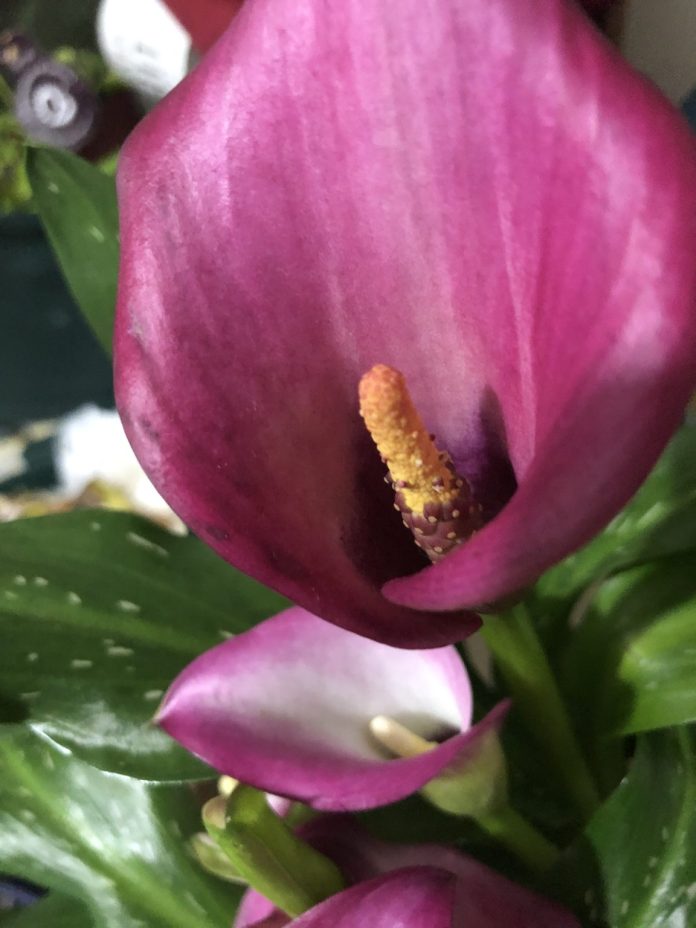
How do you take care of a calla lily plant? Calla lilies are elegant and relatively easy to care for. Here are some general tips to keep your calla lily plant healthy:
- Light: Calla lilies prefer bright, indirect light. Place them near a window where they can receive plenty of sunlight but avoid direct sunlight, especially during the hottest part of the day.
- Watering: Keep the soil consistently moist but not soggy. Water the plant when the top inch of soil feels dry to the touch. Ensure proper drainage to prevent waterlogging, as excessive moisture can lead to root rot.
- Soil: Plant your calla lily in well-draining soil rich in organic matter. A mix of potting soil and perlite or sand works well.
- Temperature and Humidity: Calla lilies thrive in temperatures between 65°F to 75°F (18°C to 24°C). They prefer moderate humidity levels, so consider using a humidifier or placing a tray filled with water and pebbles beneath the pot to increase humidity.
- Fertilization: Fertilize your calla lily plant once a month during the growing season (spring and summer) with a balanced, water-soluble fertilizer diluted to half strength. Avoid fertilizing during the dormant season.
- Pruning: Remove spent flowers and yellowing leaves to encourage new growth and maintain the plant’s appearance.
- Dormancy: Calla lilies typically go dormant in the fall. During this time, reduce watering and allow the soil to dry out slightly. Stop fertilizing until new growth appears in the spring.
- Pests and Diseases: Keep an eye out for pests like aphids, spider mites, and thrips. Treat any infestations promptly with insecticidal soap or neem oil. Also, watch for signs of fungal diseases such as powdery mildew and treat accordingly with fungicides.
By following these care tips, you can help your calla lily plant thrive and produce beautiful blooms.
Calla Lily – Zantedeschia Grow Guide
Common name: Calla Lily, Arum Lily
Family: Araceae
Type: Tender perennial / bulbous rhizome
Hardiness: RHS H3 – frost-tender; grow in pots or under cover in the UK
Ultimate size: 45–90 cm tall × 30–45 cm wide
Overview
Calla Lilies are elegant, architectural plants prized for their funnel-shaped flowers (spathes) and lance-shaped glossy leaves. Native to South Africa, they thrive in warm, sheltered conditions and are perfect for containers, tropical-style borders, or pond edges. Many varieties flower in summer, offering vibrant colours from white, cream, pink, yellow, to deep purple.
Position
- Light: Full sun to partial shade
- Needs sheltered, frost-free positions
- Container-grown plants can be moved to bright, warm spots during summer
Soil
- Type: Moist, fertile, well-draining soil
- Incorporate compost or well-rotted manure for nutrient-rich conditions
- pH: Neutral to slightly acidic
Planting
- When: Spring, after all risk of frost
- Plant rhizomes 10–15 cm deep, with the growing point facing up
- Space 30–45 cm apart in borders; one per container is sufficient
- Mulch lightly to conserve moisture
Watering
- Keep soil consistently moist during active growth
- Reduce watering after foliage dies back
- Avoid waterlogging, which can rot rhizomes
Feeding
- Apply a liquid fertiliser every 2–3 weeks during growth and flowering
- Optional slow-release fertiliser at planting for sustained nutrition
Growth & Habit
- Upright clump-forming perennial
- Glossy, arrow-shaped leaves; some varieties have variegated foliage
- Flowers rise above foliage on tall stems
- Dies back naturally after flowering; store rhizomes over winter in frost-prone areas
Flowering
- Months: Late spring to early autumn (June–September in UK)
- Flowers: Funnel-shaped spathes, colours vary by cultivar
- Long-lasting and excellent for cut flowers
Maintenance
- Remove spent flowers to encourage continued bloom
- Cut back foliage after it yellows naturally
- Lift rhizomes in autumn if grown in the ground in frost-prone areas; store dry at 10–15 °C
- Divide clumps every 2–3 years to maintain vigour
Propagation
- Division: Main method; divide clumps after dormancy
- Seed: Rarely used; slow to flower
Pests & Problems
- Slugs and snails may damage young leaves
- Aphids occasionally feed on stems and flowers
- Rhizome rot in poorly drained soil
Garden & Container Use
- Tropical-style borders and patio containers
- Pond-side planting (moist soil)
- Excellent with:
- Cannas
- Colocasias
- Hedychium
- Alocasia
Quick Reference Table
| Feature | Details |
|---|---|
| Hardiness | RHS H3 – frost-tender |
| Height | 45–90 cm |
| Spread | 30–45 cm |
| Flowering | Late spring to early autumn |
| Position | Full sun to partial shade; sheltered |
| Soil | Moist, fertile, well-draining; neutral to slightly acidic |
| Water | Keep evenly moist; avoid waterlogging |
| Feeding | Liquid fertiliser every 2–3 weeks; optional slow-release at planting |
| Propagation | Division; seed (rare) |
| Maintenance | Remove spent flowers; cut back foliage after dormancy; lift rhizomes if frost-prone |
| Best feature | Funnel-shaped flowers and glossy foliage; architectural tropical effect |