
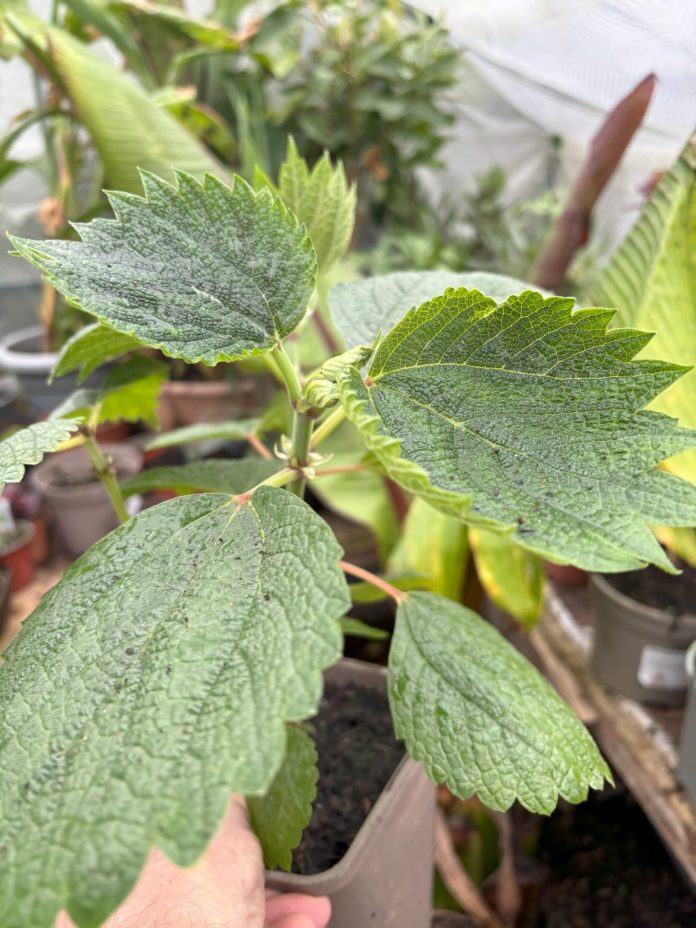
Sandpaper Plant (Boehmeria biloba) is a remarkable addition to UK gardens, known for its unique texture and adaptability. With its delicate foliage resembling sandpaper, this plant offers a distinctive charm that can enhance any outdoor space. In this comprehensive guide, tailored for UK gardeners, we’ll delve into the essential steps for successfully cultivating Sandpaper Plant in British gardens, ensuring its thriving presence year-round.
Understanding Sandpaper Plant (Boehmeria biloba):
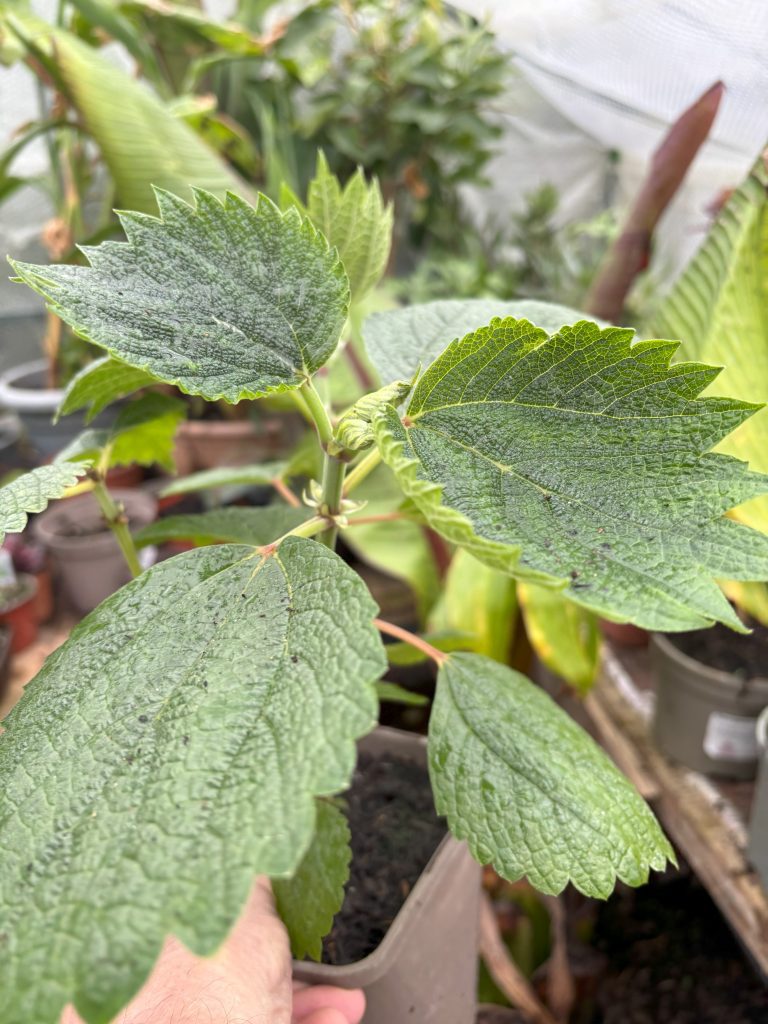
Sandpaper Plant, scientifically known as Boehmeria biloba, derives its common name from the rough texture of its leaves. Native to East Asia, this perennial plant belongs to the nettle family and boasts slender stems, heart-shaped leaves, and inconspicuous flowers. Despite its delicate appearance, Sandpaper Plant is remarkably adaptable and can thrive in various conditions, including the UK’s climate.
Planting Sandpaper Plant (Boehmeria biloba):
Select a planting site in your UK garden that offers partial shade and well-drained soil, ideal for Sandpaper Plant. Prepare the soil by incorporating organic matter to enhance fertility and drainage. Proper spacing, typically around 30 to 45 centimeters apart, allows for healthy growth and ensures adequate air circulation.
Care and Maintenance:
Sandpaper Plant (Boehmeria biloba) requires regular watering to maintain soil moisture levels, particularly during dry periods. Mulching around the base of the plant helps retain moisture and suppresses weed growth. Apply a balanced, slow-release fertilizer in the spring to provide essential nutrients for healthy growth and vibrant foliage.
Winter Hardiness:
Sandpaper Plant (Boehmeria biloba) exhibits good winter hardiness, making it suitable for UK gardens. While it can withstand colder temperatures, providing additional protection during harsh winters can help ensure its survival. Consider covering the plant with a layer of mulch or garden fabric to insulate the roots and protect them from freezing temperatures.
Pruning:
Regular pruning is essential for maintaining the shape and vigor of Sandpaper Plant (Boehmeria biloba). Remove any dead or damaged foliage as needed, and prune back overgrown stems to promote new growth and prevent legginess. This ensures the plant remains attractive and well-proportioned in your garden.
Propagation:
Sandpaper Plant (Boehmeria biloba) can be propagated through seeds or stem cuttings. Collect seeds from mature plants in the fall or take stem cuttings in spring or summer. Root cuttings in a well-draining medium and provide warmth and indirect light for successful propagation.
Conclusion:
Sandpaper Plant (Boehmeria biloba) is a captivating addition to UK gardens, offering unique texture and visual interest. By following these guidelines for planting, care, and maintenance, UK gardeners can cultivate thriving specimens of Sandpaper Plant, enhancing their outdoor spaces with its distinctive charm year-round. Whether used as a border plant, ground cover, or accent in mixed beds, Sandpaper Plant (Boehmeria biloba) adds a touch of elegance and versatility to British gardens.
Boehmeria biloba – Grow Guide
Common name: None widely used; a type of ornamental Boehmeria
Family: Urticaceae (Nettle family)
Type: Deciduous or semi-evergreen shrub
Hardiness: RHS H3–H4 – tender to half-hardy in the UK; protect from frost
Ultimate size: 2–3 m tall × 1.5–2 m wide
Overview
Boehmeria biloba is an exotic, architectural shrub valued for its lush green foliage and airy habit. Unlike many nettle relatives, it is ornamental rather than stinging, producing small, inconspicuous flowers in summer. Perfect for tropical-style borders, sheltered gardens, or large containers in the UK.
Position
- Light: Partial shade to full sun
- Performs best in sheltered, frost-free locations
- Avoid full exposure to cold winds, especially for young plants
Soil
- Type: Fertile, moist, well-draining soil
- Enrich with compost or leaf mould at planting
- pH: Neutral to slightly acidic
Planting
- When: Spring after frost or autumn in mild areas
- Space plants 1.5–2 m apart for full-grown shrubs
- Mulch around base to conserve moisture and suppress weeds
Watering
- Keep soil evenly moist, especially during the first 1–2 years
- Reduce watering in winter if dormant
- Avoid waterlogged conditions, which can cause root rot
Feeding
- Apply a balanced fertiliser in spring
- Organic compost or well-rotted manure will encourage lush foliage
Growth & Habit
- Upright, clump-forming shrub with broad, glossy leaves
- Semi-evergreen in mild winters; deciduous in colder areas
- Airy, architectural habit adds texture and tropical effect to borders
- Responds well to light pruning or shaping
Flowering
- Months: Summer (July–August)
- Flowers: Small, inconspicuous greenish-white spikes; mainly ornamental for foliage
- Attracts pollinators such as bees
Maintenance
- Prune after flowering to maintain shape and encourage fresh growth
- Mulch base in winter for frost protection
- Remove any damaged or dead stems
Propagation
- Semi-hardwood cuttings: Summer, root in humid, warm conditions
- Seed: Rarely used in cultivation
Pests & Problems
- Generally pest-free
- Occasional aphids on young growth
- Root rot in poorly drained soils
Garden Use
- Tropical-style borders or sheltered garden corners
- Large containers for patio or terrace planting
- Architectural foliage contrast with:
- Gunnera
- Tetrapanax
- Cordyline
- Fatsia japonica
Quick Reference Table
| Feature | Details |
|---|---|
| Hardiness | RHS H3–H4 – tender to half-hardy; protect from frost |
| Height | 2–3 m |
| Spread | 1.5–2 m |
| Flowering | July–August; small, inconspicuous spikes |
| Position | Partial shade to full sun; sheltered |
| Soil | Moist, fertile, well-draining; neutral to slightly acidic |
| Water | Keep evenly moist; avoid waterlogging |
| Feeding | Balanced fertiliser in spring; compost optional |
| Propagation | Semi-hardwood cuttings; seed (rare) |
| Maintenance | Light pruning after flowering; mulch in winter |
| Best feature | Architectural, glossy foliage with tropical effect |