
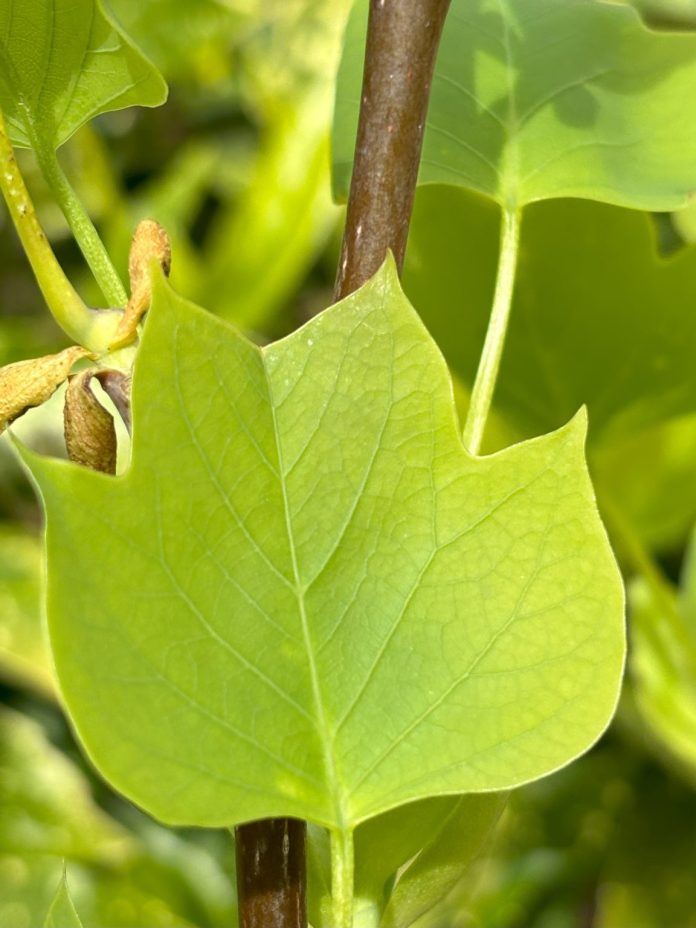
Growing a tulip tree, also known as Liriodendron tulipifera, can be a great addition to a tropical garden in the UK. Here’s a guide on how to grow the Tulip tree
- Choose the Right Location: Tulip trees prefer full sun and well-drained soil. They can tolerate various soil types, including clay and loamy soils, but they thrive in deep, fertile soil.
- Planting: Plant your tulip tree in the spring or fall. Dig a hole twice the width of the root ball and just as deep. Place the tree in the hole and backfill with soil, making sure the top of the root ball is level with the ground.
- Watering: Keep the soil consistently moist, especially during the tree’s first year of growth. Once established, tulip trees are moderately drought-tolerant but will benefit from regular watering during dry periods.
- Mulching: Apply a layer of mulch around the base of the tree to help retain moisture and suppress weed growth. Keep the mulch several inches away from the trunk to prevent rot.
- Pruning: Tulip trees generally require minimal pruning. Remove any dead, damaged, or crossing branches to maintain a healthy structure. Prune in late winter or early spring before new growth begins.
- Fertilizing: Fertilization may not be necessary if the tree is growing in fertile soil. However, if the soil is poor, you can apply a balanced fertilizer in the spring.
- Protection from Pests and Diseases: Tulip trees are relatively pest and disease resistant, but they can sometimes be affected by aphids, scale insects, or various fungal diseases. Monitor your tree regularly and take appropriate measures if you notice any issues.
- Support: Young tulip trees may benefit from staking to help them establish a strong root system and upright growth.
- Patience: Tulip trees can take several years to reach maturity and start flowering. Be patient and continue to provide proper care.
- Enjoy: Once your tulip tree matures, you’ll be rewarded with beautiful tulip-shaped flowers in the spring and vibrant foliage in the fall. Sit back and enjoy the beauty of your tree!
Size: Tulip trees are known for their impressive size. In optimal conditions, they can grow to be quite large, reaching heights of 60 to 90 feet or more, with a spread of 30 to 50 feet. It’s important to consider this when selecting a location for planting, ensuring that the tree will have ample space to grow without interfering with structures or other plants.
Pruning for Size Management:
- Early Pruning: When the tree is young, you can prune it to encourage a strong, well-shaped structure. Focus on removing any competing or crossing branches and maintain a central leader for upright growth.
- Regular Maintenance: As the tree matures, periodic pruning may be necessary to manage its size and shape. This can involve selectively removing branches to thin out the canopy and reduce overall density. Pay attention to any branches that are encroaching on structures or obstructing views.
- Size Reduction: If the tree has grown too large for its space, you can use size reduction pruning techniques to bring it under control. This typically involves cutting back branches to reduce the overall height and spread of the tree. However, it’s important to approach this carefully to avoid damaging the tree or promoting weak growth.
- Timing: Pruning for size management is best done during the dormant season, typically in late winter or early spring before new growth begins. Avoid pruning during the active growing season, as this can stress the tree and interfere with its ability to heal properly.
Professional Assistance: If you’re unsure about how to prune your tulip tree for size management or if the tree has grown too large to handle safely on your own, consider hiring a certified arborist to assess the tree and perform any necessary pruning.
By following these guidelines, you can help ensure that your tulip tree remains healthy, well-maintained, and appropriately sized for its environment.
Remember to check for specific guidelines that may apply to your particular region or climate, as well as any local regulations regarding tree planting.
Tulip Tree – Liriodendron tulipifera Grow Guide
Common name: Tulip Tree, Yellow Poplar
Family: Magnoliaceae
Type: Deciduous tree
Hardiness: RHS H5 – fully hardy in the UK
Ultimate size: 20–30 m tall × 10–15 m wide
Overview
The Tulip Tree is a majestic, fast-growing deciduous tree native to North America. It is known for its distinctive tulip-shaped flowers in late spring and bright green, lobed leaves that turn yellow in autumn. Its tall, straight habit and smooth, grey bark make it a superb specimen tree or woodland planting in large UK gardens.
Position
- Light: Full sun
- Requires sheltered conditions when young
- Best in spacious gardens, parks, or woodland edges
Soil
- Type: Fertile, well-draining, deep soil
- Tolerates clay, loam, or sandy soils
- pH: Neutral to slightly acidic
- Performs best in moist, rich soils, though it tolerates some drought once established
Planting
- When: Autumn or early spring
- Space 10–15 m apart for full-grown specimens
- Ensure root ball is level with surrounding soil and water well after planting
Watering
- Water regularly during establishment (first 2–3 years)
- Deep watering helps establish strong roots
- Once mature, moderately drought-tolerant
Feeding
- Apply a general-purpose fertiliser in spring for young trees
- Mulch around the base with organic matter to retain moisture and improve soil
Growth & Habit
- Upright, fast-growing, conical when young, broadening with age
- Leaves: lobed, bright green, turning golden yellow in autumn
- Bark: Smooth and grey in youth, becoming slightly furrowed with age
Flowering
- Months: May–June (UK)
- Flowers: Greenish-yellow with an orange centre, shaped like tulips, 5–6 cm long
- Flowers attract bees but are not very long-lasting
- Main feature: foliage and tree architecture
Maintenance
- Low-maintenance once established
- Prune only to remove dead, crossing, or damaged branches
- Mulch base to suppress weeds and conserve moisture
- Young trees may benefit from staking in exposed positions
Propagation
- Seed: Best sown fresh in autumn; stratification improves germination
- Root cuttings: Rarely used in cultivation
Pests & Problems
- Generally pest- and disease-free in the UK
- Occasionally affected by leaf miners or aphids
- Sensitive to prolonged drought when young
Garden Use
- Specimen tree for large gardens or parks
- Woodland or avenue planting
- Works well with:
- Acer spp. (maples)
- Fagus sylvatica (beech)
- Magnolia species
- Cornus spp.
Quick Reference Table
| Feature | Details |
|---|---|
| Hardiness | RHS H5 – fully hardy |
| Height | 20–30 m |
| Spread | 10–15 m |
| Flowering | May–June; tulip-shaped greenish-yellow flowers |
| Position | Full sun; sheltered when young |
| Soil | Fertile, deep, well-draining; neutral to slightly acidic |
| Water | Regular during establishment; moderate once mature |
| Feeding | General-purpose fertiliser in spring; mulch around base |
| Propagation | Seed (best sown fresh); root cuttings (rare) |
| Maintenance | Minimal; remove dead/damaged branches; mulch base |
| Best feature | Architectural form, tulip-shaped flowers, and autumn foliage |