
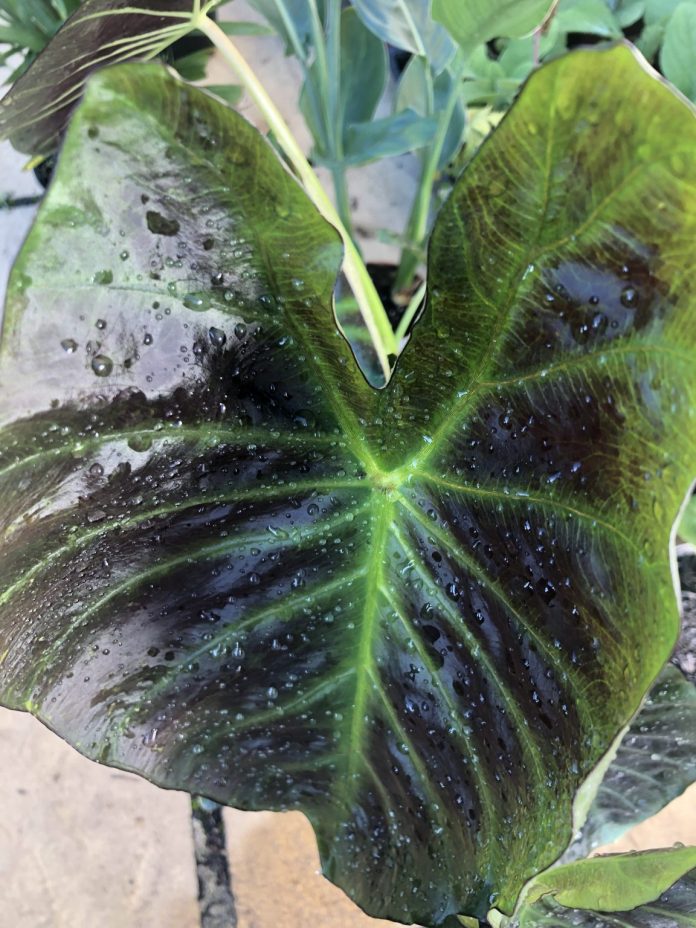
Colocasia ‘Royal Hawaiian Aloha’ is a beautiful variety of elephant ear plant known for its large, heart-shaped leaves and striking tropical appearance. To successfully grow and care for Colocasia ‘Royal Hawaiian Aloha,’ follow these guidelines:
- Select a Suitable Location: Choose a planting location that receives partial to full sun. These plants thrive in warm, humid conditions, so make sure the spot has good air circulation as well.
- Soil Preparation: Elephant ear plants prefer well-draining, rich, and moist soil. A mix of organic compost or well-rotted manure can improve soil fertility. The soil pH should be slightly acidic to neutral (around 6.0 to 7.0).
- Planting: Plant your Colocasia ‘Royal Hawaiian Aloha’ tubers in spring when the soil has warmed up. Ensure that the tubers are planted about 2-4 inches deep with the eyes or growing points facing upwards. Space multiple tubers about 2-3 feet apart, as these plants can spread.
- Watering: Elephant ear plants require consistent moisture to thrive. Water them regularly, keeping the soil consistently damp but not waterlogged. During hot, dry periods, you may need to water more frequently.
- Mulching: Apply a layer of mulch around the base of the plant to help retain moisture, regulate soil temperature, and prevent weed growth. Organic mulch, such as wood chips or straw, works well.
- Fertilization: Feed your Colocasia ‘Royal Hawaiian Aloha’ with a balanced, slow-release fertilizer during the growing season (spring through early autumn). Follow the manufacturer’s recommendations for dosage. Over-fertilization can lead to excessive foliage growth with smaller leaves, so be cautious.
- Pruning and Deadheading: Remove any damaged or yellowing leaves to encourage healthy growth. Deadheading or removing spent flowers can also improve the plant’s appearance.
- Pest and Disease Management: Elephant ear plants can be susceptible to aphids, spider mites, and fungal diseases in humid conditions. Keep an eye out for signs of pests or disease and treat them promptly with appropriate measures, such as insecticidal soap or fungicides.
- Winter Care: Considered half hardy. In colder climates, Colocasia ‘Royal Hawaiian Aloha’ is not frost-tolerant. You should either dig up the tubers and store them indoors over the winter or provide protection with heavy mulching to keep them from freezing. If you choose to store the tubers, keep them in a cool, dry place.
- Propagation: You can propagate Colocasia ‘Royal Hawaiian Aloha’ by dividing the tubers in early spring. Make sure each division has at least one eye or growing point. Plant the divisions in suitable locations as mentioned earlier.
- Container Gardening (Optional): If you don’t have suitable garden soil or live in a cold climate, you can also grow Colocasia ‘Royal Hawaiian Aloha’ in large containers filled with a high-quality potting mix. Make sure the container has drainage holes.
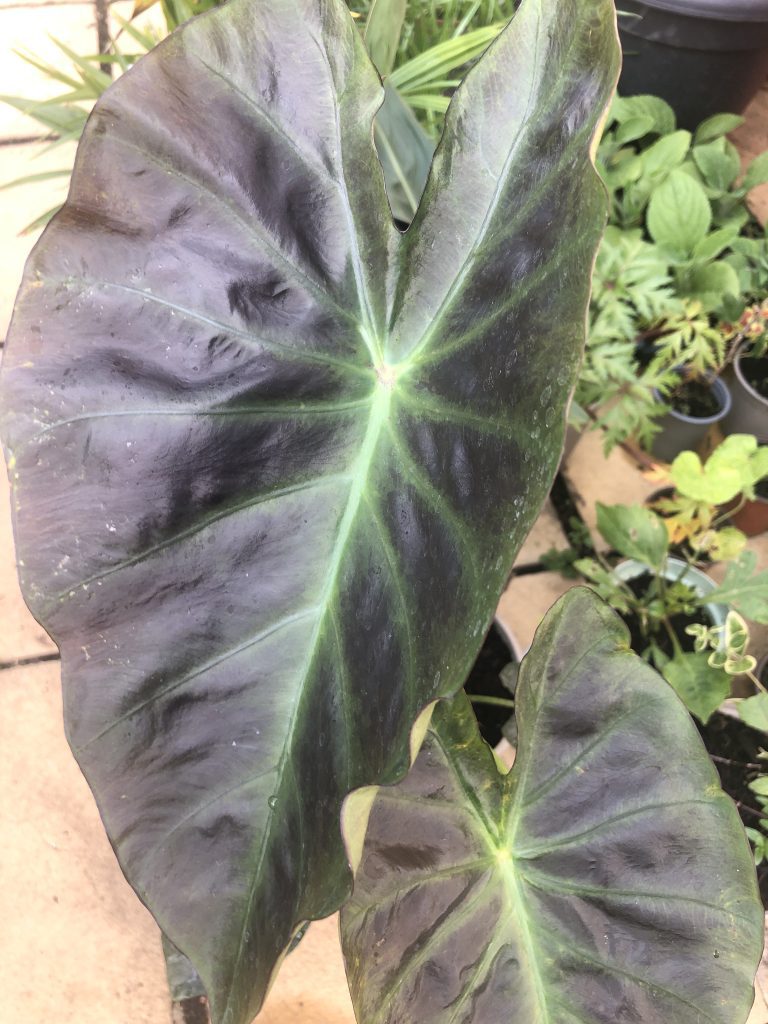
Colocasia ‘Royal Hawaiian® Aloha’ – Grow Guide
Common name: Royal Hawaiian Aloha Elephant Ear
Family: Araceae
Type: Tender perennial (tropical foliage plant)
Hardiness: RHS H3 – frost-tender; overwinter indoors or lift corms in the UK
Ultimate size: 1.2–1.5 m tall × 1–1.2 m wide
Overview
Colocasia ‘Royal Hawaiian® Aloha’ is a dramatic elephant ear with very large, upright, glossy green leaves carried on strong burgundy-purple stems. It has excellent vigour and an upright habit, making it one of the best Colocasias for tropical-style borders and large containers in the UK.
Position
- Light: Full sun to partial shade
- Best colour and strongest growth in full sun
- Sheltered from strong winds to prevent leaf tearing
Soil
- Type: Moist, fertile, humus-rich soil
- Free-draining but moisture-retentive
- pH: Slightly acidic to neutral
- Improves dramatically with added compost or organic matter
Planting
- When: Late spring, once all frost risk has passed
- Plant corms 5–10 cm deep
- Space 75–100 cm apart to allow for full leaf spread
- Excellent in large pots for easy overwintering
Watering
- Keep soil consistently moist throughout the growing season
- Water generously during hot or dry weather
- Reduce watering once foliage dies back in autumn
Feeding
- Heavy feeder
- Apply slow-release fertiliser at planting
- Supplement with liquid feed every 2–3 weeks during summer for maximum leaf size
Growth & Habit
- Upright, clump-forming perennial
- Thick, colourful stems support huge leaves
- Fast growth in warm conditions
- Dies back naturally in late autumn
Flowering
- Flowers: Rare in UK conditions
- Small spathes typical of Colocasia
- Grown almost entirely for foliage impact
Maintenance
- Remove damaged or yellowing leaves during the season
- Lift corms before first frost if grown in the ground
- Store corms dry, frost-free, and cool (5–10 °C) over winter
- Alternatively, move container plants under glass
Propagation
- Corm division: Main method; separate offsets in spring
- Seed: Rarely used and slow
Pests & Problems
- Slugs and snails on young leaves
- Aphids or spider mites under glass
- Root rot if soil becomes waterlogged
Garden Use
- Tropical-style borders
- Large containers and patios
- Bold focal plant in summer displays
- Excellent alongside:
- Cannas
- Bananas (Musa)
- Ricinus
- Dark-leaved Colocasia cultivars
Quick Reference Table
| Feature | Details |
|---|---|
| Hardiness | RHS H3 |
| Height | 1.2–1.5 m |
| Spread | 1–1.2 m |
| Position | Full sun to partial shade |
| Soil | Moist, fertile, humus-rich |
| Water | Keep consistently moist |
| Feeding | Heavy feeder; liquid feed every 2–3 weeks |
| Propagation | Corm division |
| Maintenance | Lift or protect from frost |
| Best feature | Huge green leaves with purple stems |