
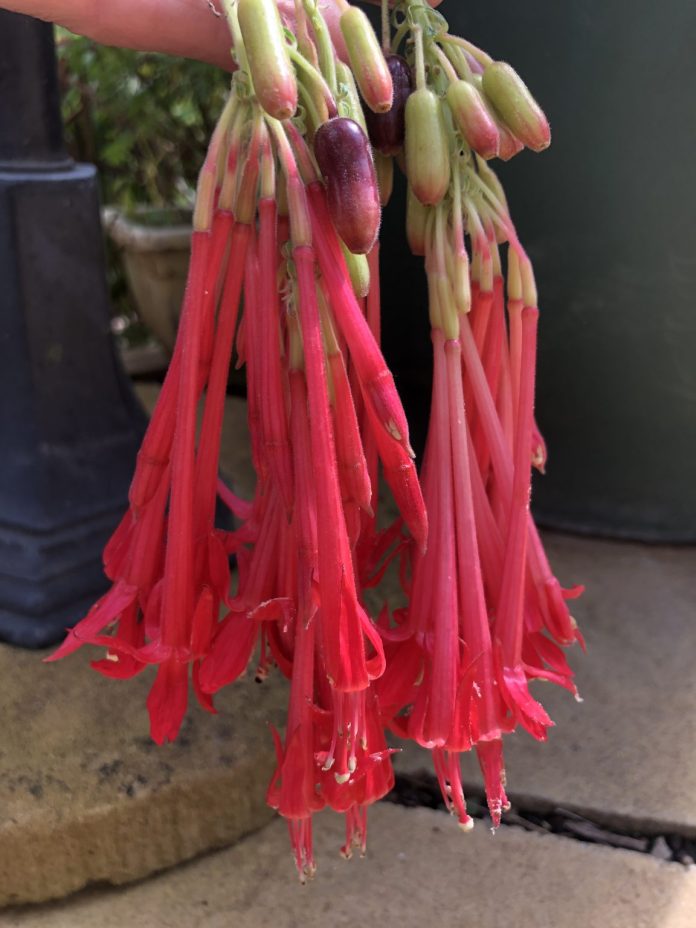
Growing Fuchsia boliviana in the UK can be a bit more challenging due to the cooler climate. However, with the right care and attention, you can still enjoy the beauty of this exotic plant. Here’s how to grow Fuchsia boliviana in the UK:
- Choose the Right Location: Select a location that receives morning sunlight but is shaded from the hot afternoon sun. If possible, choose a spot near a south or west-facing wall that can provide some warmth and protection.
- Container Gardening: Due to the colder climate, consider growing Fuchsia boliviana in a large container. This way, you can move the plant indoors during colder months or position it strategically to avoid frost exposure.
- Soil Preparation: Use a well-draining potting mix with added compost or peat moss to improve drainage and moisture retention. Fuchsia plants generally prefer slightly acidic soil.
- Watering: Keep the soil consistently moist, especially during the growing season (spring through fall). Water thoroughly whenever the top inch of the soil feels dry. Be cautious not to let the plant sit in waterlogged soil, as this can lead to root rot.
- Temperature Considerations: Fuchsia boliviana is not very frost-tolerant. When winter approaches, bring the container indoors to a cool and well-lit location, such as a greenhouse or a bright window. Maintain a minimum temperature of around 45-50°F (7-10°C).
- Fertilization: Feed the plant with a balanced, water-soluble fertilizer every 4-6 weeks during the growing season. Reduce or stop fertilizing in the winter when growth slows down.
- Pruning: Regularly prune the plant to encourage branching and bushier growth. This will also help it fit better within its container. Remove any dead or diseased growth.
- Humidity: Fuchsia boliviana appreciates higher humidity levels. You can increase humidity by misting the plant, placing a tray of water near it, or using a humidifier indoors.
- Pest and Disease Management: Keep an eye out for pests like aphids, whiteflies, and spider mites. Check the plant regularly and treat any infestations promptly using appropriate methods. Good air circulation and proper watering practices can help prevent fungal diseases.
- Overwintering: As mentioned earlier, overwinter the plant indoors in a cool and well-lit location. You might notice reduced growth during the winter months, but this is normal. Resume regular care and fertilization in spring.
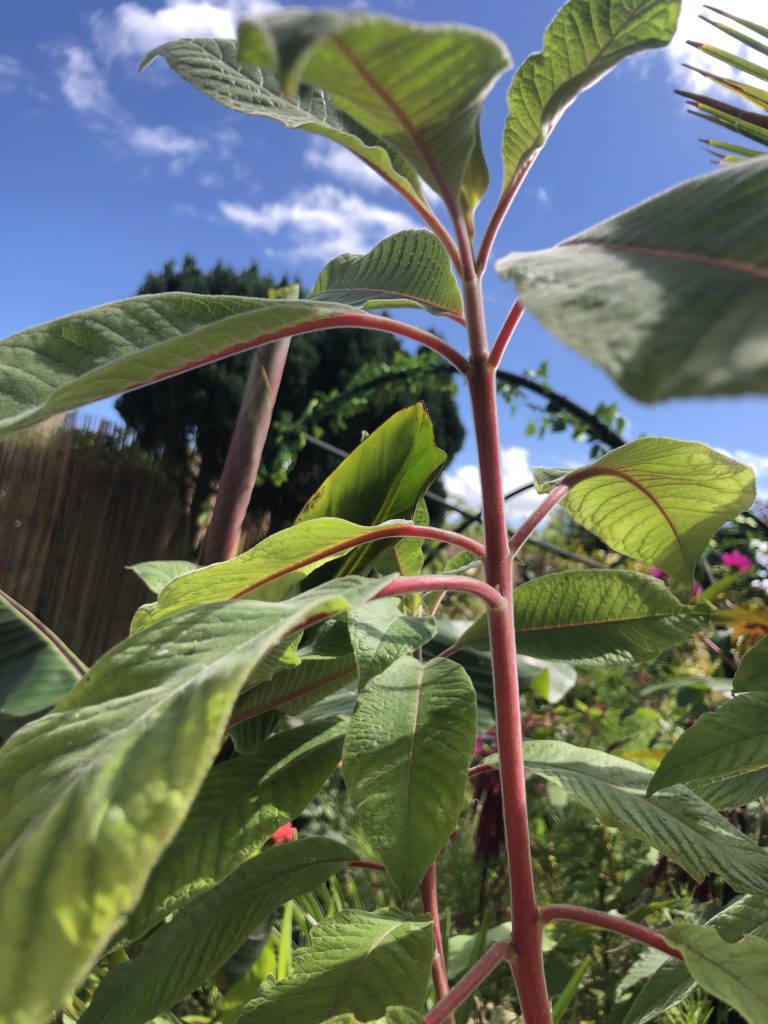
Fuchsia boliviana – Grow Guide
Common name: Bolivian Fuchsia
Family: Onagraceae
Type: Evergreen or semi-evergreen shrub (tender in frost)
Hardiness: RHS H3–H4 – frost tender; hardy in mild UK areas with winter protection or grown in a conservatory/greenhouse
Ultimate size: 2–3 m tall × 1.5–2 m wide
Overview
Fuchsia boliviana is a large, tropical-style shrub prized for its pendulous clusters of large red tubular flowers, which attract hummingbirds, bees, and butterflies. It produces blooms from late summer into autumn, providing vibrant colour when many other shrubs are fading. Its glossy green foliage adds year-round interest in sheltered gardens.
Position
- Light: Full sun to partial shade
- Protect from strong winds, which can damage flowers and stems
- Best in sheltered, warm spots for optimal flowering
Soil
- Type: Fertile, humus-rich, well-draining soil
- pH: Slightly acidic to neutral
- Enrich planting hole with compost or well-rotted organic matter
Planting
- When: Spring or autumn (frost-free for autumn planting)
- Space 1.5–2 m apart to allow full development
- Mulch to retain moisture and regulate root temperature
Watering
- Keep soil evenly moist, especially during active growth and flowering
- Reduce watering slightly in winter if plant is evergreen
- Avoid waterlogging, which can cause root rot
Feeding
- Feed monthly with liquid fertiliser from spring to late summer
- Optional slow-release fertiliser in spring for sustained growth
Growth & Habit
- Upright, bushy shrub with arching branches
- Glossy, dark green leaves
- Can be pruned lightly to maintain shape and encourage bushier growth
- May require staking in exposed sites
Flowering
- Month: Late summer to autumn (August–October in UK)
- Flowers: Pendulous, tubular, bright red; highly attractive to pollinators
- Flower clusters can be up to 10–15 cm long
Maintenance
- Prune lightly after flowering to maintain shape
- Remove weak, crossing, or damaged branches
- Protect from severe frost: mulch base and cover if necessary
- Evergreen in mild areas; may die back in frost-prone gardens
Propagation
- Semi-hardwood cuttings: Best taken in summer, root in moist compost
- Seed: Possible but slow and rarely used in cultivation
Pests & Problems
- Aphids, whitefly, or spider mites, especially indoors or in sheltered conditions
- Fungal disease (botrytis or rust) in humid, poorly ventilated sites
- Frost can kill above-ground growth in UK gardens
Garden Use
- Tropical or woodland-style borders
- Conservatory or greenhouse specimen plant
- Patio containers in frost-prone areas
- Excellent for attracting pollinators (bees, butterflies, hummingbirds in mild areas)
- Pairs well with Cannas, Fuchsia magellanica, or other bold-leaved tropicals
Quick Reference Table
| Feature | Details |
|---|---|
| Hardiness | RHS H3–H4 – frost-tender; winter protection needed in cold areas |
| Height | 2–3 m |
| Spread | 1.5–2 m |
| Flowering | August–October |
| Flowers | Pendulous, tubular, bright red; 10–15 cm clusters |
| Position | Full sun to partial shade; sheltered |
| Soil | Fertile, humus-rich, well-draining |
| Water | Keep evenly moist; avoid waterlogging |
| Feeding | Liquid fertiliser monthly; slow-release optional |
| Propagation | Semi-hardwood cuttings (main), seed (rare) |
| Maintenance | Light prune after flowering; protect from frost |
| Pests | Aphids, whitefly, spider mites; occasional fungal issues |