
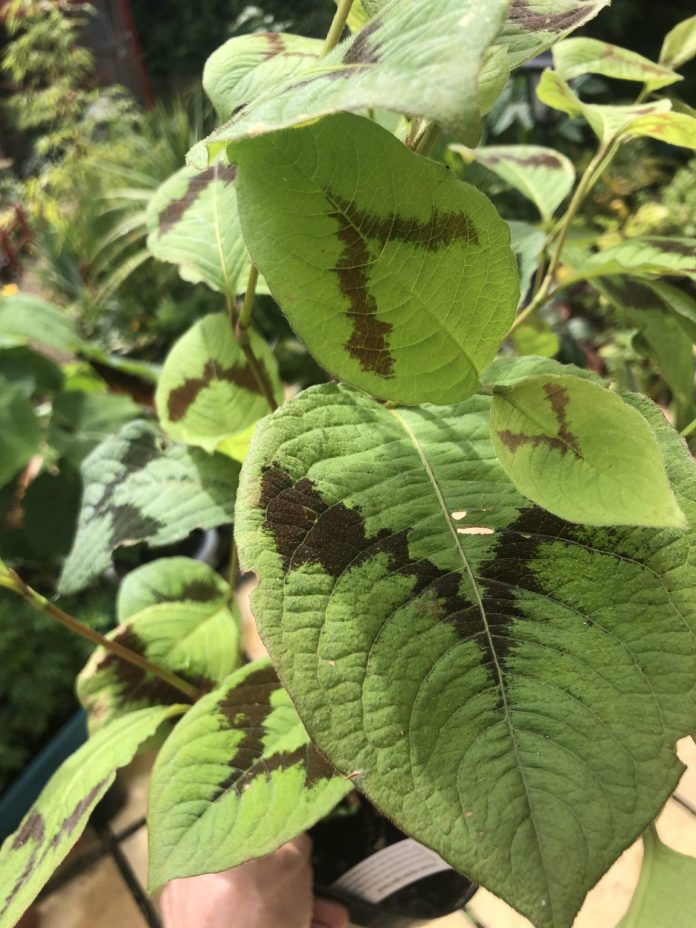
To grow Persicaria virginiana ‘Lance Corporal’ in the UK, follow these steps:
- Choose the Right Location: Select a planting spot that receives partial to full sun. Persicaria virginiana ‘Lance Corporal’ can tolerate some shade, but it generally performs best in areas with more sunlight. Ensure the soil is well-draining and avoid waterlogged areas.
- Planting Time: The best time to plant ‘Lance Corporal’ is in spring or early autumn. Avoid planting during frosty periods, as the young plant can be susceptible to frost damage.
- Soil Preparation: Prepare the planting area by digging the soil and incorporating some organic matter like compost. This helps improve soil fertility, drainage, and moisture retention.
- Planting: Dig a hole that is about the same depth as the nursery container or root ball and slightly wider. Place the plant in the hole and backfill with soil, gently firming it down as you go. Water thoroughly after planting.
- Watering: Keep the soil consistently moist, especially during the first growing season. In the UK, the climate can be relatively rainy, but during dry spells, make sure to water the plant adequately.
- Mulching: Apply a layer of organic mulch around the base of the plant. Mulching helps retain soil moisture, suppresses weed growth, and maintains a more even soil temperature.
- Fertilizing: Persicaria virginiana ‘Lance Corporal’ is not a heavy feeder, but if your soil is poor, you can apply a balanced, slow-release fertilizer in the spring to support healthy growth.
- Pruning: Minimal pruning is generally required for this plant. Remove any dead or damaged stems as needed to keep the plant looking tidy.
- Winter Care: In the UK, the plant is generally hardy, but if you experience particularly harsh winters, you can apply a layer of mulch around the base of the plant in late autumn to protect the roots from freezing temperatures.
- Pest and Disease Management: Persicaria virginiana ‘Lance Corporal’ is relatively resistant to pests and diseases. However, it’s always a good idea to keep an eye out for any issues and take appropriate action if necessary.


Persicaria virginiana ‘Lance Corporal’ – Grow Guide
Common name: Lance Corporal Virginia Knotweed
Family: Polygonaceae
Type: Herbaceous perennial
Hardiness: RHS H5 – fully hardy in most of the UK
Ultimate size: 60–90 cm tall × 45–60 cm wide
Overview
Persicaria virginiana ‘Lance Corporal’ is a clump-forming perennial with upright, arching stems and deep purple-red flower spikes that appear in late summer. Its foliage emerges green with a hint of bronze, adding seasonal colour to wildlife-friendly or naturalistic borders. It spreads slowly, forming tidy clumps over time.
Position
- Light: Full sun to partial shade. Flowering is best in full sun, but partial shade protects foliage from scorching in hot locations.
- Aspect: Sheltered from strong winds to keep flower spikes upright.
Soil
- Type: Moist, humus-rich soil
- pH: Neutral to slightly acidic
- Performs well in heavier soils if drainage is adequate
Planting
- When: Spring or autumn
- How: Plant divisions or container-grown plants at the same depth as grown in the pot
- Spacing: 45–60 cm between plants to allow for clump expansion
- Mulch after planting to conserve moisture and suppress weeds
Watering
- Keep soil evenly moist, especially during dry spells
- Reduces risk of drooping flower spikes and leaf stress
Feeding
- Apply a general-purpose fertiliser in early spring to support growth
- Optional liquid feed in summer for prolonged flowering
Growth & Habit
- Upright, arching stems forming a tidy clump
- Foliage emerges green with bronze tones; turns darker in autumn
- Flower spikes rise above foliage, producing narrow, densely packed clusters of red flowers
Flowering
- Month: August–September
- Flowers: Narrow, deep red spikes, slightly fragrant
- Attractive to bees, butterflies, and other pollinators
Maintenance
- Cut back old foliage in late winter to tidy clumps
- Remove spent flower spikes to encourage cleaner appearance
- Dividing clumps every 3–4 years maintains vigour
Propagation
- Division: Main method in spring or autumn
- Seed: Possible, but slow and less commonly used
Pests & Problems
- Generally pest-free
- Slugs may nibble young shoots
- Rarely affected by fungal disease if grown in well-drained soil
Garden Use
- Naturalistic and woodland-style borders
- Wildlife gardens (pollinator-friendly)
- Pond or damp margins
- Pairs well with hostas, ferns, and other late-summer perennials
Quick Reference Table
| Feature | Details |
|---|---|
| Hardiness | RHS H5 |
| Height | 60–90 cm |
| Spread | 45–60 cm |
| Flowering | August–September |
| Position | Full sun to partial shade |
| Soil | Moist, humus-rich, well-drained |
| Water | Keep moist, especially in dry spells |
| Feeding | General-purpose fertiliser in spring; optional summer feed |
| Propagation | Division (main), seed (slow) |
| Maintenance | Cut back old foliage late winter; divide every 3–4 years |
| Pests | Slugs (minor), generally pest-free |