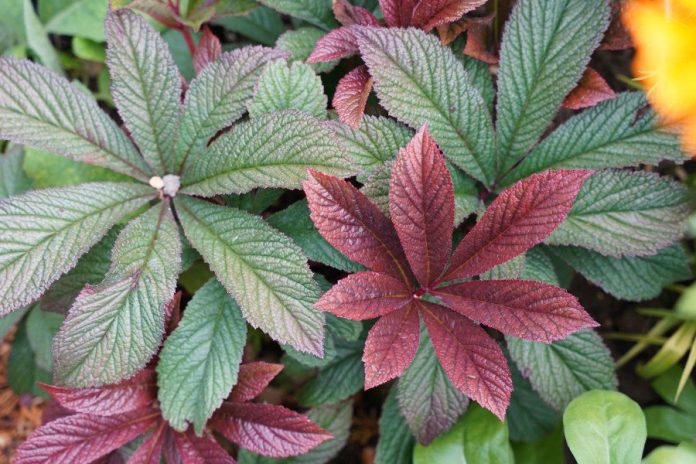
Rodgersia ‘Bronze Peacock’ is a striking perennial plant known for its bronze-colored foliage and attractive plumes of flowers. It grows to about one meter tall. Here’s a guide on how to grow and care for this beautiful plant:
- Planting and Location:
- Choose a planting location that receives partial to full shade. Rodgersia prefers moist, cool soil, so avoid planting it in hot, dry areas.
- Ensure the soil is rich, fertile, and well-draining. Rodgersia thrives in slightly acidic to neutral soil pH.
- Planting Time:
- Plant Rodgersia ‘Bronze Peacock’ in spring or early fall. This allows the plant to establish its root system before facing extreme temperatures.
- Planting Depth:
- Dig a hole that is slightly larger than the root ball of the plant. The crown of the plant (where the roots meet the stem) should be at ground level or just slightly below it.
- Watering:
- Rodgersia requires consistent moisture to thrive. Keep the soil evenly moist, but not waterlogged, especially during dry periods. Mulching around the plant can help retain soil moisture.
- Fertilization:
- Before planting, you can incorporate some organic matter or compost into the soil. During the growing season, you can use a balanced, slow-release fertilizer to provide essential nutrients.
- Pruning:
- Rodgersia ‘Bronze Peacock’ doesn’t require regular pruning. However, you can remove any dead or damaged leaves to improve the plant’s appearance and health.
- Pest and Disease Control:
- Rodgersia is generally resistant to pests and diseases. However, keeping the plant in good health through proper watering and suitable growing conditions will help prevent any potential issues.
- Winter Care:
- In colder climates, the foliage of Rodgersia ‘Bronze Peacock’ may die back during winter. If this happens, you can cut back the dead foliage in late fall or early spring before new growth emerges.
- Propagation:
- Rodgersia ‘Bronze Peacock’ can be propagated through division. It’s best to do this in early spring before new growth starts. Dig up the plant, divide the clumps, and replant them in their preferred location.
- Support:
- The tall flower plumes of Rodgersia may require staking or support to prevent them from flopping over.
Here’s a detailed grow guide for Rodgersia ‘Bronze Peacock’ covering all the key gardening details:
Rodgersia ‘Bronze Peacock’ – Grow Guide
Rodgersia ‘Bronze Peacock’ is a dramatic, large-leaved perennial prized for its architectural foliage and tall, airy flower spikes. It adds bold texture and tropical appeal to shaded or damp garden areas and is a standout plant in borders, woodland gardens, and pond edges.
Botanical Information
- Botanical Name: Rodgersia podophylla ‘Bronze Peacock’
- Family: Saxifragaceae
- Common Name: Rodgersia
- Plant Type: Herbaceous perennial
Growth Habit
- Height: 90 cm to 1.5 m (up to 2 m with flower spikes)
- Spread: 1–1.5 m
- Form: Clump-forming perennial with large, palmate leaves
- Foliage: Dark bronze-green leaves with striking texture; young leaves emerge copper-bronze, maturing to deep green
- Flowers: Creamy-white or pale pink airy panicles appearing on tall stems in summer
Soil Requirements
- Type: Moist, fertile soils; tolerates loam, clay, and rich garden soils
- Moisture: Prefers consistently moist to damp soil; excellent for pond edges or shaded borders
- pH: Slightly acidic to neutral (pH 6.0–7.0)
- Fertilization: Feed in spring with well-rotted compost or balanced fertilizer to support leaf and flower growth
Position and Sunlight
- Sun: Partial shade to full shade
- Shade: Performs best in dappled or light shade; avoids hot afternoon sun which can scorch leaves
- Air Circulation: Good airflow reduces fungal issues on large leaves
Hardiness
- Hardiness: Fully hardy in temperate zones (USDA 5–8, RHS H7)
- UK Care: Thrives in most UK gardens; protect from drying winds and winter desiccation
- Winter Care: Leaves die back in winter; mulch crown with compost or leaf mould for extra protection in harsh winters
Flowering
- Months: June to August
- Flower Type: Creamy-white or pale pink panicles on tall stems
- Pollinators: Attracts bees and other beneficial insects
- Flower Duration: Flowers last several weeks and add height to borders
Propagation
- Division: Best method; divide clumps in early spring or autumn every 3–4 years
- Seed: Rarely used; seedlings may not be true to cultivar
- Cuttings: Not commonly propagated by cuttings
Cultivation Tips
- Spacing: Allow 1–1.5 m between plants for airflow and leaf expansion
- Mulching: Annual mulch improves soil moisture retention and adds nutrients
- Deadheading: Remove spent flowers if desired, though not essential
- Companion Plants: Ferns, hostas, astilbes, and shade-loving grasses complement the bold foliage
- Pests/Diseases: Very few; occasionally slugs or snails may damage young foliage
Garden Uses
- Borders: Excellent for bold foliage in shady perennial borders
- Woodland Gardens: Thrives under trees or in semi-shade
- Pond Edges: Loves damp soil, making it ideal near water features
- Architectural Interest: Large leaves and tall flower spikes create a dramatic focal point
Summary
Rodgersia ‘Bronze Peacock’ is a show-stopping, shade-loving perennial with bold, tropical-style foliage and airy summer flowers. It thrives in moist, fertile soils in partial to full shade, making it ideal for woodland gardens, shaded borders, and pond edges. Fully hardy in the UK, it’s low-maintenance and long-lived, offering structural impact, seasonal interest, and wildlife value year after year.