
Does Hollyhock Rust Spread to Other Plants?
Hollyhock rust is one of the most common and frustrating diseases gardeners encounter when growing hollyhocks. The appearance of orange-brown pustules on the leaves often raises an immediate concern: will it spread to other plants in the garden? The answer is yes – but with some important limits.
What Is Hollyhock Rust?
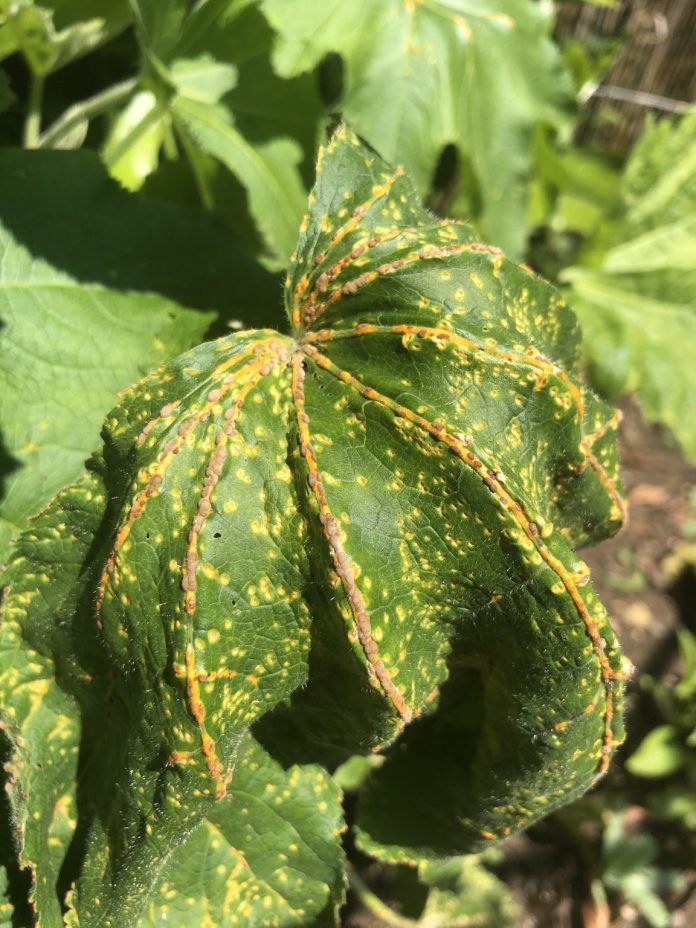
Hollyhock rust is a fungal disease that mainly affects plants in the mallow family. It shows up as yellow spots on the upper surface of the leaf, with rusty orange or brown pustules underneath. As the disease progresses, leaves may yellow, shrivel, and drop prematurely, weakening the plant.
The fungus spreads by microscopic spores that are released from infected leaves and carried by wind, rain splash, tools, or even on clothing.
Which Plants Are at Risk?
Hollyhock rust does not spread indiscriminately to all garden plants. It is largely confined to members of the mallow family (Malvaceae).
Plants that can be affected include:
- Hollyhocks (Alcea)
- Common mallows (Malva)
- Lavatera
- Hibiscus (including hardy garden forms)
- Abutilon
- Althaea (marsh mallow)
Plants outside this family are not susceptible, so you won’t see the disease spreading to roses, perennials, shrubs, or vegetables unrelated to mallows.
How the Disease Spreads in the Garden
Hollyhock rust overwinters on infected plant debris and can also persist on self-sown seedlings. In spring and early summer, spores are released and quickly infect new growth, especially in warm, damp conditions.
Once present, the disease spreads easily between susceptible plants growing close together. Poor air circulation and overhead watering make the problem worse.
Can It Be Stopped?
While hollyhock rust is difficult to eliminate completely once established, it can be managed and contained.
Key control measures include:
- Removing and destroying infected leaves as soon as they appear
- Clearing away all hollyhock debris at the end of the season
- Avoiding composting infected material
- Spacing plants well to improve air flow
- Watering at the base rather than over the leaves
In severe cases, gardeners may choose to remove badly affected plants entirely to protect nearby susceptible species.
Is It Worth Growing Hollyhocks Again?
Hollyhocks are classic cottage-garden plants, and rust is almost expected with them. Many gardeners accept some level of infection as part of growing hollyhocks successfully.
If rust is persistent in your garden, consider:
- Growing hollyhocks in a different part of the garden each year
- Trying rust-resistant varieties
- Treating hollyhocks as short-lived plants and replacing them regularly
In Summary
Hollyhock rust can spread, but only to plants closely related to hollyhocks within the mallow family. It will not jump to unrelated plants elsewhere in the garden. With good hygiene, spacing, and prompt removal of infected leaves, it’s possible to limit its impact and continue enjoying hollyhocks without the disease taking over.