The Newspaper For Gardeners

Looking Out for Hedgehogs...

Hedgehogs are some of the most endearing creatures in our gardens, but winter...

Prune Apple Trees

Pruning is an essential task for maintaining healthy, productive apple trees. Proper pruning...

Dividing Snowdrops: A Step-by-Step...

Snowdrops (Galanthus spp.) are a cherished sight in late winter, heralding the arrival...

Force Rhubarb: A Gardener’s...

Forcing rhubarb is a traditional gardening technique that produces tender, sweet stalks, perfect...
Thursday, January 8, 2026
QuestionsHow to tell the difference between a male and female Trachycarpus fortunei?

How to tell the difference between a male and female Trachycarpus fortunei?

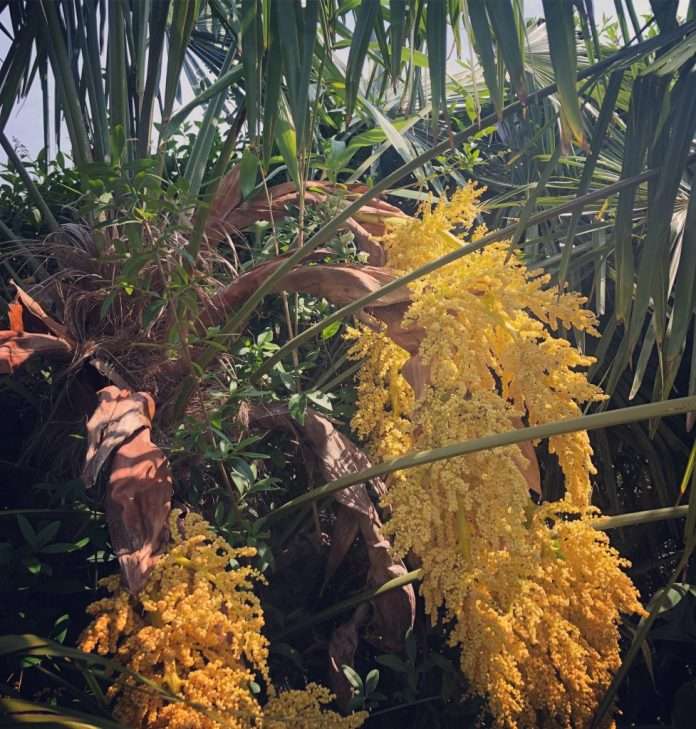
Trachycarpus fortunei, the windmill palm, is dioecious, meaning individual plants are either male or female. Telling them apart can be tricky before they reach maturity, because they look identical as juveniles. Here’s how you can distinguish them:


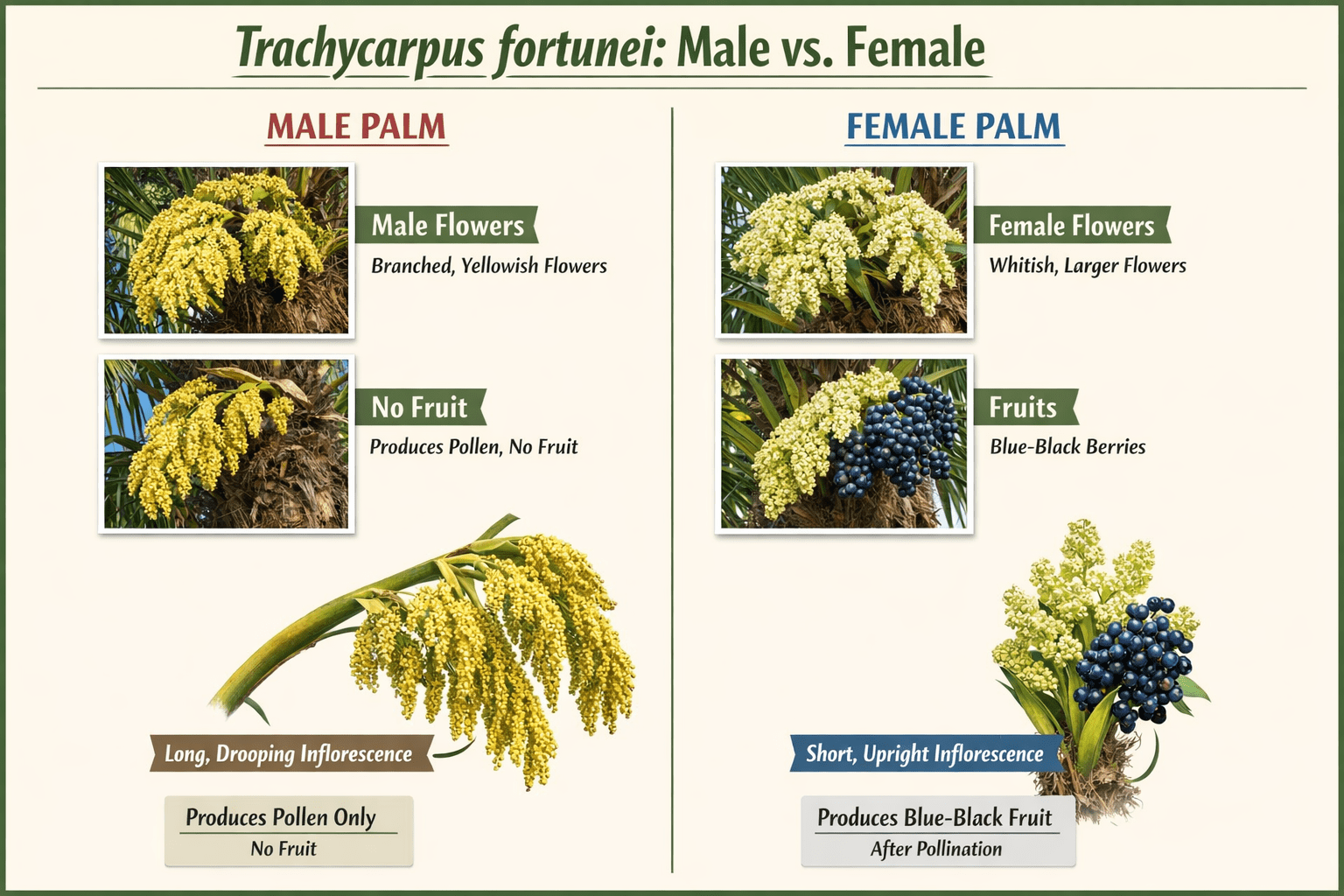
1. Flower Appearance

  • Male flowers:
    • Grow in branched clusters (inflorescences) that hang down.
    • Small, yellowish-green, and produce pollen.
    • More numerous than female flowers.
  • Female flowers:
    • Also in clusters, but less dense and slightly larger.
    • Typically whitish or pale green.
    • Will develop into fruit after pollination.

2. Fruit Production

  • Female palms produce small, round, blue-black fruits (drupes) about 1–1.5 cm in diameter, usually after successful pollination.
  • Male palms never produce fruit.

Note: Fruit only appears after the tree reaches maturity, which can take 5–10 years.


3. Inflorescence Structure

  • Male inflorescences are longer, more branched, and hang lower, often giving a “weeping” effect.
  • Female inflorescences are shorter and more upright, and the flowers are more robust to support fruit development.

4. Practical Tips

  • If you want a fruiting female palm, you’ll need at least one male nearby for pollination.
  • For ornamental use, both sexes are visually similar, so gender is usually irrelevant unless fruiting is desired.
ChatGPT Image Jan 6 2026 02 17 52 PM
spot_img

lOOKING FOR MORE WORK?

The free and easy way to get more customers. Just join Find Local Gardeners.

If your Washingtonia robusta leaves are turning yellow, there could be several reasons behind this issue. Here are some common factors that can contribute...
Why Are My Fatsia Leaves Curling? Fatsia japonica is a popular evergreen shrub known for its large, glossy, tropical-looking leaves. So when those big, dramatic...
Does Hollyhock Rust Spread to Other Plants? Hollyhock rust is one of the most common and frustrating diseases gardeners encounter when growing hollyhocks. The appearance...
Why Are My Fig Leaves Going Yellow? Yellowing leaves on a fig tree can be worrying, especially when the plant otherwise looks healthy. Figs are...
Acanthus ‘Tasmanian Angel’ vs Acanthus ‘Whitewater’ Variegated bear’s breeches are among the most architectural plants you can grow, and two of the most talked-about cultivars...

Continue reading

Why are my washingtonia robusta leaves going yellow?

If your Washingtonia robusta leaves are turning yellow, there could be several reasons behind this issue. Here are some common factors that can contribute to yellowing leaves on Washingtonia robusta: Natural Aging: It is normal for older leaves to turn...

Why are my fatsia leaves curling

Why Are My Fatsia Leaves Curling? Fatsia japonica is a popular evergreen shrub known for its large, glossy, tropical-looking leaves. So when those big, dramatic leaves start to curl, it can be worrying. Leaf curling is usually a sign that...

Does hollyhock rust spread to other plants

Does Hollyhock Rust Spread to Other Plants? Hollyhock rust is one of the most common and frustrating diseases gardeners encounter when growing hollyhocks. The appearance of orange-brown pustules on the leaves often raises an immediate concern: will it spread to...

SUBSCRIBE TO OUR YOUTUBE CHANNEL

Plant advice for unusual species plus updates from our tropical garden

SUBSCRIBE