
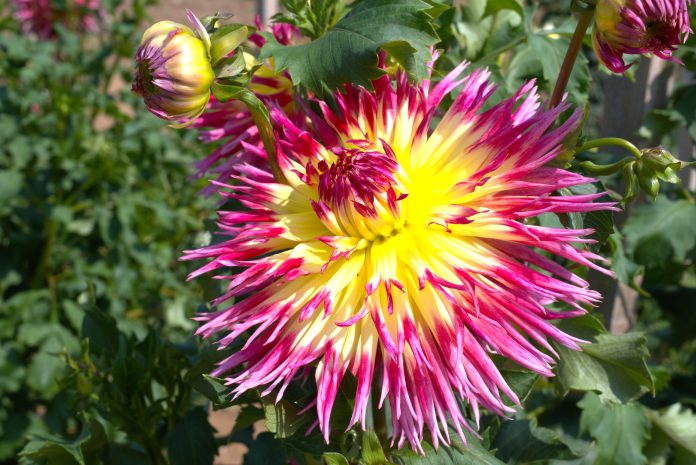
🌺 Dahlia Fact Sheet
Botanical name: Dahlia spp.
Family: Asteraceae (same as sunflowers, daisies, zinnias)
Origin: Native to Mexico and Central America. First introduced to Europe in the late 18th century; became a major garden favourite in the Victorian era.
Introduction
With over 42 recognised species and more than 57,000 named cultivars, dahlias are among the most diverse and spectacular garden flowers. They come in every shade except true blue, with blooms ranging from delicate singles to giant dinner-plate varieties. Dahlias are perfect for adding bold colour from midsummer until the first frosts, and they make excellent cut flowers with a long vase life. Whether you want drama, variety, or a magnet for bees and butterflies, dahlias earn their place in any garden.
Soil Type
- Best: Rich, fertile, well-drained loam.
- pH: Slightly acidic to neutral (pH 6.5–7.0).
- Preparation: Work in plenty of organic matter (garden compost, well-rotted manure) before planting. Avoid waterlogging.
Position
- Light: Full sun (minimum 6 hours direct sunlight daily).
- Shelter: Protected from strong winds to avoid snapping tall stems.
- Spacing: 45–75 cm apart depending on variety size.
Care
- Planting tubers:
- In the UK, start indoors in pots from March–April, plant out after last frost (usually late May/early June).
- Plant tubers horizontally, 10–15 cm deep.
- Watering:
- Keep soil evenly moist once growth starts.
- Avoid waterlogging to prevent rot.
- Feeding:
- High-potash fertiliser (tomato feed) every 2–3 weeks during flowering. Avoid excessive nitrogen.
- Staking:
- Tall varieties need staking early. Use soft ties to prevent damage.
- Deadheading:
- Regularly remove spent blooms to encourage more flowers.
- End of season:
- After the first frost blackens foliage, lift tubers, dry, and store frost-free over winter in a cool, dry place.
Flowering Months (UK)
- Typically July to first frost (October or early November in mild areas).
Hardiness
- Frost tender (H3 RHS rating).
- Must be lifted or protected in winter in most of the UK.
- In very mild, well-drained gardens, tubers may survive in-ground under a thick mulch.
Types
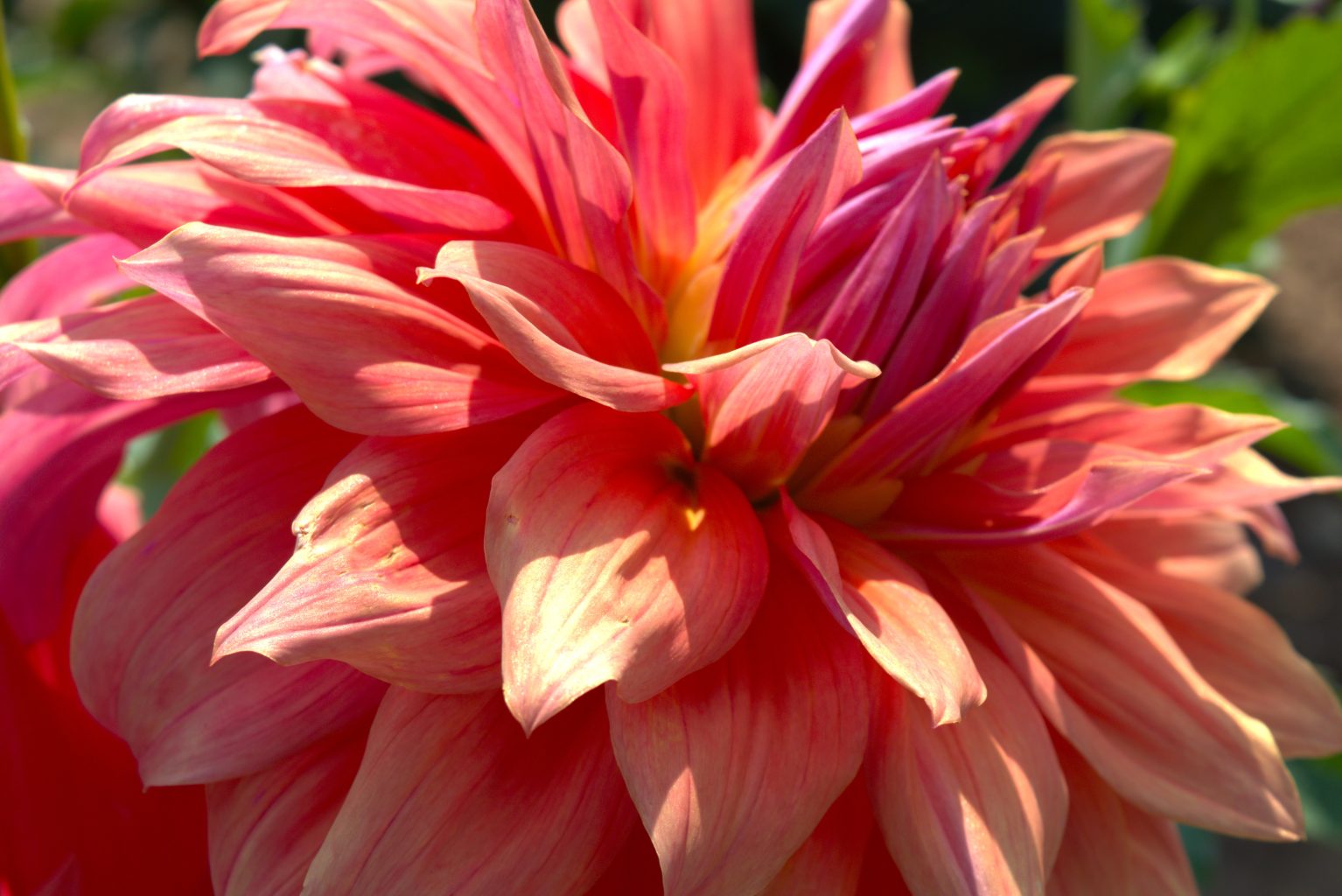
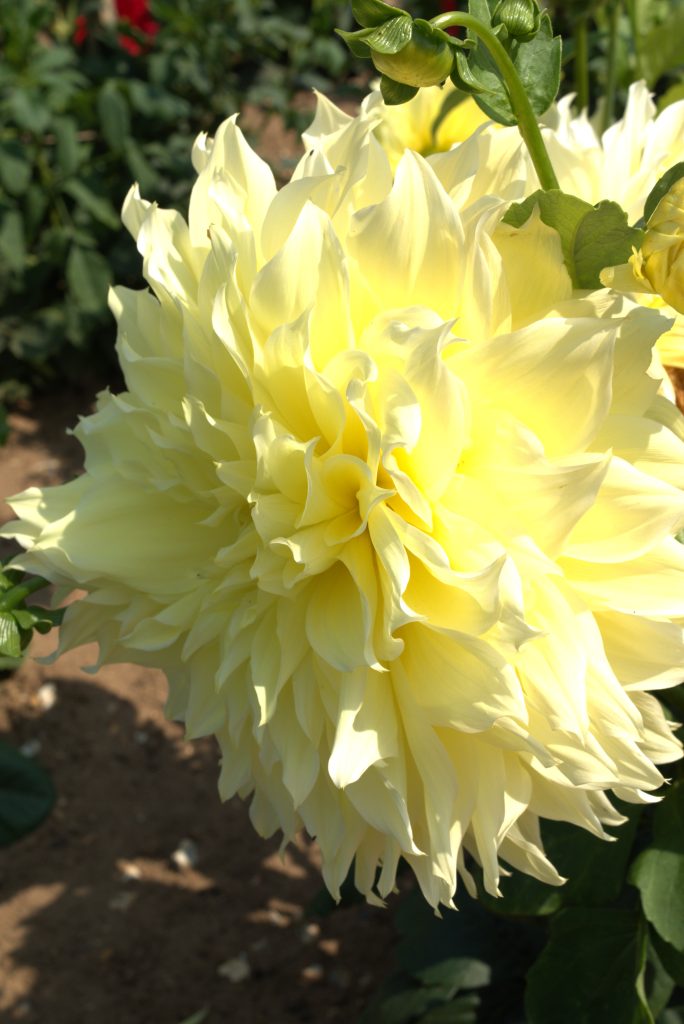
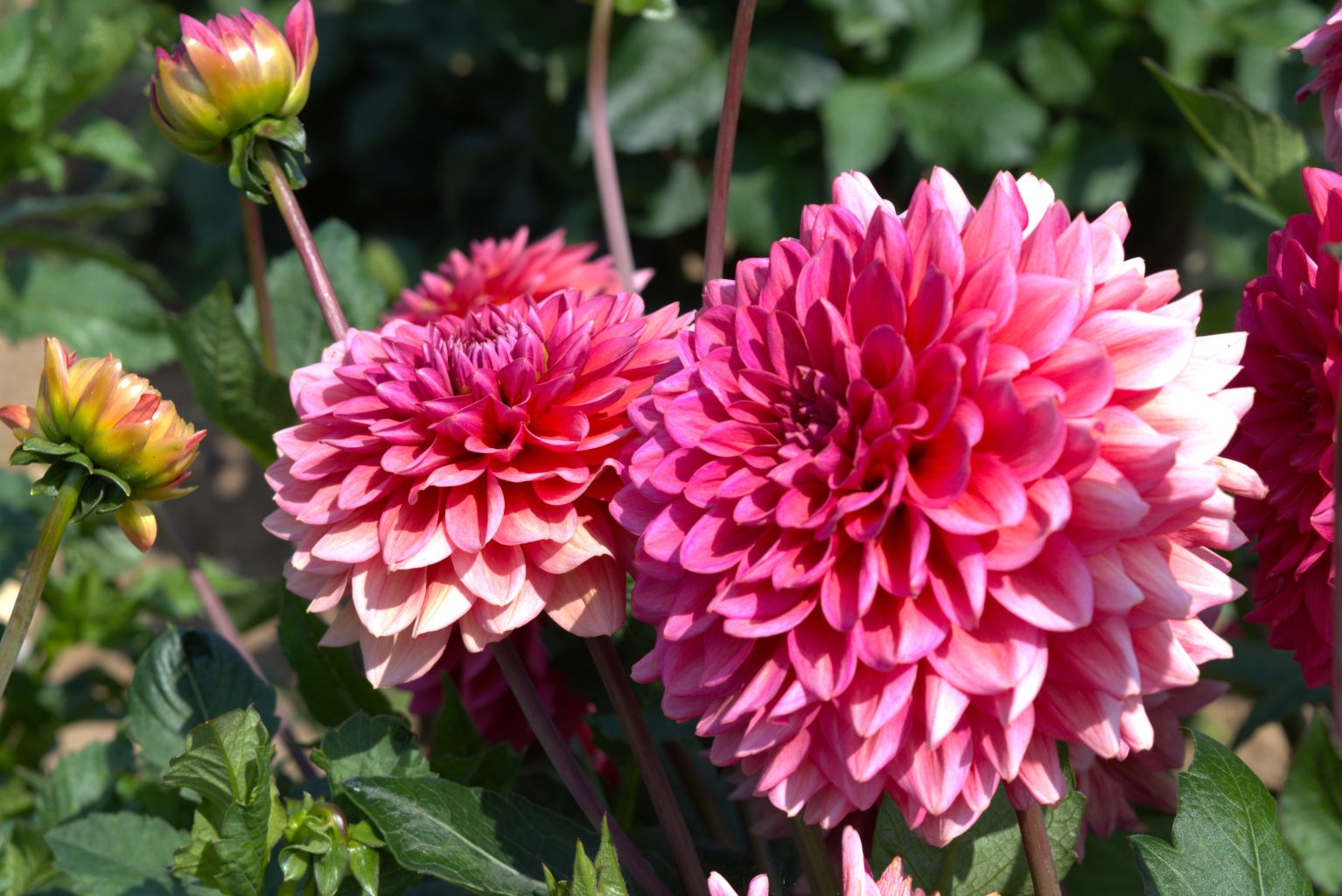
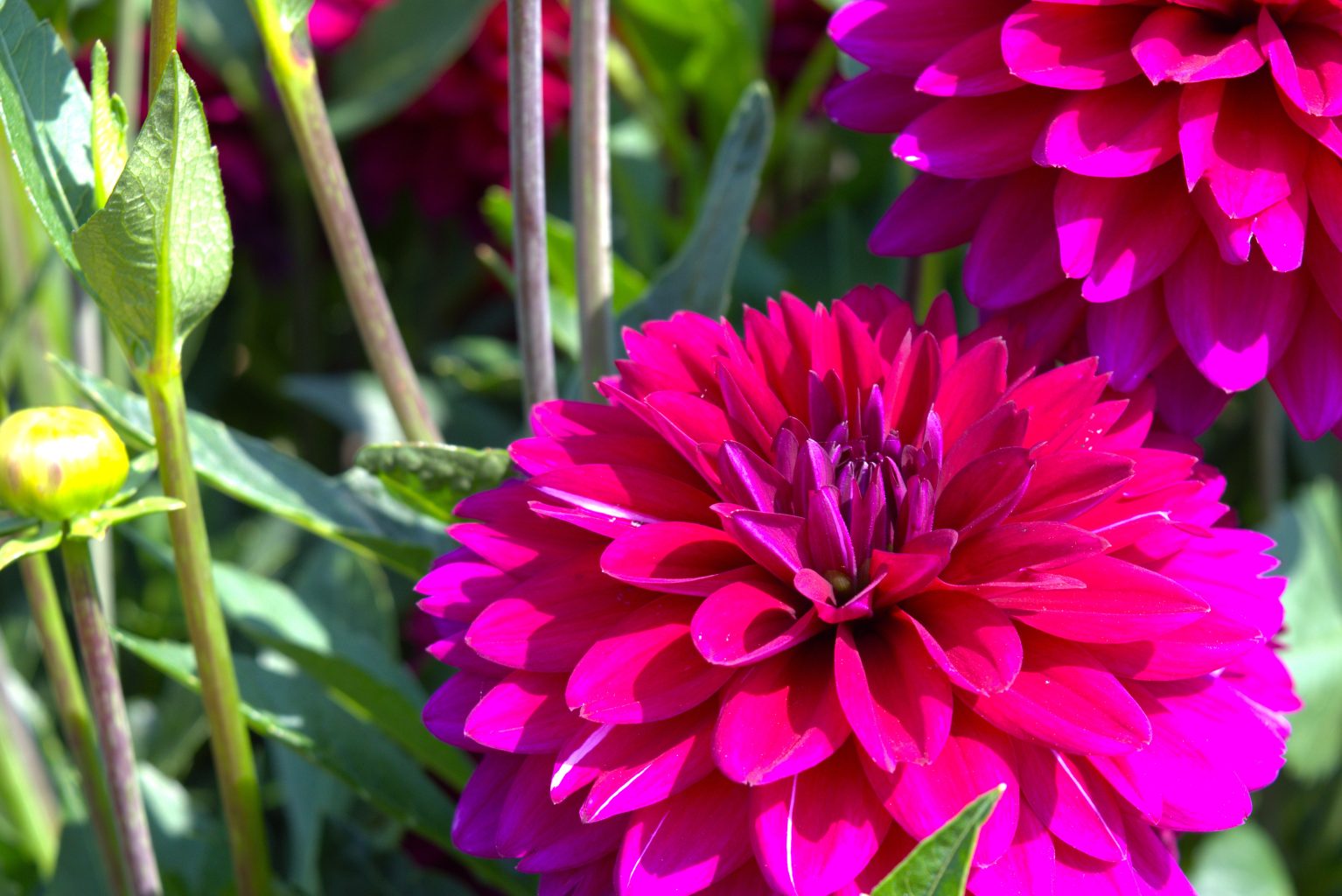
- Decorative: Large, full blooms with many petals.
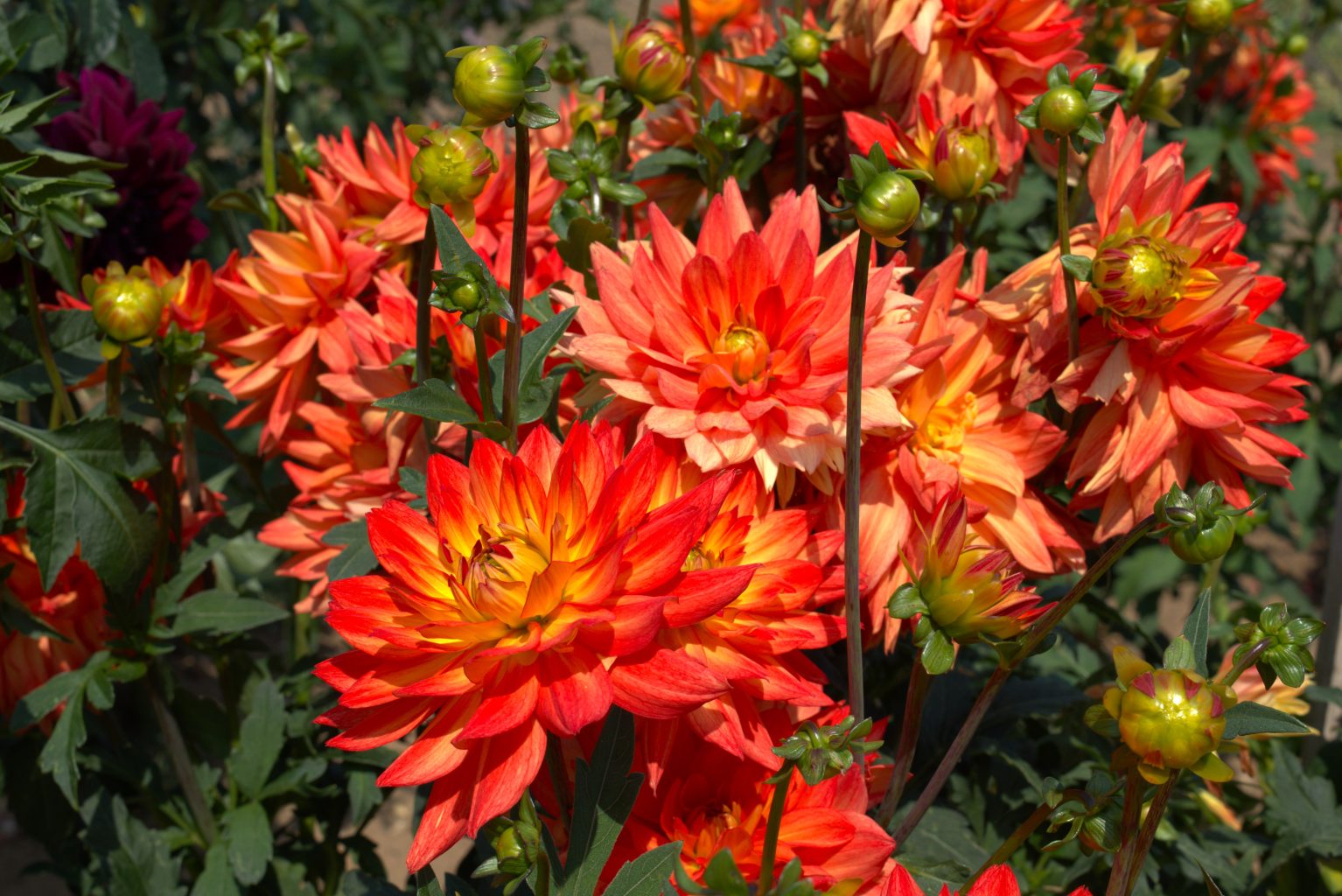
- Cactus: Narrow, pointed petals rolled back.
- Semi-cactus: Less tightly rolled petals than cactus types.
- Ball: Perfectly round blooms, tightly arranged petals.
- Pompon: Small, ball-shaped flowers, neat petals.
- Anemone-flowered: Central cushion surrounded by outer ray petals.
- Collarette: Single ring of petals with inner collar of smaller petals.
- Single: Open-faced with one row of petals, great for pollinators.
Propagation
Dahlias can be propagated in three main ways:
- Division of Tubers(Most Common)
- Lift clumps in autumn after frost has blackened the foliage.
- Store over winter in a frost-free place.
- In spring, before planting, divide clumps ensuring each section has at least one strong shoot (eye) attached to the crown.
- Replant once the soil has warmed.
- Cuttings(Produces Many New Plants)
- Start tubers into growth in pots in a frost-free place in February–March.
- When shoots are 7–10 cm tall, cut them cleanly just above the base.
- Remove lower leaves, dip the cut end in rooting hormone, and plant into free-draining compost.
- Keep warm and moist until rooted (around 3 weeks).
- Seed(For Breeding New Varieties)
- Sow indoors in March–April.
- Transplant seedlings into individual pots, grow on in warmth, and plant out after last frost.
- Seed-grown dahlias may vary greatly from the parent plant.
History Notes
- Named after Swedish botanist Anders Dahl (1751–1789).
- Cultivated by Aztecs for food and decoration before Spanish introduction to Europe.
- Became a symbol of elegance and exoticism in Victorian gardens.