
The Newspaper For Gardeners

Looking Out for Hedgehogs...

Hedgehogs are some of the most endearing creatures in our gardens, but winter...

Prune Apple Trees

Pruning is an essential task for maintaining healthy, productive apple trees. Proper pruning...

Dividing Snowdrops: A Step-by-Step...

Snowdrops (Galanthus spp.) are a cherished sight in late winter, heralding the arrival...

Force Rhubarb: A Gardener’s...

Forcing rhubarb is a traditional gardening technique that produces tender, sweet stalks, perfect...
Monday, January 12, 2026
A-ZBitter Pit

Bitter Pit

Bitter Pit

Overview:
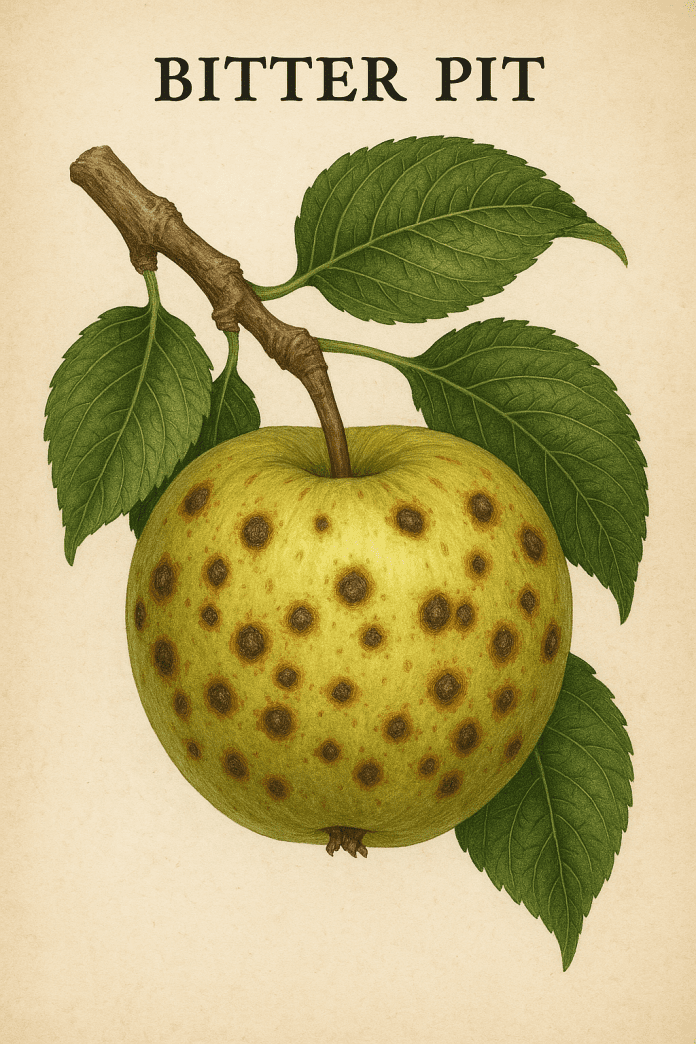
Bitter pit is a physiological disorder affecting apples (Malus domestica), primarily caused by calcium deficiency in the fruit. It manifests as small, dark, sunken spots on the skin and browning of the flesh beneath. The disorder reduces fruit quality and market value, making it a significant concern for commercial growers and home orchardists alike.

Symptoms:

  • Small, dark brown or black sunken lesions on the fruit skin, typically appearing after harvest.
  • Discoloration and corky, dry tissue beneath the affected skin.
  • Often starts at the blossom end of the fruit and spreads.
  • Does not produce foul odors or soft rotting, distinguishing it from fungal or bacterial infections.

Causes and Contributing Factors:

  • Calcium Deficiency: Inadequate calcium uptake in developing fruits leads to cell wall breakdown.
  • Environmental Factors: High temperatures, drought, and irregular watering can exacerbate the condition.
  • Excessive Nitrogen or Potassium: These nutrients can interfere with calcium absorption.
  • Vigorous Growth: Excessive vegetative growth competes with fruits for calcium.
  • Rootstock and Variety Susceptibility: Some apple cultivars, such as ‘Honeycrisp’ and ‘Granny Smith,’ are more prone to bitter pit.

Prevention and Management:

  • Calcium Sprays: Regular foliar applications of calcium chloride or calcium nitrate can improve calcium levels in fruit.
  • Balanced Fertilization: Avoid excessive nitrogen and potassium while ensuring adequate calcium supply.
  • Consistent Irrigation: Prevent drought stress and water fluctuations to support calcium uptake.
  • Thinning Fruit: Reducing crop load allows for better nutrient distribution.
  • Proper Storage: Some bitter pit symptoms develop post-harvest; storing apples at optimal temperatures can minimize progression.

Conclusion:
Bitter pit is a common yet preventable disorder in apples. By managing calcium levels, controlling vegetative growth, and optimizing orchard conditions, growers can significantly reduce its occurrence. Proper identification and proactive treatment ensure higher fruit quality and improved yields.


spot_img

lOOKING FOR MORE WORK?

The free and easy way to get more customers. Just join Find Local Gardeners.

Canna viruses are a group of plant viruses that can infect and cause diseases in cannas, which are popular ornamental plants known for their...
If your Washingtonia robusta leaves are turning yellow, there could be several reasons behind this issue. Here are some common factors that can contribute...
Does Hollyhock Rust Spread to Other Plants? Hollyhock rust is one of the most common and frustrating diseases gardeners encounter when growing hollyhocks. The appearance...
How to diagnose, prevent and treat Box Blight and Box Tree Caterpillar in accordance with UK law Box hedges (Buxus sempervirens and related species) have...
BoltingCategory: Plant Physiology / Growth Disorders Definition:Bolting is the premature production of a flowering stem in plants before the crop has been harvested, typically triggered...

What’s The Difference Between Apples and Crab Apples

When strolling through a garden or countryside, you may encounter two types of fruit-bearing trees that appear quite similar but differ greatly in size and use: apples and crab apples. Though they both belong to the genus Malus in...

Continue reading

Is there a cure for Canna virus?

Canna viruses are a group of plant viruses that can infect and cause diseases in cannas, which are popular ornamental plants known for their colorful flowers and striking foliage. Unfortunately, there is no specific cure for viral infections in...

Why are my washingtonia robusta leaves going yellow?

If your Washingtonia robusta leaves are turning yellow, there could be several reasons behind this issue. Here are some common factors that can contribute to yellowing leaves on Washingtonia robusta: Natural Aging: It is normal for older leaves to turn...

Does hollyhock rust spread to other plants

Does Hollyhock Rust Spread to Other Plants? Hollyhock rust is one of the most common and frustrating diseases gardeners encounter when growing hollyhocks. The appearance of orange-brown pustules on the leaves often raises an immediate concern: will it spread to...

SUBSCRIBE TO OUR YOUTUBE CHANNEL

Plant advice for unusual species plus updates from our tropical garden

SUBSCRIBE