Bell Glass (Cloche de Verre)
Overview:
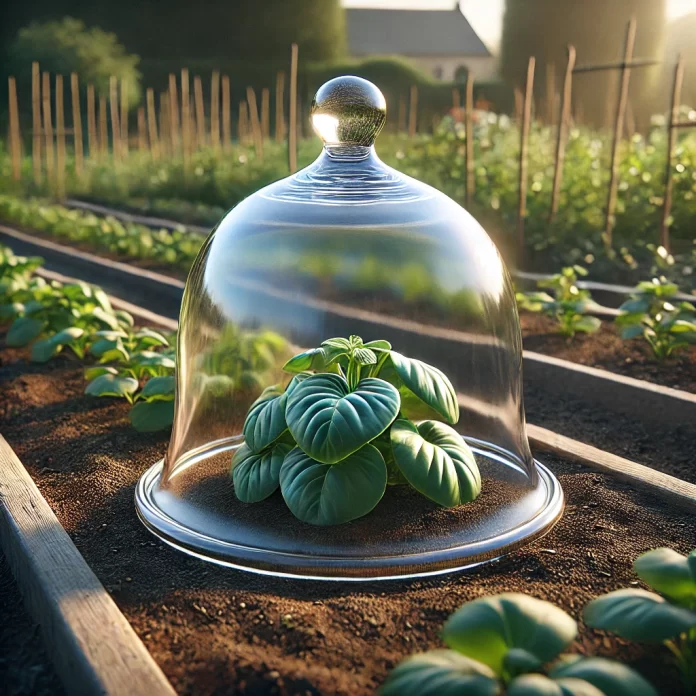
A bell glass, also known as a cloche de verre, is a transparent, dome-shaped cover traditionally used in horticulture to protect delicate plants from cold temperatures, pests, and harsh weather conditions. It is typically made of glass or plastic and functions as a miniature greenhouse, creating a controlled microclimate around the plant. The term “cloche” derives from the French word for “bell,” reflecting its characteristic shape.
Description:
Form: Bell glasses are usually hemispherical or cylindrical with a rounded top, allowing condensation to run off the inner surface without dripping directly onto the plant below. Some models have a small vent or removable top to regulate airflow and prevent excessive humidity buildup.
Material: Traditionally crafted from thick, hand-blown glass, modern variations may be made from lightweight polycarbonate or acrylic, offering durability and UV protection while maintaining transparency.
Size: Ranges from small (15–20 cm in height) for seedlings to large (40–50 cm) for mature plants or shrubs.
Botanical Applications:
- Frost Protection: By trapping heat from the sun during the day, bell glasses prevent temperature fluctuations at night, shielding tender plants from frost damage.
- Early Crop Forcing: Often used in vegetable gardening to extend the growing season by warming the soil and encouraging early growth of plants such as lettuce, strawberries, and melons.
- Moisture Retention: Reduces evaporation, maintaining humidity levels ideal for germination and young plants.
- Pest and Wind Barrier: Acts as a physical shield against pests, such as snails and insects, and protects fragile plants from strong winds.
- Propagation Aid: Used to create a humid microenvironment for rooting cuttings or acclimating newly transplanted specimens.
Historical and Cultural Significance:
The bell glass became widely used in the 17th and 18th centuries, particularly in European formal gardens and kitchen gardens of grand estates. It was an essential tool in Victorian-era glasshouse gardening, where it aided the cultivation of exotic and sensitive plants. Early designs were often hand-crafted, making them both functional and decorative.
Care and Maintenance:
- Cleaning: Regular cleaning prevents algae buildup and maintains optimal light transmission.
- Ventilation: Periodic lifting or tilting ensures adequate airflow to prevent mold and overheating.
- Storage: When not in use, bell glasses should be stored in a shaded, secure location to prevent breakage and prolong their lifespan.
Modern Usage:
While traditional glass cloches remain popular for historical garden restorations and ornamental displays, modern plastic versions are commonly used in polytunnel and cold-frame gardening. Some contemporary designs include adjustable vents for improved temperature control.
Bell glasses remain a timeless tool for gardeners seeking elegance, functionality, and plant protection in a single, beautifully designed structure.