
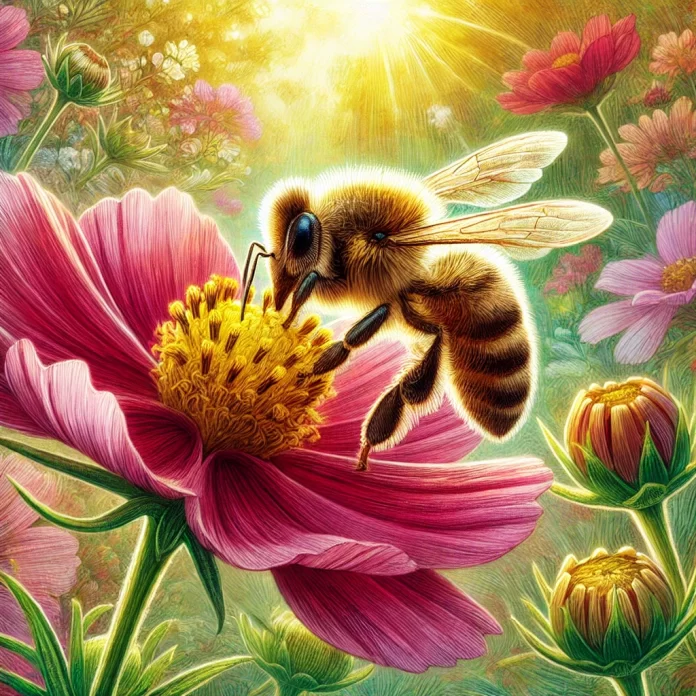
Bee (Superfamily: Apoidea)
Definition:
Bees are winged insects belonging to the superfamily Apoidea, known for their role in pollination and, in the case of honeybees (Apis spp.), for producing honey and beeswax. They are closely related to wasps and ants and are found on every continent except Antarctica.
Characteristics:
- Bees have hair-covered bodies, aiding in pollen collection.
- Most species possess two pairs of wings, with the forewings larger than the hindwings.
- They have specialized mouthparts, including a proboscis for drinking nectar.
- Some species, like honeybees and bumblebees, live in colonies, while others, like solitary bees, nest independently.
Major Types of Bees:
- Honeybees (Apis spp.) – Social bees that form colonies and produce honey.
- Bumblebees (Bombus spp.) – Large, fuzzy bees that are excellent pollinators.
- Solitary Bees – Includes mason bees (Osmia spp.), leafcutter bees (Megachile spp.), and mining bees (Andrena spp.), each nesting alone.
- Stingless Bees (Meliponini) – Found in tropical regions, they produce honey but lack a functional sting.
Ecological Role:
Bees are key pollinators of flowering plants, aiding in biodiversity and food production. Around 75% of global food crops depend on animal pollination, with bees being primary contributors. Their decline due to habitat loss, pesticides, and climate change is a major environmental concern.
Conservation & Gardening for Bees:
- Plant nectar-rich flowers like lavender (Lavandula spp.), foxglove (Digitalis purpurea), and borage (Borago officinalis).
- Avoid pesticides harmful to pollinators.
- Provide bee hotels or leave patches of bare ground for nesting solitary bees.
Bees are essential to ecosystems and human agriculture, making their conservation a priority worldwide.