
The Newspaper For Gardeners

Looking Out for Hedgehogs...

Hedgehogs are some of the most endearing creatures in our gardens, but winter...

Prune Apple Trees

Pruning is an essential task for maintaining healthy, productive apple trees. Proper pruning...

Dividing Snowdrops: A Step-by-Step...

Snowdrops (Galanthus spp.) are a cherished sight in late winter, heralding the arrival...

Force Rhubarb: A Gardener’s...

Forcing rhubarb is a traditional gardening technique that produces tender, sweet stalks, perfect...
Monday, January 12, 2026
A-ZBark-Bound

Bark-Bound

Definition

Bark-Bound (Physiological Condition in Trees and Shrubs)

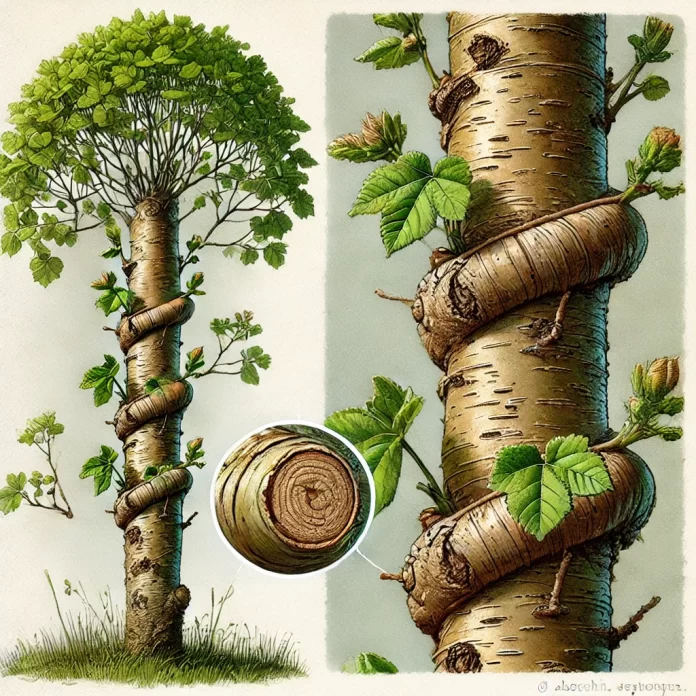
Bark-bound, also known as girdling or constricted bark syndrome, is a physiological condition affecting trees and woody shrubs in which the bark becomes excessively tight around the trunk or branches. This restricts normal vascular function, impeding the flow of water, nutrients, and carbohydrates between the roots and foliage.

Causes

  1. Rapid Growth: In some species, especially those with smooth bark, rapid expansion of the trunk may cause the outer bark to fail to split and expand naturally.
  2. Environmental Stress: Drought, temperature fluctuations, and compacted soil can reduce a tree’s ability to shed bark naturally.
  3. Improper Pruning or Grafting: Poor pruning cuts, tight graft unions, or incorrect staking methods can lead to bark constriction.
  4. Tree Ties and Supports: Leaving ties, wires, or straps in place for too long can lead to girdling, restricting sap flow.
  5. Pest and Disease Damage: Some insects or fungal infections may cause bark to tighten abnormally due to callusing or scar tissue formation.

Symptoms

  • Reduced leaf size and chlorosis (yellowing).
  • Declining vigor, weak or stunted growth.
  • Dieback of branches above the affected area.
  • Cracked or splitting bark in severe cases.
  • Increased susceptibility to pests and diseases.

Prevention & Management

  • Regular Inspection: Check young trees for signs of constricted bark, particularly around graft unions and supports.
  • Correct Planting Techniques: Avoid planting trees too deep, which can contribute to poor bark expansion.
  • Careful Staking & Tying: Use loose, flexible ties and remove supports once the tree is established.
  • Selective Bark Scoring: In mild cases, gently scoring the bark with a sharp knife can encourage expansion and prevent severe restriction.
  • Proper Watering & Mulching: Providing adequate moisture and using organic mulch helps maintain healthy bark development.
  • Avoid Overfertilization: Excess nitrogen can lead to excessive growth that outpaces natural bark expansion.

Affected Species

  • Young, fast-growing trees such as Acer (maples), Prunus (cherries and plums), and Betula (birches).
  • Some tropical and subtropical species with thin or delicate bark.
  • Trees with smooth bark, which are less able to naturally shed constrictive layers.

Related Conditions

  • Girdling Root Syndrome: A separate issue where roots encircle the trunk and constrict vascular function.
  • Sunscald: Damage to the bark due to sudden temperature changes, sometimes causing peeling and tight bark.
  • Corky Bark Disorder: A condition in some fruit trees where the bark becomes excessively thick or woody.

Bark-bound trees can often be managed successfully with early intervention, ensuring continued health and vigor in the landscape.


spot_img

lOOKING FOR MORE WORK?

The free and easy way to get more customers. Just join Find Local Gardeners.

How to diagnose, prevent and treat Box Blight and Box Tree Caterpillar in accordance with UK law Box hedges (Buxus sempervirens and related species) have...
BoltingCategory: Plant Physiology / Growth Disorders Definition:Bolting is the premature production of a flowering stem in plants before the crop has been harvested, typically triggered...
Definition:Blotchy ripening is a physiological disorder primarily observed in fleshy fruits—most notably in tomatoes (Solanum lycopersicum)—where patches of the fruit fail to develop normal...
Blossom End Rot (noun; plant pathology, horticulture) Definition: Blossom end rot is a physiological disorder affecting the fruit of various flowering plants—most notably tomatoes, peppers, aubergines...
Blind (adjective, noun; horticulture, botany) Definition (Botany & Horticulture): In a botanical or horticultural context, blind refers to a plant shoot, bud, or flowering stem that...

Why do my outdoor plants keep dying?

If your outdoor plants keep dying, there could be multiple factors at play. Understanding these factors and addressing them can significantly improve the health and longevity of your plants. Here are some common reasons why outdoor plants may be...

How do I stop slugs from eating my Hostas?

How do I stop slugs from eating my Hostas? Slugs are among the most common and troublesome pests for gardeners growing Hosta ‘Patriot’. These pests are particularly problematic because they thrive in the same moist, shady conditions that Hostas...

How to Grow Hosta ‘Patriot’

Hosta ‘Patriot’ is a popular variety of the Hosta genus, known for its striking variegated leaves featuring bold white edges and dark green centers. This hardy perennial is an excellent choice for shady garden spots, adding texture and color...

How to Grow Geum ‘Totally Tangerine’

Geum ‘Totally Tangerine’ is a vibrant and long-blooming perennial that adds a splash of orange to any garden. With its striking tangerine-colored flowers and attractive foliage, this plant is a favorite among gardeners for its easy care and visual...

Continue reading

Tackling Box Blight and Box Tree Caterpillar Legally in the UK

How to diagnose, prevent and treat Box Blight and Box Tree Caterpillar in accordance with UK law Box hedges (Buxus sempervirens and related species) have long been a staple of British gardens — framing parterres, edging borders, and forming centuries-old...

Bolting

BoltingCategory: Plant Physiology / Growth Disorders Definition:Bolting is the premature production of a flowering stem in plants before the crop has been harvested, typically triggered by environmental stress. It is especially common in leafy vegetables such as lettuce (Lactuca sativa),...

Blotchy Ripening

Definition:Blotchy ripening is a physiological disorder primarily observed in fleshy fruits—most notably in tomatoes (Solanum lycopersicum)—where patches of the fruit fail to develop normal coloration during the ripening process. This results in irregular, often green, yellow, or grey-green areas...

SUBSCRIBE TO OUR YOUTUBE CHANNEL

Plant advice for unusual species plus updates from our tropical garden

SUBSCRIBE