
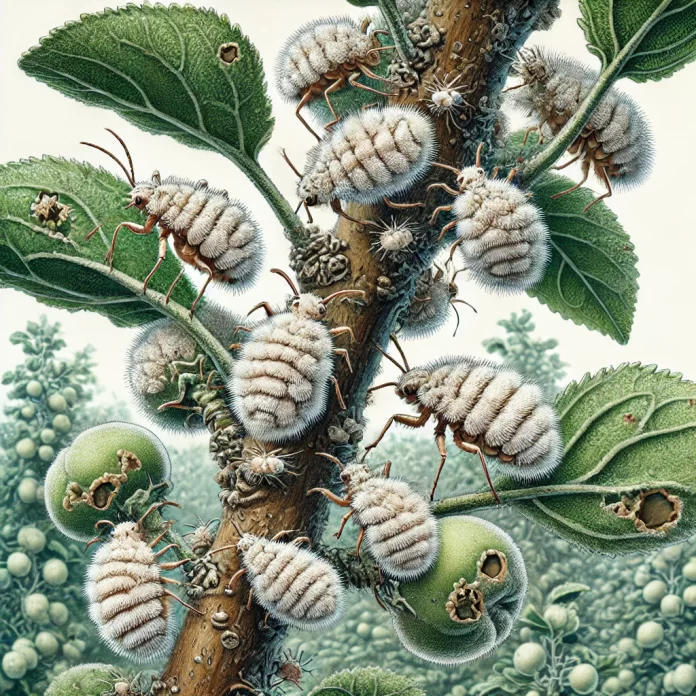
American Blight
Alternative Names: Woolly Apple Aphid Infestation
Definition:
American Blight is a common term referring to infestations of the woolly apple aphid (Eriosoma lanigerum), a sap-sucking insect that primarily affects apple (Malus domestica) trees and related species in the Rosaceae family. The term was historically used to describe the severe damage these aphids caused in North American orchards, though the pest is now widespread across temperate regions globally.
Description:
The woolly apple aphid is a small, soft-bodied insect covered in a white, waxy secretion, giving it a cotton-like appearance. It forms colonies on the bark, roots, and branches of host trees, where it feeds on plant sap. Aphid feeding induces gall-like swellings on roots and branches, which can weaken the tree and create entry points for fungal infections.
Life Cycle & Habitat:
The insect has a complex life cycle, alternating between primary hosts (apple and related trees) and secondary hosts, typically elms (Ulmus spp.) in some regions. However, in many areas, the aphid completes its entire cycle on apple trees. It reproduces both sexually and asexually, with winged forms dispersing to new locations during warm seasons.
Symptoms & Damage:
- White, woolly clusters on bark, stems, or wounds
- Swollen, galled areas on branches or roots
- Stunted growth and reduced fruit production
- Increased susceptibility to secondary infections, particularly fungal pathogens
Control & Management:
- Cultural Methods: Encouraging natural predators, such as ladybirds (Coccinellidae) and parasitic wasps (Aphelinus mali), helps regulate populations.
- Pruning: Removing heavily infested branches reduces aphid colonies.
- Chemical Control: Horticultural oils or insecticidal soaps can suppress infestations, though systemic insecticides may be required for severe outbreaks.
- Resistant Rootstocks: Some apple cultivars grafted onto resistant rootstocks show improved tolerance to root infestations.
Historical Context:
The term “American Blight” was frequently used in 19th-century horticultural texts to describe widespread woolly aphid infestations in North American orchards. As apple cultivation expanded worldwide, so did the pest, making it a persistent problem in commercial and home orchards.
See Also:
- Eriosoma lanigerum
- Apple Tree Pests
- Integrated Pest Management (IPM) for Orchards