Alpine Plants and Gardening
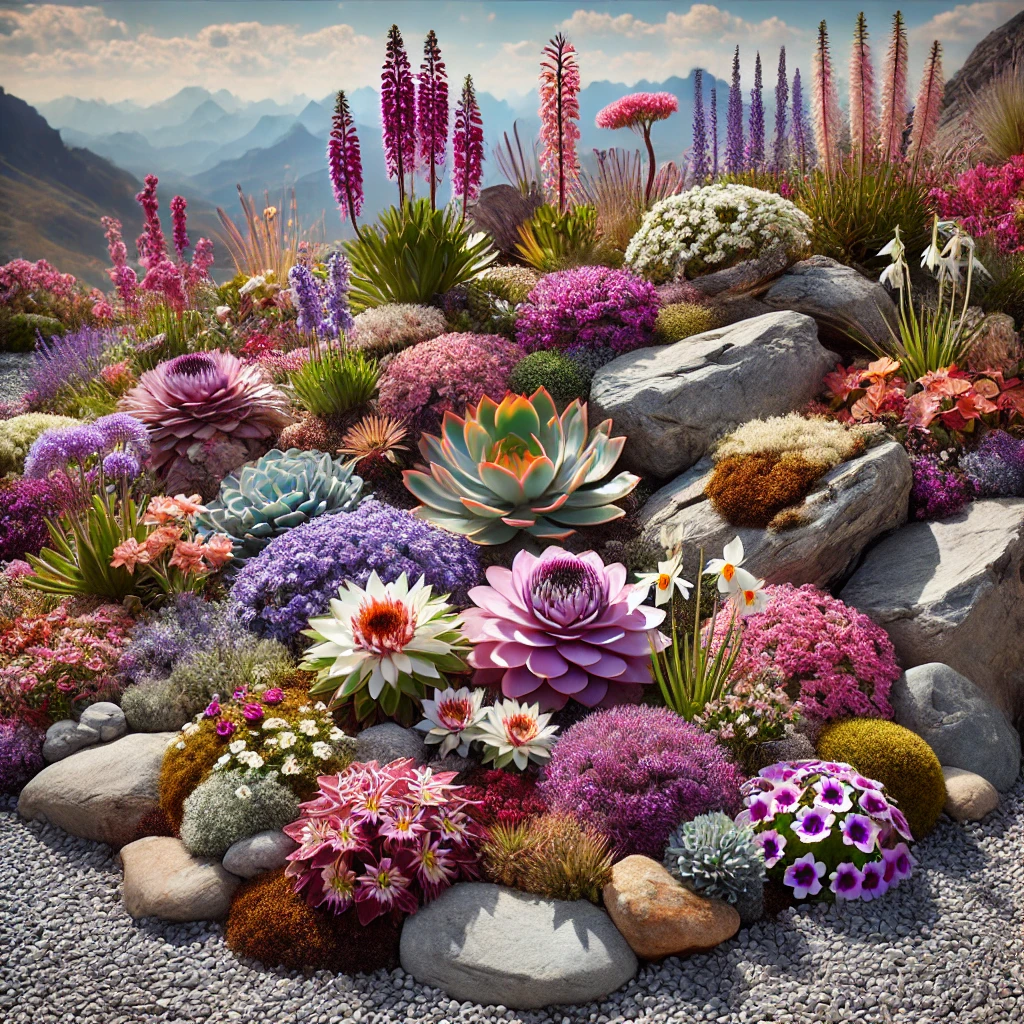
Alpine plants are a specialized group of flora that thrive in mountainous regions, typically above the tree line, where conditions are harsh with cold temperatures, strong winds, and well-drained, rocky soils. These plants have adapted to survive in nutrient-poor environments and extreme weather fluctuations, making them an excellent choice for rock gardens and container displays in temperate climates.
Characteristics of Alpine Plants
- Low Growth Habit: Many alpine species grow close to the ground to withstand harsh winds and cold temperatures.
- Drought Tolerance: Their roots are adapted to survive in well-drained, often dry soils.
- Resilient Foliage: Many have hairy or waxy leaves to conserve moisture and reduce damage from frost.
- Seasonal Blooms: These plants often produce vibrant flowers in spring and summer to attract pollinators within a short growing season.
Popular Alpine Plants
- Saxifraga (Rockfoils): Compact, mat-forming perennials with small, star-like flowers.
- Edelweiss (Leontopodium alpinum): A famous alpine plant with woolly white flowers and silvery foliage.
- Gentians (Gentiana spp.): Noted for their intense blue, trumpet-shaped flowers.
- Primula (Alpine Primroses): Some species, such as Primula auricula, are highly prized for their intricate, colorful blooms.
- Dianthus (Alpine Pinks): Low-growing with fragrant, vibrant flowers.
Creating an Alpine Garden
1. Site Selection
Alpine gardens thrive in sunny, well-drained locations. A rockery, raised bed, or scree garden mimics their natural habitat.
2. Soil Preparation
- Use a gritty, well-draining mix containing sand, gravel, and compost.
- Ensure good drainage to prevent root rot, as many alpine plants dislike excessive moisture.
3. Planting and Care
- Space plants carefully to allow for air circulation and prevent overcrowding.
- Mulch with gravel or grit to suppress weeds and maintain soil moisture.
- Water sparingly; overwatering can lead to root rot.
- Protect from excessive winter wetness by covering with a cloche or providing overhead shelter in very rainy climates.
Alpine Plants in Containers
Alpine plants are well-suited to containers and trough gardens. Choose shallow, wide pots with excellent drainage and use a free-draining soil mix. Place containers in a bright, airy position, and avoid waterlogging during winter.
Benefits of Growing Alpine Plants
- Low Maintenance: Once established, alpine plants require minimal care.
- Drought Resistance: Their natural adaptations make them ideal for dry conditions.
- Aesthetic Appeal: They provide year-round interest with their foliage, flowers, and architectural forms.
- Wildlife Friendly: Many attract pollinators such as bees and butterflies.
Conclusion
Alpine gardening offers an excellent way to cultivate resilient, low-maintenance plants while creating an attractive, naturalistic display. Whether in rock gardens, troughs, or dedicated alpine beds, these hardy plants bring beauty and biodiversity to any garden space.