
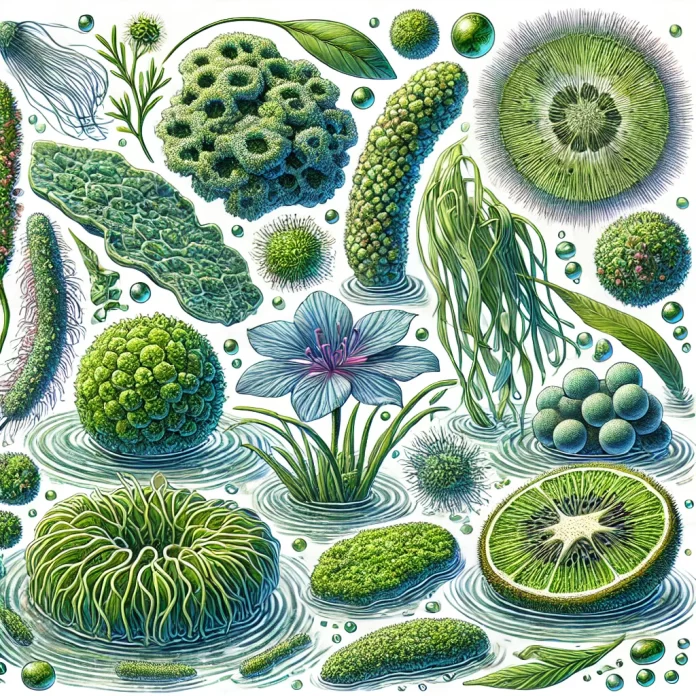
Algae (plural noun, singular: alga)
- (Botany, Horticulture, Ecology) A diverse group of photosynthetic organisms found primarily in aquatic environments, ranging from microscopic single-celled forms to large multicellular structures like seaweeds. Unlike true plants, algae lack roots, stems, and leaves but contain chlorophyll for photosynthesis.
- Microalgae: Unicellular or colonial species, such as Chlorella and Diatoms, that play a crucial role in oxygen production and aquatic food chains.
- Macroalgae: Larger, multicellular species, including green (Ulva), brown (Laminaria), and red (Porphyra) algae, often referred to as seaweeds.
- (Horticulture, Water Management) In garden ponds, greenhouses, and irrigation systems, algae can proliferate due to excess nutrients and sunlight, sometimes causing issues like biofouling or algal blooms. However, certain algae species are beneficial as biofertilizers or indicators of water quality.
Interesting Facts About Algae
- Oxygen Powerhouses: Algae produce over 50% of the Earth’s oxygen, making them essential for maintaining atmospheric balance.
- Ancient Organisms: Fossil evidence suggests that algae have existed for over 1.5 billion years, playing a key role in shaping early ecosystems.
- Edible and Nutritious: Many algae, such as Spirulina and Nori, are rich in protein, vitamins, and omega-3 fatty acids, forming a staple in various cuisines.
- Algal Blooms: While some algae are beneficial, others can form harmful algal blooms (HABs), producing toxins that affect marine life and water quality.
- Potential Biofuel Source: Certain algae can be cultivated for biofuels, providing a sustainable alternative to fossil fuels.
- Lichen Symbiosis: Some algae live in symbiosis with fungi, forming lichens, which help break down rocks into soil over time.
Algae are essential to global ecosystems, producing oxygen, supporting marine life, and contributing to soil health in wetland environments.