Clay soil can be both a blessing and a curse in the garden. It’s rich in nutrients and holds moisture well, but poor drainage can lead to waterlogging, stunted roots, and plant failure. Many gardeners turn to horticultural grit as a solution—but does it really work? Should you add it to individual planting holes, mix it with soil, or layer it in pots? Let’s break down the facts, myths, and best methods for improving drainage in clay soil.
Understanding Clay Soil and Drainage
Clay soil is made up of tiny, tightly packed particles that slow water movement. When wet, it becomes sticky and heavy; when dry, it turns rock-hard. To improve drainage, the goal is to open up the structure so water and air can move more freely.
Does Putting Grit in the Bottom of a Planting Hole Improve Drainage?
No—this is a common myth. Adding grit, gravel, or stones to the bottom of a planting hole does not improve drainage and can actually make it worse.
Why?
- The “Sump Effect” – Water does not easily move from fine clay particles into coarse grit. Instead, it sits above the grit layer, creating a perched water table, which can drown roots.
- The Hole Becomes a Bathtub – If the surrounding clay drains poorly, water pools in the hole rather than escaping.
Verdict: Do not add grit to the bottom of a planting hole—it won’t help and may cause root rot.
What About Mixing Grit with the Soil in a Planting Hole?
This is better than layering it at the bottom, but still not a perfect solution.
Does It Improve Drainage?
- Only slightly, and only if used in high enough quantities (at least 40–50% grit to soil).
- If you add just a small amount, clay still dominates, and water may still collect around the roots.
Potential Issues
- The Hole Acts Like a Pot – Even if the soil inside the hole drains well, the surrounding clay stays dense, trapping water.
- Roots May Stay Confined – If the amended soil is too different from the surrounding clay, roots may struggle to grow beyond the hole, becoming “pot-bound”.
When Is It Useful?
- For bulbs like Fritillaria, adding a small handful of grit beneath each bulb can prevent rot.
- For shallow-rooted plants, mixing grit in the hole can help slightly—but only if the surrounding area is also improved.
Verdict: Better than layering grit, but not a long-term fix. For real improvement, amend the whole planting area.
Does Adding Grit to Every Planting Hole Improve the Whole Border Over Time?
If you consistently add grit to every hole over multiple plantings, the soil will slowly change, but this method is very slow and inefficient.
Why?
- Clay is still the dominant texture unless you work grit into a wider area.
- Water may still pool in unamended areas.
- A better method is to improve the entire bed at once rather than working hole by hole.
Verdict: Over time, it helps slightly, but improving the whole border at once is far more effective.
The Best Long-Term Solutions for Improving Drainage in Clay Soil
1. Incorporate Organic Matter
The best way to improve clay soil is by adding plenty of organic matter:
- Compost
- Well-rotted manure
- Leaf mould
Organic matter binds with clay particles, creating larger aggregates that improve drainage, aeration, and root penetration. Unlike grit, it also boosts soil fertility and encourages earthworms to aerate the soil naturally.
2. Mix Grit into the Whole Planting Area
Grit can help, but only when used correctly:
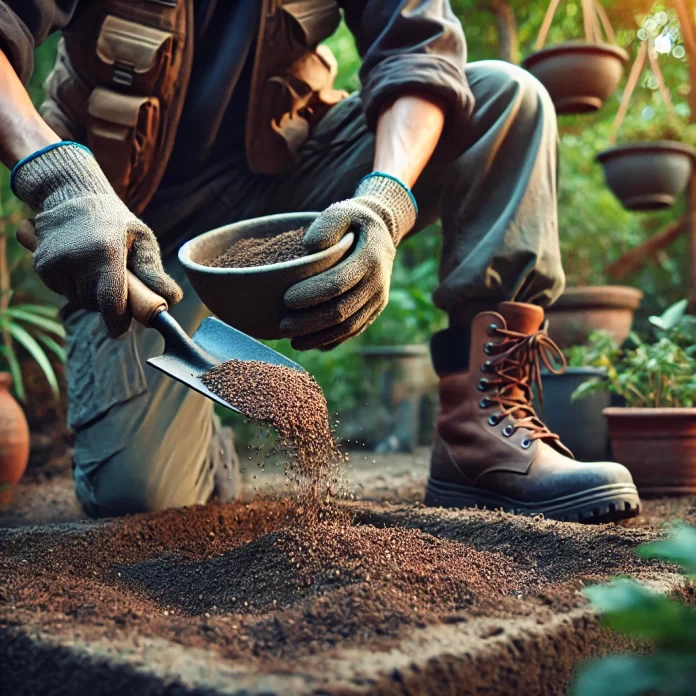
- Mix at least 40–50% horticultural grit into the top 6–12 inches of soil.
- Avoid using sand, which can bind with clay and create a cement-like texture.
- Grit works best when combined with organic matter.
3. Use Raised Beds or Mounds
If drainage is a serious issue, plant on raised mounds or in raised beds. This keeps plants above the waterlogged zone.
4. Avoid Deep Digging
Heavy digging can compact clay soil even more, especially when wet. Instead, try:
- Surface mulching with compost or bark.
- No-dig gardening, where worms and soil organisms naturally improve structure.
5. Choose Plants That Thrive in Clay
Some plants do well in heavy clay, including:
- Moisture-loving plants – Ligularia, Astilbe, Cornus
- Clay-tolerant perennials – Geranium, Hosta, Rudbeckia
- Bulbs that need sharp drainage (Fritillaria, Tulips) should be planted on a slight mound with a small amount of grit beneath them.
Does Grit Improve Drainage in Pots?
Should You Put Grit at the Bottom of a Pot?
No—this is another common myth. Just like in planting holes, water builds up above the grit layer, creating a perched water table that can cause root rot.
The Right Way to Use Grit in Pots
- Mix Grit into the Compost
- Add 20–30% grit to improve aeration and drainage.
- Ideal for plants that hate wet feet, like alpines, succulents, and bulbs.
- Choose the Right Potting Mix
- For moisture-loving plants: peat-free compost + a little grit for structure.
- For Mediterranean plants: John Innes No.2 or No.3 + 30% grit or perlite.
- Ensure Good Drainage
- Always use pots with drainage holes.
- Raising pots slightly on pot feet helps water drain freely.
When Is Grit at the Bottom of a Pot Useful?
- If a pot has no drainage hole, a thin layer of grit can prevent waterlogging, but a drainage hole is always better.
- For heavy pots, a layer of crocks or grit can reduce weight.
Verdict: Mix grit into the compost—don’t layer it at the bottom.
Common Myths About Clay Soil and Drainage
| Myth | Reality |
|---|---|
| “Adding gravel at the bottom of a hole improves drainage.” | Creates a sump effect, trapping water around roots. |
| “Grit alone will fix clay soil.” | Needs at least 40–50% grit and must be mixed throughout. |
| “Sand is better than grit for breaking up clay.” | Fine sand can make clay set like concrete—use grit, not sand. |
| “You should dig deep to improve drainage.” | Over-digging can worsen compaction—use organic matter instead. |
Final Verdict: What’s the Best Way to Improve Drainage in Clay Soil?
✔ Best solution: Mix organic matter and grit across a wide area, not just in holes.
✔ Avoid: Layering grit at the bottom of planting holes or pots.
✔ Consider: Raised beds, mounds, and choosing clay-tolerant plants.
Improving clay soil takes time, but the right methods will create a healthier, more manageable garden with better drainage in the long run.