
Common Name: Black Cherry Plum
Botanical Name: Prunus cerasifera ‘Nigra’
Family: Rosaceae
Hardiness Zone: RHS H5 (Hardy in most of the UK), USDA Zone 4-9
Origin: Cultivar of Prunus cerasifera, native to Western Asia and Southeastern Europe
Description
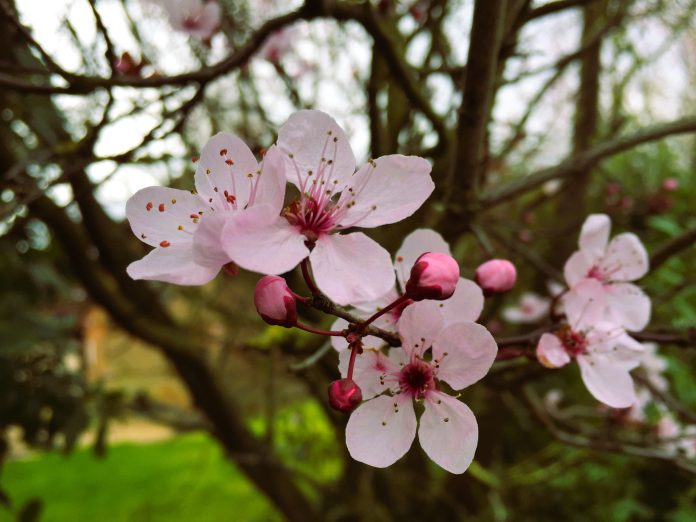
Prunus cerasifera ‘Nigra’ is a striking deciduous tree prized for its deep purple-black foliage and early spring blossom. Growing to a height of 5–7m, it creates a dramatic contrast in gardens and landscapes. The pink flowers appear in March before the leaves fully emerge, providing an important nectar source for pollinators. In August, small edible plums may develop, though they are often overlooked in favour of the tree’s ornamental value.
Planting & Position
- Best Time to Plant: November to March, when the tree is dormant.
- Position: Prefers full sun to enhance foliage colour, though it tolerates partial shade.
- Soil: Well-drained, moderately fertile soil. Adaptable to clay, loam, or sandy soils but avoid waterlogging.
- Spacing: Allow at least 4–5m between trees to ensure proper development.
Care & Maintenance
- Watering: Once established, ‘Nigra’ is fairly drought-tolerant but benefits from occasional deep watering in prolonged dry spells.
- Feeding: Apply a balanced fertiliser in March to promote healthy growth and flowering.
- Mulching: A 5cm layer of organic mulch around the base in March helps retain moisture and suppress weeds.
- Pruning: Minimal pruning required; remove dead, diseased, or crossing branches in August to maintain shape and airflow.
Pests & Diseases
- Pests: Aphids, caterpillars, and scale insects can occasionally affect young growth.
- Diseases: Susceptible to silver leaf and bacterial canker; good airflow and hygiene practices help prevent issues.
Seasonal Interest
- March: Masses of pale pink flowers before leaf emergence.
- June-August: Rich purple-black foliage provides contrast in the landscape.
- September-October: Leaves turn bronze before falling, and occasional small plums may ripen.
- November-February: Bare branches with dark bark provide structure in the garden.
Uses & Companion Planting
- Works well as a specimen tree, in mixed borders, or as part of a wildlife-friendly garden.
- Pairs beautifully with light green or silver-foliaged plants such as Elaeagnus or Stachys byzantina for contrast.
- Attracts pollinators and birds, adding biodiversity to the garden.
Propagation
- Best propagated by semi-ripe cuttings in July or grafting in January.
- Seeds can be sown but may not come true to type.
Final Tips
- Regularly check for signs of disease, especially in wet summers.
- Avoid excessive pruning, as this can lead to stress and disease susceptibility.
- Enjoy its year-round beauty as a striking addition to any garden.