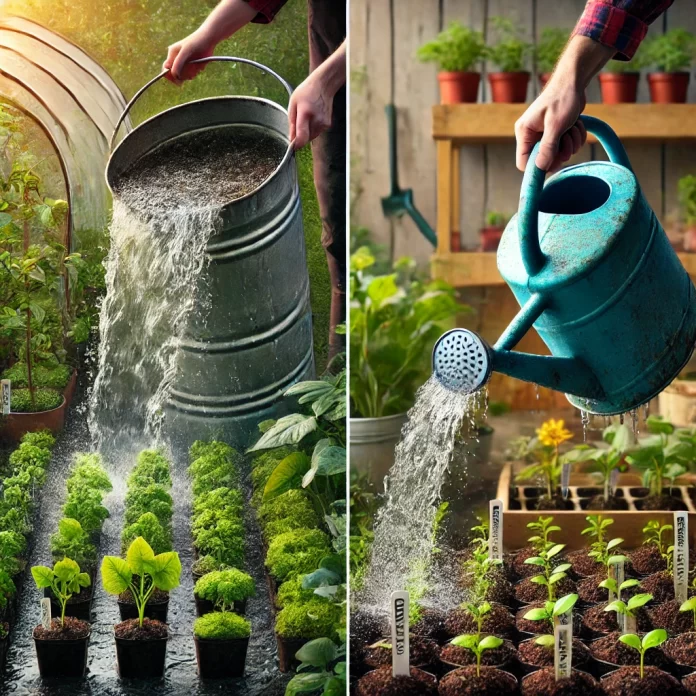
Watering is one of the most important aspects of plant care, but not all water is the same. Many gardeners prefer rainwater, while others rely on tap water. But which is better, and when should you use each? This article explores the pros and cons of both, especially for seedlings, which are particularly sensitive to water quality.
The Benefits of Rainwater for Plants
Rainwater is often considered the best option for watering plants because:
- Free from Chemicals – Unlike tap water, which may contain chlorine, fluoride, and other additives, rainwater is naturally pure.
- Slightly Acidic – Most rainwater has a pH around 5.5 to 6.5, which suits acid-loving plants and helps nutrient uptake.
- Rich in Nitrogen – Rainwater contains small amounts of dissolved nitrogen, which promotes healthy green growth.
- Soft Water – It lacks the calcium and magnesium found in hard tap water, which can build up in soil and affect plant health.
When to Use Rainwater for Plants
- For acid-loving plants like azaleas, camellias, blueberries, and ferns.
- For houseplants that are sensitive to tap water chemicals, such as spider plants and peace lilies.
- In gardens where tap water is high in chlorine or limescale.
- After collecting fresh rainwater from a clean water butt or barrel.
Is Tap Water Safe for Plants?
Tap water is convenient, but its quality depends on your local water supply. Hard water, in particular, contains high levels of calcium and magnesium, which can build up in soil over time.
When Tap Water is Fine for Plants
- For most garden plants, especially those adapted to alkaline conditions (e.g., lavender, rosemary, and geraniums).
- If your tap water is low in chlorine and not excessively hard.
- After letting it sit for 24 hours to allow chlorine to evaporate.
When to Avoid Tap Water
- For plants that dislike alkaline conditions, such as rhododendrons and orchids.
- If your water is heavily chlorinated—this can harm beneficial soil microbes.
- In very hot weather—cold tap water can shock plant roots.
Rain vs. Tap Water for Seedlings
Seedlings are particularly sensitive to water quality, as their roots are delicate and still developing. While rainwater is generally better for mature plants, tap water may be safer for seedlings in some cases.
Why Rainwater is Great for Seedlings
- Chemical-Free – No chlorine or fluoride that could harm young roots.
- Slightly Acidic – Helps with nutrient uptake.
- Soft Water – No mineral buildup that could affect seedling growth.
When Tap Water May Be Better for Seedlings
Tap water can help reduce the risk of certain seed and seedling infections, depending on its treatment:
- Chlorine and Chloramine as Disinfectants
- Many water supplies contain chlorine or chloramine, which kill bacteria and fungi.
- This can help prevent damping-off disease, a common fungal issue that kills seedlings.
- Reduced Contamination Risk
- Unlike rainwater, which can collect bacteria, mold spores, or algae from roofs and gutters, tap water is usually pathogen-free.
- Using unfiltered rainwater on seedlings, especially in humid conditions, could increase the risk of mold or fungal infections.
Best Practices for Watering Seedlings
- Use Room-Temperature Water – Cold water can shock delicate roots.
- Let Tap Water Sit – If using tap water, allow it to stand for 24 hours to let chlorine evaporate.
- Sterilize Water if Necessary – If worried about fungal infections, boil or filter water before using it.
- Use a Fine Spray – Prevents disturbing young roots and soil structure.
- Water from Below – Placing seedlings in a tray and letting them soak up water prevents fungal issues on leaves.
Does Tap Water Prevent Seedling Diseases?
While tap water may help reduce some infections due to its chlorine content, it is not a replacement for proper seed treatment and hygiene. If disease prevention is a concern:
- Sterilize Seeds – Soaking seeds in diluted hydrogen peroxide or warm water can reduce pathogens.
- Ensure Good Airflow – Prevents fungal buildup.
- Use Clean Watering Equipment – Avoids introducing contaminants.
Final Verdict: Which Should You Use?
- For mature plants: Rainwater is generally best, as it is free from chemicals and has a balanced pH.
- For seedlings: Tap water may be safer if your rainwater is unfiltered, as it reduces the risk of fungal infections.
- For disease-prone plants: Tap water that has been left to sit (to remove chlorine) or sterilized may be a good compromise.
Best Approach?
Use rainwater when possible for established plants and tap water (left to stand) for seedlings to ensure a clean and safe growing environment. If you’re in a hard water area, consider filtering or mixing tap and rainwater to balance pH and mineral content.