
The Newspaper For Gardeners

Looking Out for Hedgehogs...

Hedgehogs are some of the most endearing creatures in our gardens, but winter...

Prune Apple Trees

Pruning is an essential task for maintaining healthy, productive apple trees. Proper pruning...

Dividing Snowdrops: A Step-by-Step...

Snowdrops (Galanthus spp.) are a cherished sight in late winter, heralding the arrival...

Force Rhubarb: A Gardener’s...

Forcing rhubarb is a traditional gardening technique that produces tender, sweet stalks, perfect...
Monday, January 12, 2026
A-ZAAcute

Acute

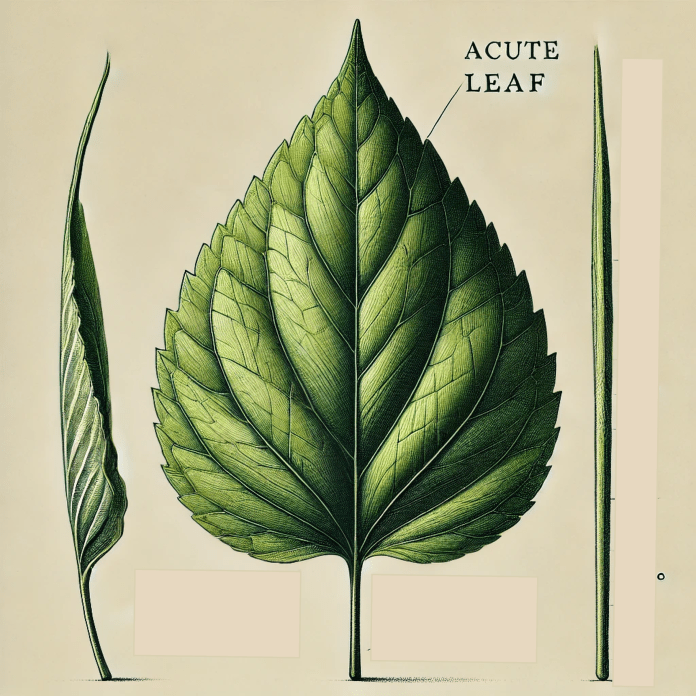
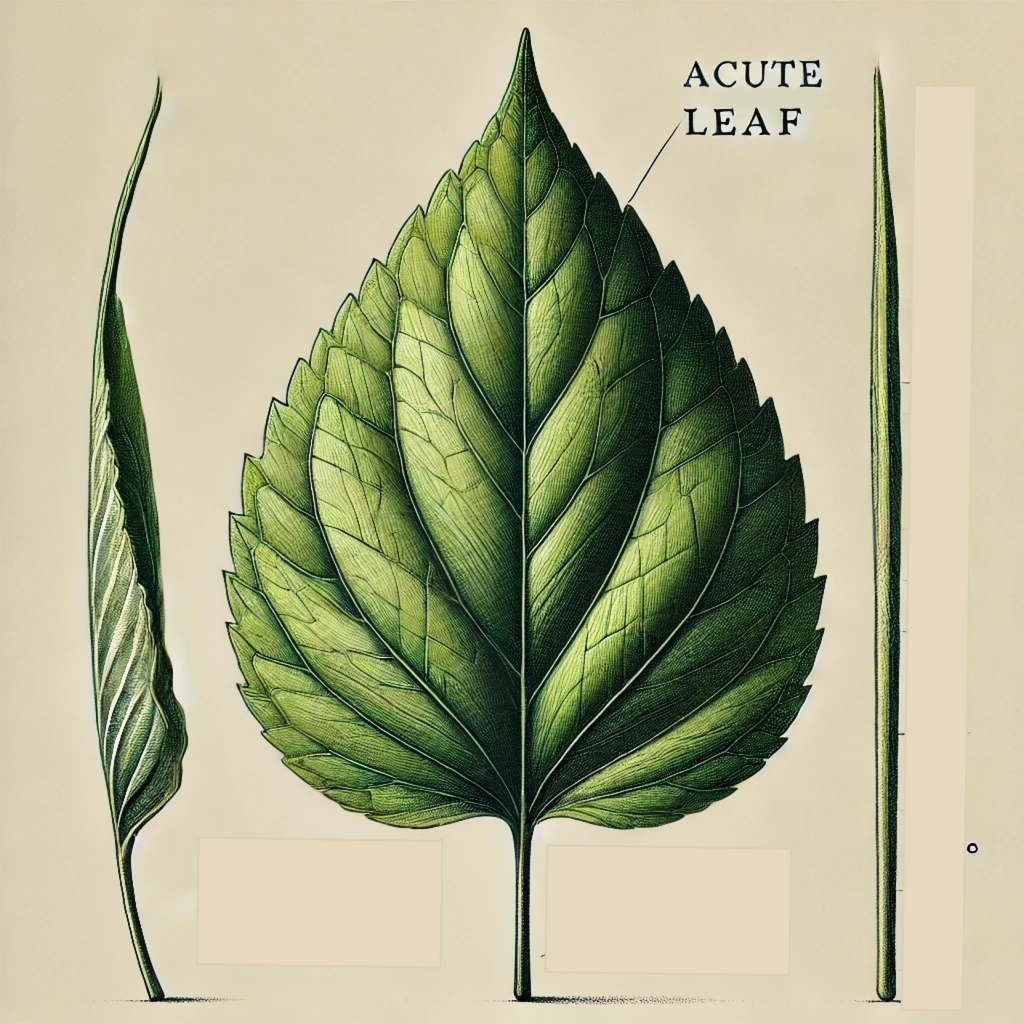
In botany, the term acute refers to a plant part, typically a leaf or petal, that ends in a sharp, distinct point. Unlike an acuminate tip, which gradually narrows, an acute tip tapers more directly and often forms a less elongated point. This shape is commonly observed in many plants and is used to describe the angle formed at the apex.

Characteristics

  • Shape: Tapers to a short, sharp point.
  • Angle: The apex typically forms an angle less than 90 degrees.
  • Margins: Straight or slightly curved near the tip.

Examples in Nature

  • Elm Tree (Ulmus spp.): Leaves often feature acute tips.
  • Holly (Ilex spp.): Some leaves have acute points along the margins.
  • Many Grasses: Often exhibit acute leaf tips for aerodynamic and water-shedding efficiency.

Functional Significance

  • Water Management: Acute tips may help direct water runoff.
  • Streamlined Shape: May reduce wind resistance in exposed environments.

Tip: Incorporating plants with acute leaf shapes can add sharpness and definition to garden designs, especially when paired with broader or rounder foliage for contrast.

acute
spot_img

lOOKING FOR MORE WORK?

The free and easy way to get more customers. Just join Find Local Gardeners.

BoltingCategory: Plant Physiology / Growth Disorders Definition:Bolting is the premature production of a flowering stem in plants before the crop has been harvested, typically triggered...
Definition:Blotchy ripening is a physiological disorder primarily observed in fleshy fruits—most notably in tomatoes (Solanum lycopersicum)—where patches of the fruit fail to develop normal...
Blossom End Rot (noun; plant pathology, horticulture) Definition: Blossom end rot is a physiological disorder affecting the fruit of various flowering plants—most notably tomatoes, peppers, aubergines...
Blind (adjective, noun; horticulture, botany) Definition (Botany & Horticulture): In a botanical or horticultural context, blind refers to a plant shoot, bud, or flowering stem that...
(noun; pathology, botany) Definition:In botany, blight refers to a rapid and extensive discoloration, wilting, or death of plant tissues—typically leaves, stems, or flowers—caused by...

Continue reading

Bolting

BoltingCategory: Plant Physiology / Growth Disorders Definition:Bolting is the premature production of a flowering stem in plants before the crop has been harvested, typically triggered by environmental stress. It is especially common in leafy vegetables such as lettuce (Lactuca sativa),...

Blotchy Ripening

Definition:Blotchy ripening is a physiological disorder primarily observed in fleshy fruits—most notably in tomatoes (Solanum lycopersicum)—where patches of the fruit fail to develop normal coloration during the ripening process. This results in irregular, often green, yellow, or grey-green areas...

Blossom End Rot

Blossom End Rot (noun; plant pathology, horticulture) Definition: Blossom end rot is a physiological disorder affecting the fruit of various flowering plants—most notably tomatoes, peppers, aubergines (eggplants), and courgettes (zucchini). It is characterized by a dark, sunken, leathery patch at the...

SUBSCRIBE TO OUR YOUTUBE CHANNEL

Plant advice for unusual species plus updates from our tropical garden

SUBSCRIBE