
The Newspaper For Gardeners

Looking Out for Hedgehogs...

Hedgehogs are some of the most endearing creatures in our gardens, but winter...

Prune Apple Trees

Pruning is an essential task for maintaining healthy, productive apple trees. Proper pruning...

Dividing Snowdrops: A Step-by-Step...

Snowdrops (Galanthus spp.) are a cherished sight in late winter, heralding the arrival...

Force Rhubarb: A Gardener’s...

Forcing rhubarb is a traditional gardening technique that produces tender, sweet stalks, perfect...
Monday, January 12, 2026
A-ZAAcaulescent

Acaulescent

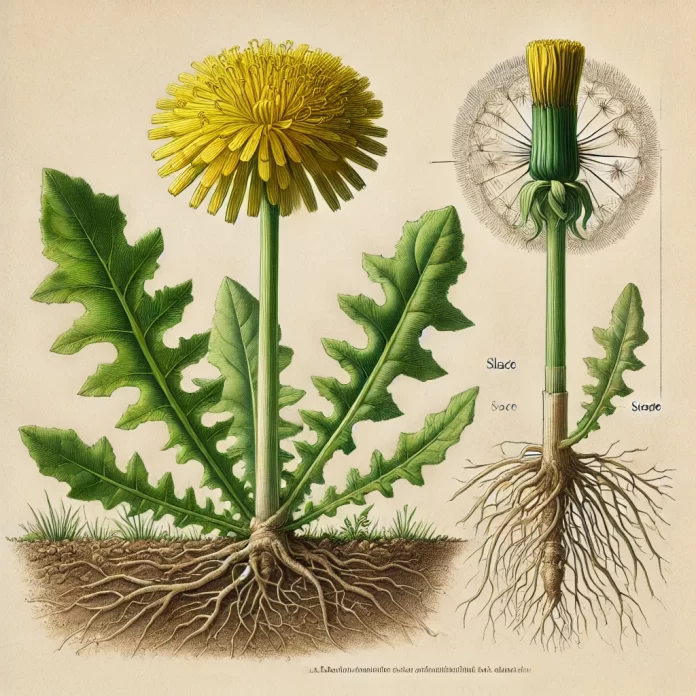
An acaulescent plant is one that appears to lack a stem or has an extremely short stem, often with leaves growing directly from the base or from a rosette at ground level. While the stem may not be visible above ground, some acaulescent plants may have an underground stem, such as a rhizome, corm, or bulb.

Characteristics

  • Leaves are arranged in a basal rosette or grow directly from the base of the plant.
  • Stems, if present, are either very short or entirely subterranean.
  • Flowers may grow on a separate flowering stalk (scape) that emerges from the base.

Examples of Acaulescent Plants

  • Dandelion (Taraxacum officinale): Produces leaves in a basal rosette with flowering scapes.
  • Primroses (Primula spp.): Have short stems and basal leaves.
  • African Violet (Saintpaulia spp.): Acaulescent with a compact growth habit.

Adaptive Significance

Acaulescent growth can be an adaptation to certain environmental conditions, such as:

  • Protection from herbivory by keeping foliage close to the ground.
  • Efficient water retention in arid climates.
  • Reduced exposure to wind in open environments.

Tip: Acaulescent plants are excellent for low-maintenance garden designs and can be paired with taller species for contrasting height effects.


spot_img

lOOKING FOR MORE WORK?

The free and easy way to get more customers. Just join Find Local Gardeners.

BoltingCategory: Plant Physiology / Growth Disorders Definition:Bolting is the premature production of a flowering stem in plants before the crop has been harvested, typically triggered...
Definition:Blotchy ripening is a physiological disorder primarily observed in fleshy fruits—most notably in tomatoes (Solanum lycopersicum)—where patches of the fruit fail to develop normal...
Blossom End Rot (noun; plant pathology, horticulture) Definition: Blossom end rot is a physiological disorder affecting the fruit of various flowering plants—most notably tomatoes, peppers, aubergines...
Blind (adjective, noun; horticulture, botany) Definition (Botany & Horticulture): In a botanical or horticultural context, blind refers to a plant shoot, bud, or flowering stem that...
(noun; pathology, botany) Definition:In botany, blight refers to a rapid and extensive discoloration, wilting, or death of plant tissues—typically leaves, stems, or flowers—caused by...

Impatiens omeiana ‘Pink Nerves’ – Grow Guide

Impatiens omeiana ‘Pink Nerves’ is a captivating perennial known for its striking variegated foliage and delicate pink flowers. Native to China, this plant is perfect for adding color and texture to shaded garden areas. Propagating Impatiens omeiana ‘Pink Nerves’...

How to grow Rodgersia podophylla ‘Braunlaub’

Rodgersia podophylla ‘Braunlaub’ is a striking perennial known for its bold, palmate leaves and creamy white flower clusters. Native to East Asia, this plant thrives in woodland settings, making it an excellent choice for shaded gardens in the UK....

How to Grow Acanthus ‘Morning’s Candle’

Acanthus ‘Morning’s Candle’, commonly known as Bear’s Breeches, is a striking perennial plant that adds architectural elegance to any garden. With its tall flower spikes, deep green foliage, and white flowers tinged with pink or purple, this plant is...

Cardoon (Cynara cardunculus) – Grow Guide

Cardoons (Cynara cardunculus) can be relatively easy to grow, especially if you have some gardening experience and the right conditions. Cardoons come in several varieties, each with distinct characteristics. Here are some popular varieties: 1. ‘Gigante di Romagna’ Description: This is a large...

Continue reading

Bolting

BoltingCategory: Plant Physiology / Growth Disorders Definition:Bolting is the premature production of a flowering stem in plants before the crop has been harvested, typically triggered by environmental stress. It is especially common in leafy vegetables such as lettuce (Lactuca sativa),...

Blotchy Ripening

Definition:Blotchy ripening is a physiological disorder primarily observed in fleshy fruits—most notably in tomatoes (Solanum lycopersicum)—where patches of the fruit fail to develop normal coloration during the ripening process. This results in irregular, often green, yellow, or grey-green areas...

Blossom End Rot

Blossom End Rot (noun; plant pathology, horticulture) Definition: Blossom end rot is a physiological disorder affecting the fruit of various flowering plants—most notably tomatoes, peppers, aubergines (eggplants), and courgettes (zucchini). It is characterized by a dark, sunken, leathery patch at the...

SUBSCRIBE TO OUR YOUTUBE CHANNEL

Plant advice for unusual species plus updates from our tropical garden

SUBSCRIBE