Fruit or Berry, and the Surprising World of Legumes
Today, we’re going to explore some surprising truths about everyday fruits and vegetables—specifically, what makes a fruit a berry, and how peanuts are actually legumes, and why bananas are technically berries too! So, grab a cup of tea, sit back, and let’s get into it.
What Makes a Berry a Berry?
Now, when you hear the word “berry,” you probably think of small, juicy fruits like strawberries, raspberries, and blackberries. But hold on, because these common kitchen “berries” are not technically berries at all. Confused? Well, let’s break it down.
In botanical terms, a berry is a type of fruit that develops from the ovary of a single flower. Now, here’s where it gets interesting—berries must have a fleshy pericarp, meaning the entire fruit, from the outer layer to the inner part, should be soft and fleshy. Plus, true berries contain multiple seeds that are scattered throughout the fruit.
So, while we call strawberries, raspberries, and blackberries “berries” in the kitchen, they are actually aggregate fruits, meaning they form from several ovaries of a single flower. Each little seed on a strawberry is technically a separate ovary.
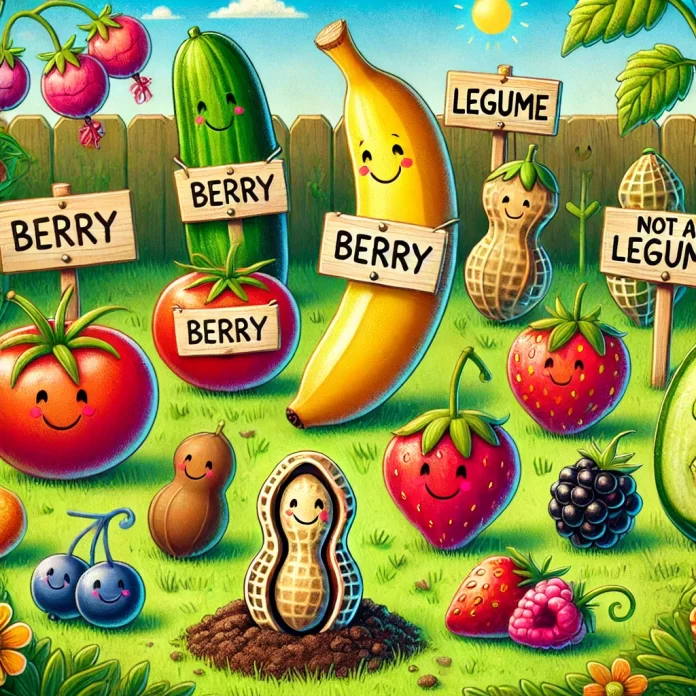
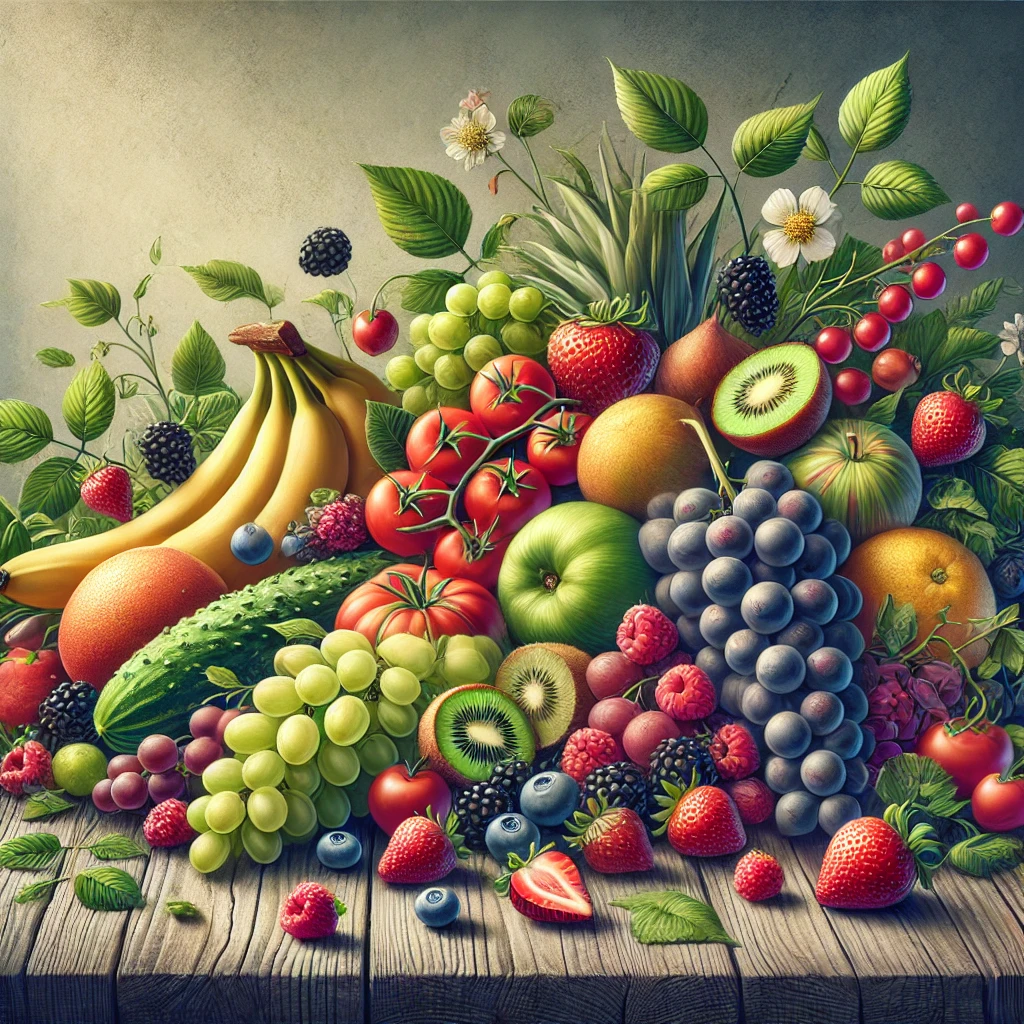
But what does that leave us with? True botanical berries! Think grapes, tomatoes, bananas, and even kiwi. Yes, bananas! Botanically, bananas are classified as berries because they develop from a single ovary and have multiple tiny seeds embedded in the flesh. Even though we don’t usually think of them that way, bananas are more closely related to grapes and tomatoes than to, say, strawberries or raspberries.
So, next time you eat a banana, remember—it’s a berry!
The Mystery of Peanuts – A Legume, Not a Nut!
Now, moving away from berries for a second, let’s talk about something else that might surprise you: peanuts. You might be thinking, “A peanut is a nut, right?” But in fact, peanuts are not nuts at all. They are legumes!
That’s right—peanuts belong to the same family as beans, lentils, and peas. So how does that work? Well, peanuts actually grow underground, which is pretty unique compared to most nuts that grow on trees. Peanuts develop from a flower above the soil, but once the flower is pollinated, the ovary of the flower elongates and pushes underground, where the peanuts mature.
In botanical terms, legumes are plants that belong to the Fabaceae family and produce seeds inside a pod, like peas or beans. Peanuts follow this same pattern, developing inside pods rather than on the branches of a tree.
So, even though peanuts are called “nuts,” they’re actually more closely related to peas and beans. Who would have thought?
More Surprising Fruit Facts
But we’re not done with the fruit confusion yet. Did you know that tomatoes are also berries? That’s right—tomatoes are botanically classified as berries because they develop from a single ovary and contain multiple seeds inside. So when you slice into a tomato, what you’re actually eating is a fleshy berry! Same goes for cucumbers and even eggplant. All of these are technically berries, even though we treat them as vegetables in the kitchen.
It all comes down to the structure. A true berry is fleshy throughout and develops from one ovary, while other fruits, like apples and peaches, have a hard pit or a tougher outer layer, which is a key difference.
Why Does All This Matter for Gardeners?
Now you might be wondering, why does any of this matter for us as gardeners? Well, understanding the difference between fruits, berries, and other plant categories can help you make better decisions in the garden.
For instance, if you’re growing something like tomatoes or cucumbers, you’re actually growing a type of berry. That means, you can apply some of the same care strategies that you would use for other berries—like grapes or blueberries. Knowing these details can help when you’re selecting your plants, managing growth, and even diagnosing issues.
Plus, with all these surprising facts about peanuts and legumes, it can be fun to think about how we classify plants and how nature blurs the lines between what we think of as fruits, vegetables, and nuts.
And that’s a wrap on today’s episode of Local Gardener Today. We’ve learned that bananas are berries, peanuts are legumes, and tomatoes are technically fruits too! It just goes to show that nature always has something new to teach us, and the more we learn, the more we realize how fascinating and interconnected the plant world truly is.
I hope you enjoyed this episode and that you’re feeling a little more empowered in your gardening journey with this newfound knowledge. Be sure to subscribe and check out more episodes where we explore the quirky and wonderful world of plants.
Until next time, happy gardening!