
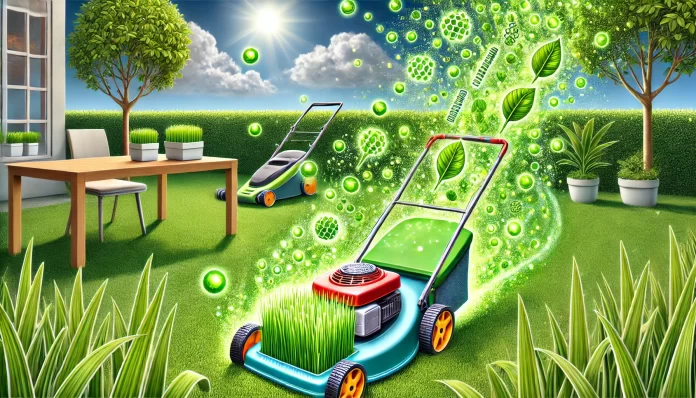
The scent of freshly cut grass is one of the most recognizable and nostalgic smells of summer. For many, it brings memories of sunny days, picnics, and gardening. But what if we told you that this familiar aroma is actually the grass crying out in distress?
Yes, you read that right. The smell of freshly cut grass is a plant’s way of signaling that it’s been injured. Here’s what’s happening at the molecular level.
The Science of Grass Distress
When you mow your lawn or cut grass blades, the plant releases a group of chemicals known as green leaf volatiles (GLVs). These are a mix of organic compounds that serve multiple purposes:
- Healing the plant: GLVs help the grass repair itself by sealing the wounds caused by cutting.
- Signaling nearby plants: These chemicals act as a warning to neighboring plants, alerting them to potential threats like herbivores or environmental stress.
- Attracting helpful insects: The scent can also attract predatory insects that feed on pests, indirectly helping the injured grass.
In essence, what smells so refreshing to us is actually an SOS from the grass.
Why Does Grass Need an SOS?
Plants, including grass, can’t run away from danger. Instead, they’ve evolved intricate defense mechanisms, like chemical signaling, to cope with threats. The release of GLVs is part of this strategy:
- It warns nearby plants to prepare their own defenses, such as increasing the production of protective compounds.
- It repels herbivores that might otherwise feast on the injured plant.
- It attracts natural predators or parasitoids of plant-eating pests, creating a form of biological pest control.
How Humans Perceive the Smell
Interestingly, humans have evolved to find the smell of freshly cut grass pleasant. Some scientists theorize this may be because GLVs contain compounds that have antimicrobial properties, which may subconsciously signal safety to humans. Others believe the scent’s association with nature and outdoor activity creates positive emotional responses.
Beyond Grass: GLVs in the Plant Kingdom
Grass isn’t the only plant to release GLVs when damaged. Many plants emit similar distress signals, including fruits, vegetables, and trees. For example:
- Tomatoes release GLVs to warn neighboring plants of caterpillars.
- Trees emit chemicals that can deter insects or attract their natural predators.
These chemical communications are an example of how interconnected the plant world is, creating a “hidden language” we’re only beginning to understand.
The Irony of Mowing
While mowing is a routine part of lawn care, it’s fascinating (and a little humbling) to realize that it’s essentially triggering a widespread plant alarm system. However, regular mowing also encourages grass to grow thicker and healthier, as long as it’s done correctly.
Final Thoughts
The next time you inhale the sweet scent of freshly cut grass, remember it’s not just a pleasant smell—it’s a complex survival strategy at work. Grass may be silent, but it’s far from passive, using every tool in its arsenal to heal, warn, and defend itself.
Perhaps this newfound knowledge will add a layer of appreciation the next time you mow your lawn—or make you think twice about it!