Double Digging
- What It Is: Double digging is a soil preparation technique where you dig two spades deep into the soil, loosening the soil structure below the surface. This allows for better aeration, drainage, and root penetration.
- How It’s Done: You begin by digging out a trench about one spade’s depth (around 10-12 inches) and moving the soil to one side. Then, in the trench below, you loosen the soil further by turning it over. Afterward, you replace the soil back in the trench. This method is particularly useful in heavy clay soils.
- Why It Works: Double digging creates an environment where plant roots can access oxygen and nutrients more easily, and it helps break up compacted soil layers that could hinder root growth.
Trench Composting (or Pit Composting)
- What It Is: Trench composting is a simple method of composting plant material directly in the garden. Instead of using a compost pile, you dig a trench and bury organic material like vegetable scraps, leaves, and grass clippings.
- How It’s Done: Dig a trench about 12 inches deep, place the compostable material inside, and cover it with soil. The trench slowly decomposes over time, enriching the soil with nutrients.
- Why It Works: It’s a low-maintenance way of composting and is especially useful for larger gardens or vegetable plots. The buried material decomposes naturally, adding organic matter to the soil and improving its fertility.
Raised Beds
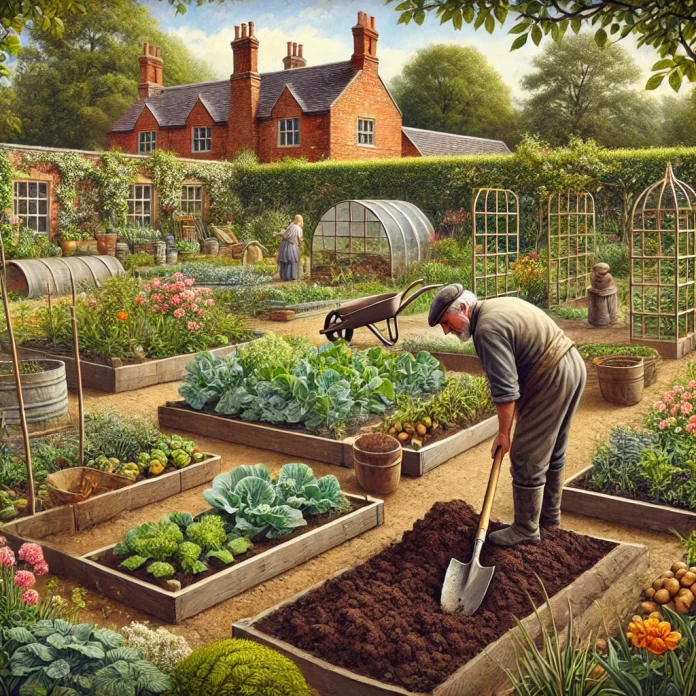
- What It Is: Raised beds are an old method of improving drainage, soil quality, and accessibility in the garden by building up the soil in mounds or framed boxes.
- How It’s Done: You create a bed using wood, stone, or brick to frame the bed, then fill it with a mix of good-quality soil, compost, and organic matter. The soil in the raised bed is typically more fertile and easier to work with than ground soil.
- Why It Works: Raised beds improve drainage and soil structure, protect plants from compaction, and make gardening easier, especially for older gardeners or those with limited mobility. They also warm up faster in the spring, giving plants an earlier start.
The No-Dig Method (or No-Till Gardening)
- What It Is: The no-dig method is a traditional technique where gardeners avoid turning over the soil and instead add organic matter on top of the soil. It reduces soil disturbance, allowing for healthier ecosystems in the soil.
- How It’s Done: To start, you cover the soil with layers of compost, mulch, or well-rotted manure. Over time, this organic material breaks down and adds nutrients to the soil without needing to till or dig the earth.
- Why It Works: No-dig gardening maintains the structure of the soil, encourages earthworms and beneficial microbes, and prevents soil erosion. It’s especially useful for maintaining the health of delicate soils.
Green Manuring
- What It Is: Green manuring involves planting cover crops, such as legumes (peas, beans, clover), that are then turned under to enrich the soil. These crops “fix” nitrogen in the soil, making it more fertile for other plants.
- How It’s Done: You sow specific plants in the garden beds during the off-season (usually in autumn or early spring), and when they’re fully grown, you dig them into the soil. This increases organic matter and nutrients.
- Why It Works: Green manure improves soil fertility by adding organic matter and enriching the nitrogen content. It also helps suppress weeds and protect the soil from erosion.
Spade or Fork Digging
- What It Is: In traditional gardening, spades or forks were used to dig soil to a depth of around 8–12 inches, loosening it and adding air pockets that allow roots to grow easily. This was typically done in preparation for planting or improving the soil’s structure.
- How It’s Done: Simply use a spade or fork to loosen the soil, breaking up large clumps and mixing in organic matter such as compost. It’s not as deep as double digging, but it’s a common practice to prepare the garden for planting.
- Why It Works: Spade or fork digging improves aeration, drainage, and root penetration without being as labor-intensive as double digging.
Mounding (or Hilling)
- What It Is: Mounding is a method of growing plants by creating raised soil mounds around the base of crops. It’s particularly effective for root crops like potatoes, carrots, and certain types of squash.
- How It’s Done: After planting seeds or seedlings, gardeners mound soil around the plants as they grow. For potatoes, this involves adding soil to the base of the plant to encourage tuber development.
- Why It Works: Mounding improves drainage and air circulation, keeps the plants’ roots cooler, and helps prevent waterlogging. It’s also an excellent technique for managing tall or sprawling crops.
Soil Enrichment with Manure and Mulch
- What It Is: Traditional gardeners used manure and organic mulch extensively to add nutrients to the soil. Well-rotted manure is rich in nitrogen and other vital elements that plants need.
- How It’s Done: Manure is spread on the soil in the fall, then worked into the earth in spring. Organic mulch (like straw or compost) is also added around plants to retain moisture, suppress weeds, and improve the soil’s fertility.
- Why It Works: Adding manure or mulch improves soil structure, promotes better root growth, and reduces the need for synthetic fertilizers. It’s a simple, effective way to nurture the soil naturally.
Ridge and Furrow Cultivation
- What It Is: This is an old technique used for planting rows of crops, particularly in heavy or clay soils. The soil is worked into raised ridges (for planting) and furrows (for water drainage).
- How It’s Done: Gardeners create a series of ridges and furrows in the garden, with crops planted in the ridges. This allows water to drain efficiently, prevents waterlogging, and helps crops grow in well-drained soil.
- Why It Works: Ridge and furrow cultivation is particularly useful in wet conditions, as it prevents roots from sitting in stagnant water, which can lead to disease and poor growth.
Traditional Fertilizer Making (Comfrey, Fish Emulsion, etc.)
- What It Is: Before commercial fertilizers, gardeners often made their own plant-based fertilizers. Comfrey leaves, for example, were steeped in water to make a potent organic fertilizer known for promoting healthy plant growth.
- How It’s Done: A common method is to steep comfrey leaves or nettles in water for several weeks to create a nutrient-rich liquid fertilizer. Fish emulsion was another popular homemade fertilizer made by fermenting fish or fish by-products.
- Why It Works: These natural fertilizers provide plants with essential nutrients like potassium, nitrogen, and phosphorus, but without the harsh chemicals found in synthetic fertilizers.
Row Covers and Cloches for Early Season Growth
- What It Is: Row covers and cloches (often bell-shaped, transparent covers) were traditionally used to extend the growing season, protect delicate plants from frost, and create a warm microclimate for crops to thrive.
- How It’s Done: Row covers are placed over plant rows, while cloches are positioned over individual plants. Both create a protective barrier that traps heat, reduces wind, and shields against frost or pests.
- Why It Works: These methods allow gardeners to get a jumpstart on the growing season, providing warmth and protection to tender plants like tomatoes, cucumbers, and early greens.
These traditional gardening techniques were foundational for maintaining large, productive gardens, especially on estates. Many of them can still be used today to improve soil health, increase productivity, and make gardening more sustainable and enjoyable.