Garlic mustard (Alliaria petiolata), a biennial herb native to Europe and parts of Asia, has become one of the most problematic invasive species in North America and the UK. Its rapid spread and ability to dominate forest understories have made it a focus of concern among ecologists and land managers. Despite its small stature, garlic mustard wields a disproportionate impact on native ecosystems, soil health, and biodiversity.
Identification
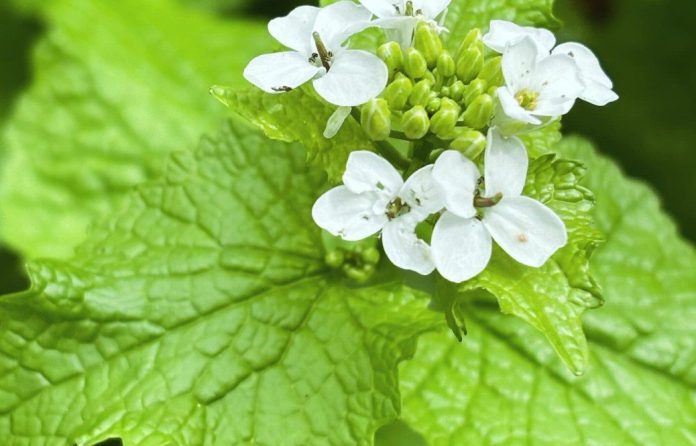
Garlic mustard is relatively easy to identify, especially in its second year of growth when it flowers. Its key characteristics include:
- First-Year Plants: A basal rosette of kidney-shaped leaves with scalloped edges, staying close to the ground.
- Second-Year Plants: Erect stems up to 1 meter tall with triangular to heart-shaped leaves that are toothed and alternate along the stem.
- Flowers: Small, white, four-petaled flowers that form clusters at the top of the stems in spring.
- Seed Pods: Long, slender siliques (seed pods) that mature by summer, each containing numerous small black seeds.
- Aroma: Crushed leaves release a garlicky smell, giving the plant its name.
Habitat and Distribution
Garlic mustard thrives in a wide range of habitats but prefers shaded environments such as woodlands, forest edges, and riparian zones. It tolerates various soil types and can establish itself in disturbed areas as well as relatively undisturbed ecosystems. Its ability to grow in dense shade and poor soils allows it to outcompete many native plants.
Ecological Impact
Garlic mustard’s invasive nature stems from several factors that enable it to dominate ecosystems:
- Allelopathy: Garlic mustard releases chemicals into the soil that suppress the growth of native plants and disrupt beneficial mycorrhizal fungi that native trees and plants rely on for nutrient uptake.
- Competition: Its aggressive growth and dense stands outcompete native wildflowers like trilliums, violets, and spring ephemerals, reducing biodiversity.
- Impact on Wildlife: The decline in native plants affects insects, including specialist pollinators, which in turn impacts birds and other animals dependent on a healthy understory.
- Seed Production: Each plant can produce hundreds of seeds, which remain viable in the soil for up to five years, making eradication efforts challenging.
Control and Management
Efforts to control garlic mustard require persistence and a multi-faceted approach:
- Manual Removal: Hand-pulling is effective, especially in small infestations. Care must be taken to remove the entire root system to prevent regrowth. Plants should be bagged and removed to prevent seed dispersal.
- Cutting: Mowing or cutting flowering plants can reduce seed production, but it must be timed carefully to prevent regrowth and seed set.
- Chemical Control: Herbicides like glyphosate can be used for larger infestations, but application must be done carefully to avoid harming native plants.
- Biological Control: Research is ongoing into potential biocontrol agents, such as insects from garlic mustard’s native range, though none are yet widely implemented.
- Prevention: Early detection and rapid response are critical. Land managers should monitor susceptible areas and act quickly to remove new infestations.
Culinary Uses
Despite its invasive nature, garlic mustard is edible and has been used for centuries as a food source. Its leaves can be harvested and used raw in salads or cooked like spinach, offering a garlicky flavor. The seeds can be ground into a spicy condiment similar to mustard. However, harvesting alone is not an effective control method.
Conclusion
Garlic mustard’s resilience and adaptability make it a formidable invader, but with sustained effort, its spread can be managed. Public education and involvement are key to controlling this plant’s impact on native ecosystems. By recognizing garlic mustard and taking action, gardeners, conservationists, and communities can help protect biodiversity and restore balance to affected habitats.