- Henry Moore exhibitions at both Kew Gardens and Wakehurst celebrate the vision and legacy of one of Britain’s most acclaimed artists
- Return of much-loved Orchid festival
- New Shafran Learning Centre to be unveiled at Kew Gardens in autumn 2026
- Fundraising ongoing for ambitious Palm House renovation
- Seasonal highlights include spectacular spring blossom, and the newly developed Carbon Garden entering its first year in full flower
During 2026, visitors to the Royal Botanic Gardens, Kew and Wakehurst, Kew’s wild botanic garden in Sussex can enjoy a variety of events, exhibitions and horticultural highlights.
Opening at Kew Gardens on 9 May 2026, Henry Moore: Monumental Nature, presented in partnership with the Henry Moore Foundation, will mark the most comprehensive exhibition of Moore’s work in a generation, with 30 monumental sculptures displayed across the Gardens. An accompanying exhibition in the Shirley Sherwood Gallery of Botanical Art will include over 90 works which are rarely on display to the public, including bronzes, carvings, prints and drawings, exploring Moore’s innovative process of ‘thinking through nature’. This new exhibition, presented across Kew’s 320-acre UNSESCO World Heritage Site, will also look at Moore’s creative responses to the fragility of the natural world, and the interplay between humans and the complex ecosystems which connect all life on earth. This must-visit exhibition builds on Kew’s recent tradition of contemporary commissions from innovative artists including Marshmallow Laser Feast, The Singh Twins, Marc Quinn, Felicity Aylieff and Mat Collishaw, using powerful artistic interventions across the Gardens to tell powerful and emotive stories around plants, fungi and nature.
At Wakehurst, Henry Moore and moreopens on 5 June, showcasing four of Henry Moore’s iconic sculptures, alongside bold new commissions from contemporary artists. Curated in partnership with the Henry Moore Institute, the exhibition will invite visitors to explore the evolving conversation between art and nature.
Kew’s ever-popular Orchid festival returns from 7 February, with a spectacular display of horticultural marvels inspired by China, its biodiversity, heritage and design traditions. The Princess of Wales Conservatory will once again be filled with a spectacular selection of large-scale floral installations, including dragons, lanterns and plant sculptures, shining a light on China’s incredible flora and fauna, as well as the work of Kew Science across China. After Hours events will also offer a unique opportunity to explore the glasshouse by night. For younger visitors, February half-term at Wakehurst brings an exciting new family adventure, encouraging all generations to get outside in winter and connect with nature.
As winter gives way to spring, Sounds of Blossomanimates the Gardens with melodic sound compositions bringing seasonal blooms to life at this special time of the year.
The Easter break offers the opportunity to explore the world of the Octonauts: Above & Beyond at both Kew and Wakehurst, with young explorers embarking on a mission to help protect plants and wildlife.
Throughout 2026, visitors to Kew Gardens can enjoy the innovative new Carbon Garden as it blooms through its first year. With newly planted spring bulbs flowering for the first time alongside a swathe of delicate perennials designed to evoke the Climate stripes, the Carbon Garden reveals the invisible, bringing to life the critical role carbon plays in sustaining life on Earth, communicating the scale of the climate crisis, and sharing the extraordinary potential of the natural world to combat it.
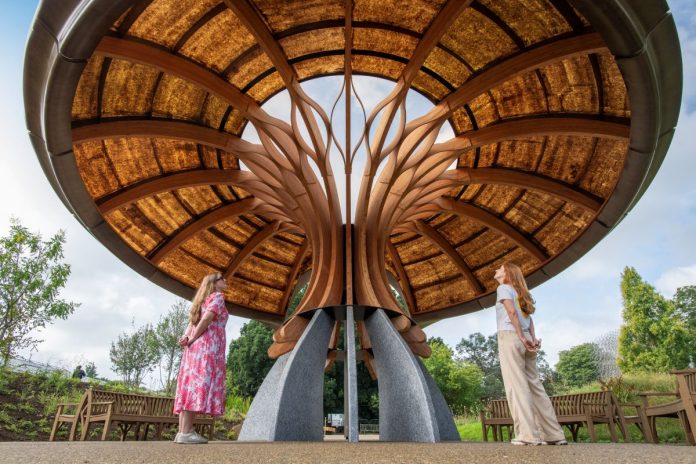
Autumn sees the opening of Kew’s pioneering new Shafran Learning Centre, our first net-zero education building. Constructed to Passivhaus standards, this innovative new facility will support Kew’s ambitious sustainability goals whilst providing a dynamic new environment for learning across generations. The space will be equipped with state-of-the-art education labs, lecture theatres and classrooms, providing a much-needed space for learning and professional development. It will be used by a range of learners, from early years to school pupils and community groups, offering a specialised environment to train the next generation and support the green careers of the future.
Elsewhere in the Gardens, the Waterlily House will remain closed during 2026 for renovation, with the Princess of Wales Conservatory taking centre stage for the much-loved annual display of these showstopping plants. Fundraising is currently underway for the Palm House renovation project, with one third of the funding raised so far. The proposed renovation will conserve the heritage of Palm House, one of the UK’s most iconic buildings, while reimagining its design for a more sustainable future. The Palm House is showing serious signs of deterioration, having last undergone a renovation in the 1980s. Without urgent work, this listed building and the rare plants it protects are at risk of being lost forever, posing a real threat to the ex-situ conservation work of RBG Kew.
The renovation project will also provide a unique opportunity to embed co-production of Kew’s Learning and Participation programmes; new interpretation will involve and engage community partners, and content will be used in engagement activities to allow debates to be shaped, prejudices to be challenged and new meanings to be constructed, delivering a step change in how Kew meaningfully engages with diverse audiences.
As winter arrives, Christmas at Kew returns to delight visitors during the festive season, whilst at Wakehurst Glow Wild promises enchanting evenings from later November onwards.
The Royal Botanic Gardens, Kew, is dedicated to harnessing the power of plants and fungi to end the extinction crisis and to create a thriving planet for us all. With Kew’s world-leading research, global partnerships and beloved gardens – home to the world’s most diverse collections of plants and fungi – Kew is using its trusted voice to shape policy and practice worldwide. As a charity, Kew relies on the critical support of its visitors, not only to sustain the gardens, but to protect global plant and fungal biodiversity for the benefit of our planet and humanity.
PHOTO CREDIT Carbon garden – Ines Stuart-Davidson © RBG Kew
At-a-glance listings
Flora Indica: Recovering the lost histories of Indian botanical art / Botanical Tales and Seeds of Empire by The Singh Twins | Shirley Sherwood Gallery of Botanical Art, Kew Gardens until Sunday 12 April 2026 | Free with admission
Kew’s Shirley Sherwood Gallery of Botanical Art showcases two contrasting but complimentary exhibitions connecting traditional Indian Art with contemporary art practice.
Orchids: China | Saturday 7 February – Sunday 8 March 2026 | Princess of Wales Conservatory, Kew Gardens | Free with admission but slots must be pre-booked in advance
Kew Gardens’ much-loved annual Orchid festival returns, drawing inspiration from the biodiversity, heritage and traditions of China.
An evening with The Singh Twins | 5 March 2026 | Kew Gardens
In conversation with Dr Janina Ramirez.
Sounds of Blossom | 14 March 2026 – 6 April 2026 | Around Kew Gardens | included with entry
Visitors can welcome the arrival of spring with the return of Sounds of Blossom, celebrating nature with sensory soundscapes across the Gardens.
Octonauts: Above & Beyond | 28 March 2026 – 12 April 2026 | Kew Gardens and Wakehurst | included with entry
Celebrate biodiversity in the natural world, as brave young explorers discover the challenges facing plant life and global ecosystems.
Wellbeing at Kew | throughout 2026 | Tickets include entry to Kew Gardens
Kew’s popular programme of wellbeing events returns for 2026. With sessions including Yoga in the Temperate House, forest bathing, tai-chi and sound bathing, there is something on offer for everyone to enjoy.
Henry Moore: Monumental Nature | opens 9 May 2026 | Kew Gardens | included with entry
From spring 2026, experience the awe-inspiring scale and beauty of Henry Moore’s sculptures in the stunning landscape of Kew Gardens, presented in partnership with the Henry Moore Foundation.
Henry Moore and more | opens 5 June 2026 | Wakehurst | included with entry
Sculpture meets the beauty of the natural world as we showcase four of Henry Moore’s iconic sculptures, alongside bold new commissions from contemporary artists, set across the gardens. Curated in partnership with the Henry Moore Institute.
Christmas at Kew | November 2026 – January 2027 | Kew Gardens
Christmas at Kew returns with more festive fun to see out the year.
Glow Wild | 26 November 2026 – 2 January 2027 | Wakehurst, Haywards Heath
Sussex’s award-winning festive lantern trail at Wakehurst, Kew’s wild botanic garden, returns for the winter months, with a captivating theme of Nature’s Gifts.
The Board of Trustees of the Royal Botanic Gardens, Kew are delighted to be naming the Shafran Learning Centre to recognise the generosity of Jake and Hélène Marie Shafran, and their support of Kew’s education and engagement work. They would like to thank the following for their generous support of the Shafran Learning Centre:
Jake and Hélène Marie Shafran, Kusuma Trust, The Foundation and Friends of the Royal Botanic Gardens, Kew, the estate of Gweslan Lloyd, Sarah Fransen, J & R Savery, the Stavros Niarchos Foundation (SNF), Steve and Claire Almond, the estate of Barbara Rowe, Swire Charitable Trust, The Winslow Family, and all other donors including those who have chosen to remain anonymous.
About the Royal Botanic Gardens, Kew
The Royal Botanic Gardens, Kew is a world-famous scientific organisation, internationally respected for its outstanding collections and scientific expertise in plant and fungal diversity, conservation, and sustainable development in the UK and around the globe. Kew’s scientists and partners lead the way in the fight against biodiversity loss and finding nature-based solutions to the climate crisis, aided by five key scientific priorities outlined in Kew’s Science Strategy 2021-2025. Kew Gardens is also a major international and top London visitor attraction. Kew’s 132 hectares of historic, landscaped gardens, and Wakehurst, Kew’s Wild Botanic Garden and ‘living laboratory’, attract over 2.5 million visits every year. Kew Gardens was made a UNESCO World Heritage Site in July 2003 and celebrated its 260th anniversary in 2019. Wakehurst is home to the Millennium Seed Bank, the largest wild plant seed bank in the world and a safeguard against the disastrous effects of climate change and biodiversity loss. RBG Kew received approximately one third of its funding from Government through the Department for the Environment, Food and Rural Affairs (Defra) and research councils. Further funding needs to support RBG Kew’s vital scientific and educational work comes from donors, memberships and commercial activity including ticket sales. For tickets, please visit www.kew.org/kew-gardens/visit-kew-gardens/tickets. In the first six months since implementing a new accessibility scheme for those in receipt of Universal Credit, Pension Credit and Legacy Benefits, Kew has welcomed over 200,000 visitors with £1 tickets.
About Wakehurst
Whilst Wakehurst is not a National Trust property, Royal Botanic Gardens, Kew has a longstanding relationship with the National Trust dating back to 1965 when Kew took over the running of Wakehurst’s 535 acres of botanical landscapes and Elizabethan Mansion, bequeathed to the National Trust in 1963.
Wakehurst is Kew’s wild botanic garden in the Sussex High Weald National Landscape. Its ancient and beautiful landscapes span 535 acres and are a place for escape, exploration, tranquillity, and wonder. Its diverse collection of plants from Britain and around the globe thrive within a tapestry of innovative gardens, temperate woodlands, meadows, and wetlands. Wakehurst is a centre for UK biodiversity and global conservation, seed research and ecosystem science. At its heart is Kew’s Millennium Seed Bank, the world’s largest store of seeds from wild plant species.
RBG Kew receives approximately one third of its funding from Government through the Department for the Environment, Food and Rural Affairs (Defra) and research councils. Further funding needed to support RBG Kew’s vital work comes from donors, membership and commercial activity including ticket sales. In the first six months since implementing a new accessibility scheme for those in receipt of Universal Credit, Pension Credit and Legacy Benefits, Kew has welcomed over 100,000 visitors with £1 tickets.
At the Royal Botanic Gardens, Kew, we’re dedicated to harnessing the power of plants and fungi to end the extinction crisis and secure a future for all life on Earth. With our world-leading research, global partnerships and beloved gardens – home to the world’s most diverse collections of plants and fungi – we’re using our trusted voice to shape policy and practice worldwide. As a charity we rely on the critical support of our visitors, not only to sustain the gardens, but to protect global plant and fungal biodiversity for the benefit of our planet and humanity.
In March 2021, RBG Kew launched its 10-year strategy Our Manifesto for Change 2021. The institution’s ultimate goal is step up to help to end the extinction crisis and contribute to creating a world where nature is protected, valued by all and managed sustainably. In the wake of a global pandemic, and with the future of the planet in peril, the strategy represents a public commitment by RBG Kew to do everything in its power to reverse the environmental devastation of biodiversity loss and climate change. The five key priorities are 1) Delivering science-based knowledge and solutions to protect biodiversity and use natural resources sustainably 2) Inspiring people to protect the natural world 3) Training the next generation of experts: 4) Extending our reach 5) Influencing national and international opinion and policy. On May 25 2021 RBG Kew launched its new Sustainability Strategy – committing to become Climate Positive by 2030 and marking a step-change in our urgent action to tackle the climate and biodiversity crisis.